
Table of Contents
- Why Leather Conditioning Matters for Outdoor Knife Sheaths
- How to Clean a Leather Knife Sheath Before Conditioning
- Oil-Based vs. Wax-Based Treatments for Vegetable-Tanned Leather
- Leather Oil for Knife Sheath: Application and Performance
- How Often to Condition Leather Sheaths for Outdoor Use
- Knife Sheath Rust Prevention Through Proper Conditioning
- Top Conditioned Sheaths from AnchorsAweighLeather
- Frequently Asked Questions
Last Updated: October 10, 2026
Why Leather Conditioning Matters for Outdoor Knife Sheaths
The best leather conditioner for outdoor knife sheaths keeps your blade safe and your sheath functional in harsh conditions. Untreated leather dries out, cracks, and loses its protective ability. The right conditioning routine transforms a sheath from fragile to field-ready.
Vegetable-tanned leather, which we use in all our handcrafted sheaths, responds exceptionally well to proper conditioning. Without conditioning, it becomes brittle; with it, the leather stays supple, water-resistant, and stronger year after year.
Conditioning replenishes natural oils, seals against moisture and humidity, prevents mildew, and keeps leather flexible enough to hold your knife securely without cracking at stress points like belt loops and stitching.
How to Clean a Leather Knife Sheath Before Conditioning
You can't condition dirty leather effectively. Dirt blocks conditioning products from penetrating the surface. Clean before every conditioning session.
Use lukewarm water and a soft cloth. Wipe the entire surface, paying attention to creases and belt loops. For stubborn grime, add mild soap and scrub gently. Never soak or use hot water.
Rinse with a fresh damp cloth to remove soap residue, which attracts moisture and accelerates deterioration.
Pat dry and air-dry completely in warm air (typically 2-4 hours) before conditioning. Conditioning wet leather traps moisture and causes uneven swelling.
Oil-Based vs. Wax-Based Treatments for Vegetable-Tanned Leather
The two main categories of leather conditioner work differently, and choosing between them depends on your use case, climate, and how the sheath will interact with your blade.
Oil-based conditioners (neatsfoot oil, mink oil, or specialized leather oils) penetrate deep and restore flexibility, resisting cracking at stress points. They excel in arid climates but darken leather noticeably, can feel greasy if over-applied, and require reapplication every 2-3 months. They take 24-48 hours to cure and shed water for 4-6 weeks before losing resistance as the oil oxidizes.
Wax-based treatments (beeswax balms, carnauba wax blends) create a surface barrier that waterproofs effectively and lasts 4-6 months between applications. Water beads rather than soaking in. Trade-offs: wax doesn't penetrate as deeply, is less effective for already-dry leather, and can feel stiff until worked in. It takes 12-24 hours to cure.
Hybrid approach for outdoor use: Many experienced practitioners combine both methods for maximum protection. Apply oil first to restore flexibility and penetration, allow it to cure fully (24-48 hours), then seal with wax for water resistance and durability. This method gives you deep conditioning plus long-lasting protection and is especially effective for sheaths that will see rain, stream crossings, or coastal humidity. The oil ensures the leather stays supple year-round, while the wax extends the interval between maintenance cycles.
Leather type matters. Vegetable-tanned leather absorbs oils and waxes readily and develops a durable patina. Chrome-tanned leather accepts oil but resists wax. Finished leather may reject both until the topcoat wears away. Test any new conditioner on an inconspicuous area first.
Blade corrosion: Oil-conditioned leather can trap moisture if over-applied, accelerating rust on carbon steel. Wax-based treatments are superior for moisture exclusion in humid or wet environments. For carbon steel blades in high-humidity conditions, wax or a hybrid approach is safer.
Leather Oil for Knife Sheath: Application and Performance
Applying oil correctly determines results. Too little leaves dry spots; too much creates a greasy mess that attracts dirt.
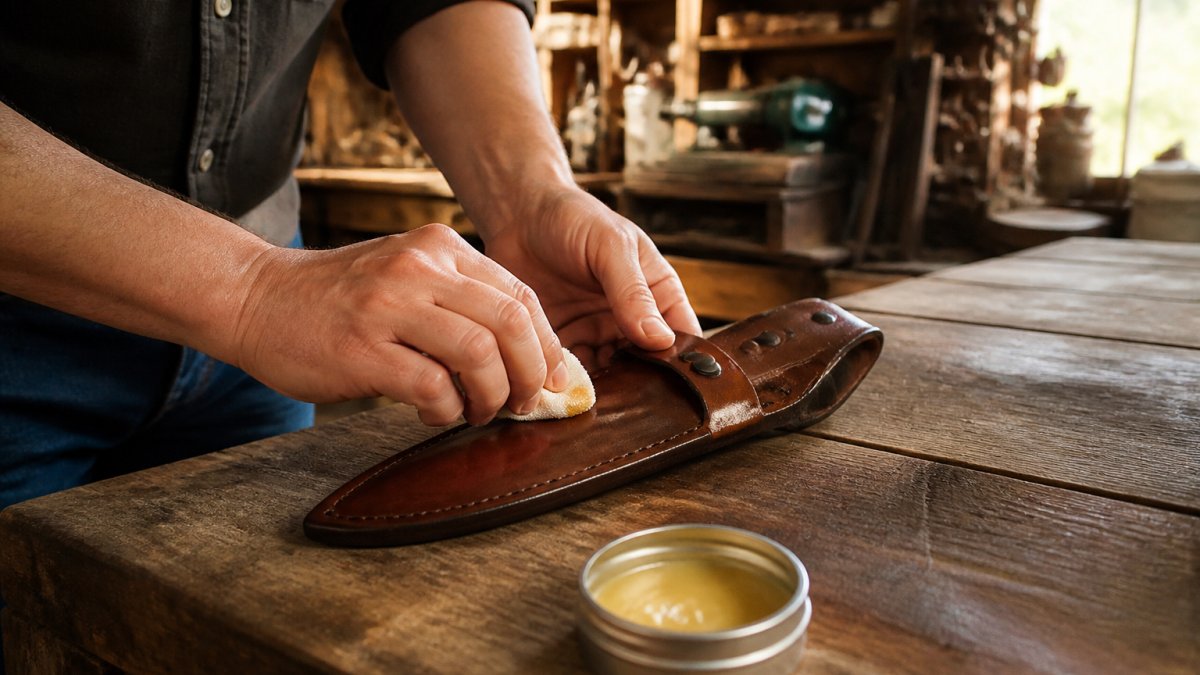
Start with a clean, dry sheath. Apply oil sparingly with a soft cloth in thin, even coats. Work in circular motions covering the entire surface. The leather should absorb the oil within 15-20 minutes; if still wet after 30 minutes, wipe off excess.
One thin coat every 2-3 months keeps leather supple and protected. Condition more frequently in dry climates or winter; less frequently in humid coastal environments.
Well-oiled leather holds its shape and resists cracking. Neglected leather becomes stiff and allows moisture penetration, leading to blade corrosion and mildew.
How Often to Condition Leather Sheaths for Outdoor Use
Frequency depends on your environment, use intensity, and climate. Here are recommendations based on conditions:
Heavy outdoor use in wet conditions: Every 4-6 weeks. Wax-based treatments are preferable to oil because they shed water. After wet-weather use, air-dry completely (4-8 hours) before storing. If soaked, dry the knife and sheath separately to prevent blade corrosion.
Regular outdoor use in dry climates: Every 2-3 months. In arid regions, condition less frequently (every 3-4 months). If leather looks dull or feels stiff, condition sooner.
Light use or indoor storage: Every 4-6 months. Don't skip conditioning; indoor leather can dry out from heating and air conditioning.
Custom Leather Knife Sheath, horizontal knife sheath →
Storage between seasons: Always condition before storing for months. For carbon steel blades, use wax-based treatment or light oil, allow full cure, and store in a cool, dry location. Never store a wet sheath with a blade inside.
Blade protection: After each use, especially in wet conditions, dry the knife and sheath separately. Store the blade unsheathed for 1-2 hours to allow sheath moisture to evaporate. For carbon steel blades in humid climates, store outside the sheath between uses or use wax-based conditioner exclusively.
Over-conditioning: Too much oil creates a greasy surface that attracts dirt and weakens leather. If the sheath feels oily after 48 hours, wipe off excess. If darkened significantly and feels soft, air-dry for several days.
Seasonal adjustment: In winter, condition more frequently (every 6-8 weeks) to prevent drying. In summer, especially in humid regions, condition less frequently (every 3-4 months). Spring and fall: stick to 2-3 months.
Consistency beats perfection. Set a reminder every 6-8 weeks and assess the sheath. Skip if it looks and feels good; condition if dull or stiff. You'll develop a feel for your specific sheath and climate.
Knife Sheath Rust Prevention Through Proper Conditioning
Rust on carbon steel blades starts with moisture. Proper leather conditioning creates a moisture barrier that protects your blade during storage.
Here's the mechanism: untreated or poorly conditioned leather absorbs humidity from the air. That moisture transfers to the blade, especially if the sheath fits tightly. Carbon steel oxidizes readily in the presence of moisture, creating rust spots that pit the blade surface and damage the edge.
Conditioned leather resists moisture absorption. A well-oiled or wax-sealed sheath keeps the interior dry, which keeps the blade dry. This is why conditioning matters more for carbon steel knives than for stainless steel, carbon steel has zero corrosion resistance on its own.
The conditioning approach also affects blade safety. Rough, unconditioned leather can scratch or dull a sharp blade through friction. Smooth, conditioned leather protects the edge. This is why we hand-stitch our sheaths with saddle stitch, the reinforced seam holds the shape even after conditioning, preventing the leather from shifting and damaging the blade.
Storage location amplifies the effect. A conditioned sheath in a dry closet keeps a blade safe for years. An unconditioned sheath in a humid garage or basement becomes a rust factory. If you live in a damp climate or near the coast, conditioning becomes even more critical, the air itself is trying to corrode your blade, and the sheath is your only defense.
Top Conditioned Sheaths from AnchorsAweighLeather
We handcraft every sheath from vegetable-tanned leather and apply neatsfoot oil and atoms wax finish during production for the Custom Leather Filet Knife Sheath. This gives you a sheath that's already conditioned and ready for field use.

Our Custom Leather Knife Sheath ($49.00) handles blades up to 5 inches and features hand-stitched construction with rivets for reinforcement. The veg-tan leather develops a natural patina as you use and condition it.
For pocket knife users, the Custom leather knife sheath, case, pocket knife sheath, EDC ($33.00) fits Buck 382 Trappers and similar folding blades. Hand-sewn with saddle stitch for durability, it accommodates belts up to 1.5 inches wide and accepts conditioning beautifully.

The Custom Texas pancake knife sheath ($46.00) uses premium full-grain leather and pancake-style design for slim belt carry. Custom fit to your specific knife, it's built to last a lifetime with proper conditioning.

For fishing applications, the Custom Leather Filet Knife Sheath ($43.00) accommodates blades up to 6 inches. This sheath comes pre-treated with neatsfoot oil and beeswax for water resistance, critical when you're working near water daily.
All our sheaths ship with free conditioning applied. We include guidance on how often to condition based on your climate and use case.
| Sheath Type | Price | Best For | Belt Capacity | Blade Length |
|---|---|---|---|---|
| Custom Horizontal | $49.00 | General outdoor use | Up to 1.5" | Up to 5" |
| Pocket Knife EDC | $33.00 | Folding knives | Up to 1.5" | Varies |
| Texas Pancake | $46.00 | Slim carry, custom fit | Up to 2" | Custom |
| Filet Knife | $43.00 | Fishing, water use | Standard | Up to 6" |
Conditioning your leather knife sheath is the difference between a tool that lasts decades and one that fails in a few years. The process is simple, clean, dry, apply oil or wax, repeat every few months, but the results compound over time.
Start with a quality sheath built from vegetable-tanned leather like ours, apply the conditioning routine we've outlined, and your investment will outlast you. Get started with AnchorsAweighLeather and build a sheath that's conditioned, protected, and ready for whatever outdoor work you throw at it.
Frequently Asked Questions
How often should you condition a leather knife sheath?
Condition your leather sheath every 3-6 months for regular outdoor use, or more frequently if exposed to wet conditions, salt air, or extreme temperature swings. High-use sheaths benefit from quarterly conditioning. Check the leather regularly: if it feels dry or starts to show water spots, it's time to condition. The specific interval depends on climate and storage conditions.
Can you use leather oil on a knife sheath, and what's the best type?
Yes, leather oil works well on knife sheaths. Natural oils like neatsfoot oil penetrate vegetable-tanned leather deeply and restore suppleness. Many makers combine neatsfoot oil with beeswax or atoms wax to create a waterproof barrier while keeping the leather soft. This combination prevents moisture absorption while maintaining flexibility, critical for sheaths that hold sharp blades securely.
What's the best way to clean a leather knife sheath before conditioning?
Use lukewarm water and a soft, damp cloth to gently wipe away dirt and debris. For stubborn grit, use a soft-bristled brush. Dry thoroughly with a clean cloth and allow the sheath to air-dry completely in warm air before applying any conditioner. Never soak the leather or use hot water, as this can cause warping or damage to hand-stitched seams.
How does conditioning prevent rust and blade corrosion in a knife sheath?
A properly conditioned leather sheath creates a moisture barrier that keeps water away from both the leather and your blade. Wax-based finishes seal the surface, while oils maintain the leather's natural protective properties. This waterproofing is especially important for carbon steel blades, which corrode quickly when exposed to moisture. Regular conditioning keeps the sheath's interior dry, preventing rust formation on your knife.
0 comments