
Table of Contents
- Why Spotting Fake Leather Matters Before You Buy
- How to Tell If Leather Is Real: The Visual Inspection
- Real Leather vs. Fake Leather: The Touch and Flexibility Test
- Ways to Test Leather Without Damaging It
- Common Leather Authenticity Tests: Backing and Edges
- Reading Leather Labels and Material Composition
- What to Avoid: Tests That Can Damage Your Leather
- Choosing Real Leather Goods That Last
- Frequently Asked Questions
Last Updated: October 15, 2026
Why Spotting Fake Leather Matters Before You Buy
Counterfeit leather goods flood the market. You think you're buying genuine leather, then the wallet cracks after six months or the belt starts peeling. Learning to spot fake leather helps you avoid these problems, it's about knowing the material.

Learning how to spot fake leather protects your purchases: real leather develops character and ages beautifully, while fake leather deteriorates.
Genuine leather costs more upfront but lasts decades; fake leather gets replaced in months. This guide covers seven reliable, non-damaging tests.
How to Tell If Leather Is Real: The Visual Inspection
Real leather shows character; fake leather looks uniform and plastic-like. Look closely at the surface.
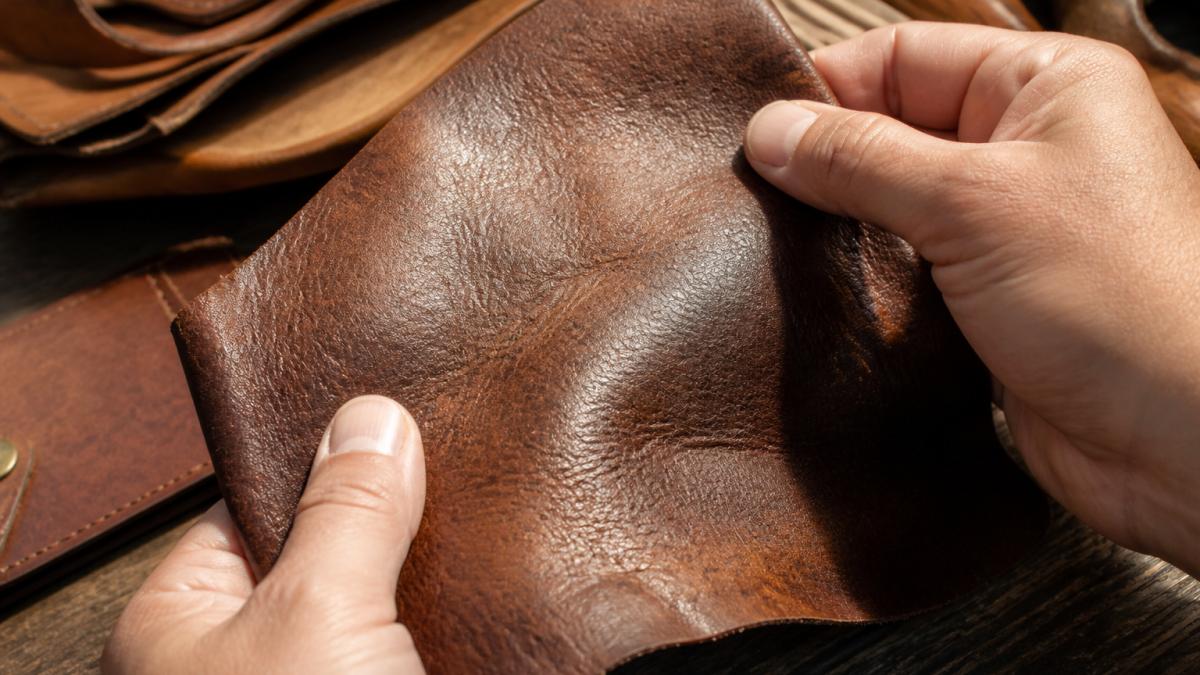
Grain Pattern and Natural Blemishes
Genuine leather displays unique grain patterns, no two hides are identical, with natural marks, scars, and variations.
Natural blemishes tell the story: real leather has scratches and marks that prove authenticity, while fake leather has none or artificial ones that look painted on.
Surface Texture and Finish
Run your fingers across the surface. Real leather feels organic, with subtle irregularities that shift as you move your hand.
Under light, genuine leather has depth and reflects naturally. Fake leather looks flat, glossy, and painted on.
Real Leather vs. Fake Leather: The Touch and Flexibility Test
Pick up the item. Real leather feels warm and alive; fake leather feels cold and stiff, or overly flexible in a plastic way.
Bend the item gently. Real leather creases and wrinkles naturally while holding its shape; fake leather either cracks or flexes back without a natural crease pattern.
Press your thumb into the surface. Real leather yields slightly and recovers without a permanent dent; fake leather resists completely or leaves a mark that won't disappear.
Ways to Test Leather Without Damaging It
These tests are safe and non-destructive.
The Smell Test
Genuine leather has a distinctive earthy, natural smell; fake leather smells like plastic or chemicals.
Aged real leather develops a more complex scent; new genuine leather smells fresher but still organic. Plastic, vinyl, or chemical fumes mean fake leather. The test works best on new items, since older leather absorbs other scents.
The Water Droplet Test
Place a single water droplet on an inconspicuous area. Real leather absorbs it slowly; fake leather repels it so the droplet beads up and rolls off immediately.
Real leather darkens slightly as it absorbs, then returns to normal as it dries; fake leather shows no darkening, the water sitting on the surface like it's coating glass.
Genuine leather is porous and breathes; fake leather is sealed and impermeable.
Common Leather Authenticity Tests: Backing and Edges
What you can't see matters. Check the hidden parts.
Inspect the Underside and Backing
Flip the item over. Real leather shows the flesh side, fuzzy or suede-like, different from the top grain. Fake leather has a consistent backing, usually fabric, felt, or plastic.
Genuine leather's flesh side feels soft and slightly rough; fake leather backing feels manufactured and uniform.
Check seams and edges.
Check Cut Edges and Seams
Look at the cut edges. Real leather shows a layered, fibrous, grainy structure. Fake leather has a sharp, clean, plastic-like edge.
Examine the stitching. Real leather accepts stitches cleanly with neat, precise holes; fake leather sometimes separates between top layer and backing at seams, exposing the backing.
Quality stitching matters. Machine-stitched fake leather often shows thread bunching or uneven spacing.
Mens leather wallet, leather wallet, leather billfold, bifold wallet →
Reading Leather Labels and Material Composition
Labels are a starting point, not proof. In the United States, no single federal standard forces a manufacturer to define "genuine leather," "top-grain," or "full-grain," so two items with identical labels can be made from very different materials.

What the Common Terms Actually Mean
- Full-grain leather. The entire hide with the grain layer intact and hair removed, nothing sanded or split away. It is the strongest, most durable form, develops a patina with use, and is the most expensive because a hide yields fewer full-grain panels.
- Top-grain leather. The grain layer is sanded down and often given a uniform finish. Still genuine leather, but altered, so it is less breathable and less likely to develop character. Many mid-priced bags and jackets use it.
- Genuine leather. Used loosely, it can describe full-grain, top-grain, or a thin split that has been finished and embossed. Because the word is not tightly regulated, it does not by itself tell you the grade or thickness.
- Split leather. The lower layer left after the top grain is removed. It has no natural grain, so a pattern is usually embossed onto it. Real leather, but the weakest form, often finished with a heavy coating.
- Bonded leather. Leather fibers and scraps mixed with a binder, usually polyurethane, and pressed onto a backing. It may contain a small percentage of real leather fiber, but the sheet is largely adhesive and backing, and it tends to crack and peel within a few years. It is commonly labeled simply "leather" or "genuine leather."
- Coated split leather (sometimes called bicast). A split given a polyurethane or PVC coating embossed with a grain pattern. It looks like top-grain at a glance, but the surface is plastic, not hide, one of the most common materials mistaken for genuine leather.
Why a Label Alone Cannot Establish Authenticity
A tag can say "100% leather" and describe bonded leather, "genuine leather" and describe a paper-thin split with a plastic finish, or "full-grain" and be wrong. The label is a claim, not a certification.
Synthetic Material Names to Watch For
If the composition lists any of the following, the item is not leather:
- Polyurethane (PU)
- Polyvinyl chloride (PVC)
- Vinyl
- Microfiber (sometimes marketed as "microfiber leather" or "vegan leather")
- Polyester or nylon backing with a coated surface
Microfiber deserves a note: it is synthetic, made from fine polyester or nylon fibers, often finished to imitate suede or leather.
The Practical Takeaway
Use the label to rule items out, not in. If the composition lists PU, PVC, vinyl, or microfiber, you know what you are holding.
What to Avoid: Tests That Can Damage Your Leather
Most online leather-testing advice comes from people who won't be held responsible for the item you damage.
A Safe, Ordered Testing Sequence
Work through these steps from least to most invasive. Stop as soon as the evidence is clear.
- Read the label and composition. Rule out PU, PVC, vinyl, and microfiber immediately. This costs nothing and damages nothing.
- Inspect the surface in raking light. Tilt the item under a lamp or near a window. Look for repeating grain, uniform color, and a flat plastic sheen. Real hide varies across the panel; coated synthetics repeat.
- Check the cut edges and seams. Genuine leather shows a fibrous, layered cross-section; a coated synthetic shows a sharp plastic edge or visible fabric backing. This is one of the most reliable non-destructive checks and is often overlooked.
- Examine the underside or lining. Genuine leather usually shows a suede-like flesh side; a uniform fabric or foam backing suggests a coated or bonded material.
- Feel for warmth and give. Press a thumb into the surface. Real leather warms to your hand and recovers. Synthetics stay cool and either resist or dent permanently.
- Smell the item. Genuine leather has an earthy, organic scent; synthetics smell of plastic, glue, or chemicals. Weak on its own, especially on older or heavily finished items, but it corroborates other findings.
- Bend gently, if at all. A light flex along a natural fold line can reveal cracking or a plastic feel. Do not crease sharply, and never do this on a piece you haven't purchased.
Why the Destructive Tests Are a Bad Trade
The burn test is the most commonly recommended and the most damaging.
The scratch test is similarly flawed. Some coated materials show a different color underneath when scratched, but the scratch is permanent.
Aggressive bending is the subtlest trap. A hard fold can crack a finished top-grain or coated split that would otherwise serve for years.
When to Stop Testing and Seek Professional Verification
Home checks are good at ruling materials out but weaker at confirming exactly what a material is, especially when a surface has been coated, embossed, or refinished.
Options for escalation include:
- A leather goods repair specialist or cobbler. These tradespeople handle leather daily and can often identify a material by feel and by examining a cut edge or lining seam. Many give a quick verbal opinion at low or no cost.
- A qualified appraiser. For high-value items such as designer bags or vintage jackets, an appraiser in leather goods or fashion accessories can provide a written opinion. Expect a fee, and ask in advance what the appraisal covers.
- The manufacturer or an authorized retailer. For branded goods, an authorized repair center can often confirm whether material and construction match the brand's specifications.
- A consumer protection agency or your state attorney general's office. If a seller misrepresented a material, these offices can explain your options under state consumer protection laws. Keep the listing, label photos, and any correspondence.
Choosing Real Leather Goods That Last
Once you've confirmed genuine leather, focus on quality construction.
Look for full-grain or top-grain leather. Bonded leather won't last. Check the stitching. Saddle stitch creates the strongest seams. Machine stitching is acceptable but not as durable.
Examine the hardware. Real leather goods use quality metal that shouldn't tarnish or rust quickly; cheap hardware suggests poor overall quality.
Ask about the tanning method. Vegetable-tanned leather ages beautifully. It's worth the investment.
Consider the maker. Handcrafted goods from established makers show attention to detail.
Choose items made by craftspeople who understand the material.
Real leather goods are worth the investment. They last decades when properly made. The items you choose today can become heirlooms.
Frequently Asked Questions
How can you tell if leather is real without damaging it?
Start with visual inspection: look for natural grain variation and blemishes rather than uniform patterns. Feel the texture, genuine leather is warm and flexible, while fake leather feels plastic or stiff. Check the backing by flipping the item; real leather has a flesh side that's rough or suede-like, while faux leather has synthetic or fabric backing. The smell test works too: real leather has a distinct earthy scent, not chemical. Avoid destructive tests like burn or scratch tests on items you're considering buying.
What's the difference between real leather and fake leather?
Real leather is made from animal hides and develops a natural patina over time, becoming softer and more supple. It has unique grain patterns, natural blemishes, and an organic smell. Fake leather (polyurethane or PVC) has uniform, repetitive patterns, feels plastic-like, and may emit a chemical odor. Real leather breathes and ages beautifully; fake leather cracks, peels, and deteriorates faster. Quality real leather goods, like handcrafted wallets using vegetable-tanned leather, improve with age and use.
Are common at-home leather tests reliable?
Visual, touch, smell, water droplet, and backing inspections are reliable when combined. No single test is foolproof on its own. The grain pattern test works well because fake leather manufacturers struggle to replicate natural randomness. The backing test is nearly definitive, genuine leather has a flesh side, while synthetics have fabric or plastic backing. Water tests show breathability but aren't conclusive alone. Burn and scratch tests damage the item, so avoid them unless you own it already. Professional verification is best for high-value purchases.
What should you look for on a leather product label?
Look for terms like 'genuine leather,' 'full-grain,' or 'top-grain' on the label, these indicate real leather. Avoid 'bonded leather' or 'split leather,' which are lower-quality scraps glued together. Check material composition percentages; if leather isn't listed first, it's likely faux. Labels should specify tanning method (vegetable-tanned is premium) and origin. Be wary of vague terms like 'leather-like' or 'faux leather.'
0 comments