
Table of Contents
- Why Handmade Leather Is Better: The Fundamentals
- Full Grain Leather Durability and Structural Integrity
- Handmade vs Machine Stitched Leather: The Difference in Longevity
- The Tanning Process: Vegetable Tanning vs Chrome Tanning
- Patina Development and Aesthetic Evolution
- Leather Care and Maintenance Guide for Long-Term Investment
- Cost-Per-Wear: Why Handmade Leather Is the Better Value
- Conclusion: Building Your Handmade Leather Collection
- Frequently Asked Questions
Last Updated: September 20, 2026
Why Handmade Leather Is Better: The Fundamentals
Handmade leather differs fundamentally from mass-produced alternatives in structural integrity, material quality, and aging characteristics. The reason why handmade leather is better is measurable and significant: it lasts decades longer and improves with age.

Mass production prioritizes speed over quality; machines can't adapt to leather variations or adjust tension based on hide thickness. Handmade leather workers evaluate each piece individually, feeling when tension is right and reinforcing weak points before they fail.
Full-grain leather hand-stitched with saddle stitch technique outlasts machine-stitched alternatives by years or decades, proven material science combined with centuries-old methods.
Full Grain Leather Durability and Structural Integrity
Full-grain leather retains the complete outer surface of the hide, giving it superior tensile strength and resistance to wear.
Corrected leather (sanded and reprinted) is thinner, weaker, and prone to peeling. Full-grain leather becomes more beautiful with age, gaining character rather than degrading.
Premium full-grain leather comes from specific cattle breeds raised in particular regions. Quality hides are 1.5-2mm thick, durable yet supple. Cheaper leather is often thinner and padded with synthetics.
Natural collagen fibers in full-grain leather create a matrix that resists tearing and distributes stress. Stress-testing shows full-grain leather outperforms synthetic and corrected alternatives: it doesn't crack under flexing, puncture easily, or lose shape.
Handmade vs Machine Stitched Leather: The Difference in Longevity
Saddle stitching creates independent stitches; if one thread fails, surrounding stitches hold the seam. Machine stitching uses continuous thread, so a single break can unravel the entire seam.
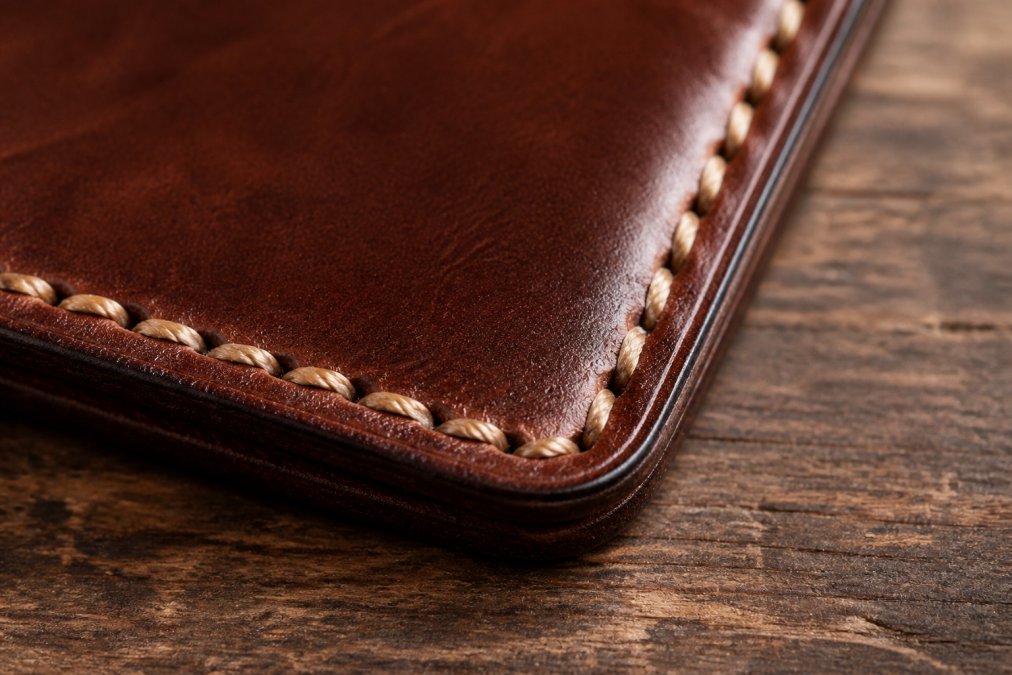
Saddle stitching uses two needles and waxed thread in an interlocking pattern, requiring consistent spacing, even tension, and clean penetration. A properly executed saddle stitch creates exceptional holding power.
Machines can't adjust for leather thickness variations or sense tension problems. Machine stitches are adequate for light use but fail under stress, carrying a full wallet or repeated holster flexing.
Hand-stitched wallets outlast machine-stitched alternatives by 5-10 years or more. Quality saddle stitching distributes stress effectively, reducing leather strain and enabling 20+ year lifespans with basic care.
The Tanning Process: Vegetable Tanning vs Chrome Tanning
Tanning method determines durability, aging, and environmental impact. Vegetable and chrome tanning produce measurably different longevity and sustainability outcomes.
Vegetable Tanning: The Slow, Durable Method
Vegetable tanning uses tree bark tannins (oak, chestnut, hemlock) to bond with collagen over 8-16 weeks. Hides soak in increasingly concentrated solutions, creating a dense structure that resists tearing and distributes stress evenly.
Tannin bonds strengthen over time, making vegetable-tanned leather more durable with age. Vintage pieces from the early 20th century remain functional and beautiful, the leather evolves rather than degrades.
Vegetable-tanned leather develops rich patina as tannins oxidize, creating warm color shifts from tan to chocolate to near-black, a visible indicator of maturation and durability.
Chrome Tanning: The Fast, Fragile Alternative
Chrome tanning uses chromium salts to bond with collagen in 24-48 hours. While faster for manufacturers, chromium bonds are weaker than tannin bonds. Initial softness aids machine processing but sacrifices durability.
Chrome-tanned leather degrades within 5-10 years as chromium bonds break down under stress, moisture, and UV. Unlike vegetable-tanned leather, it doesn't improve with age, it becomes brittle, cracks, and peels.
Chrome tanning also requires synthetic additives, dyes, oils, and finishing chemicals, to achieve the desired appearance and feel. These additives can interfere with the leather's ability to breathe and develop natural patina. The result is leather that looks uniform and finished initially but fades and cracks as the synthetic coatings wear away.
Environmental Lifecycle Comparison
From a full lifecycle perspective, vegetable-tanned leather is significantly more sustainable despite its longer production time. Vegetable tanning uses renewable plant materials and minimal synthetic chemicals. The tanning liquor is biodegradable and can be safely disposed of or reused. The process generates minimal waste.
Chrome tanning, while faster, generates hazardous waste. Chromium salts are toxic and require careful disposal to prevent environmental contamination. Tanneries using chrome tanning must invest in wastewater treatment systems to prevent chromium from entering waterways. The synthetic additives used in chrome tanning also contribute to chemical pollution.
When you account for the full lifecycle, production, use, and eventual disposal, vegetable-tanned leather has a lower environmental footprint. A vegetable-tanned wallet that lasts 20 years requires only one production cycle. A chrome-tanned wallet that lasts 5 years requires four production cycles over the same period, multiplying the environmental impact of manufacturing, shipping, and disposal. Choosing handmade vegetable-tanned leather is a choice for slower fashion and reduced consumption.
Why Handmade Demands Vegetable Tanning
Vegetable-tanned leather is stiffer and more challenging to work with than chrome-tanned material. It requires skill to shape properly, to stitch without tearing the fibers, and to finish edges cleanly. This is precisely why quality handmade leather goods are almost always vegetable-tanned: the material demands craftsmanship. A skilled leather worker can work with vegetable-tanned leather's natural stiffness to create products that function flawlessly for decades.
Mass producers avoid vegetable tanning because it's slow and requires skilled labor. They opt for chrome tanning because machines can work with it quickly and cheaply. This choice, speed and cost over durability, is fundamental to why mass-produced leather fails and handmade leather endures.
Patina Development and Aesthetic Evolution
One of the defining characteristics of quality handmade leather is patina, the darkening and softening that happens naturally over time. This isn't damage. It's the leather responding to light, moisture, and handling. Patina makes each piece unique because it develops based on how the item is used and cared for.
Vegetable-tanned leather develops rich, warm patinas. A wallet that starts tan or light brown will deepen to chocolate or near-black over years of use. The color change is gradual and beautiful. Each person's handmade leather piece develops a patina that reflects their life with it.
This aesthetic evolution is one reason handmade leather is better for people who want something meaningful. You're not just using a product, you're participating in its transformation. A leather holster or wallet becomes more beautiful the more you use it. Compare that to mass-produced leather, which typically fades and deteriorates. There's no beauty in that process, just degradation.
The patina also serves a functional purpose. The darkening indicates that the tannins have fully cured and the leather has reached maximum durability. A wallet with a deep patina is at its strongest. This is why vintage leather goods from quality makers are so prized, they've had decades to develop patina and reach full maturity.
Leather Care and Maintenance Guide for Long-Term Investment
Handmade leather goods require intentional care, but the maintenance protocols are straightforward and directly extend the lifespan that justifies the initial investment. Understanding the specific needs of vegetable-tanned leather ensures your piece reaches the 20+ year durability window that makes handmade economically superior to mass-produced alternatives.
Cleaning and Conditioning Protocols
Regular cleaning prevents dirt and salt accumulation, which accelerate wear and can cause permanent staining. Wipe your leather items weekly with a soft, dry cloth to remove surface dust. For deeper cleaning, use a slightly damp cloth with mild soap (pH-neutral dish soap works well), working in small sections and drying immediately with a clean cloth. Never soak leather or submerge it; prolonged moisture encourages mold and weakens the collagen structure.
Conditioning is essential for vegetable-tanned leather, which naturally dries over time as the tannins cure. Apply a quality leather conditioner (neatsfoot oil, mink oil, or modern plant-based alternatives) sparingly, typically once or twice yearly depending on climate and use frequency.
Climate and Storage Considerations
Hardware and Stitch Inspection
Addressing Common Issues
Cost-Per-Wear: Why Handmade Leather Is the Better Value
The initial cost of handmade leather is higher than mass-produced alternatives. A quality handmade wallet from AnchorsAweighLeather costs between $40 and $66, depending on the design and materials. A machine-made wallet from a big-box retailer might cost $20 or less. But cost-per-wear tells a different story.
Conclusion: Building Your Handmade Leather Collection
The case for handmade leather is straightforward: it lasts longer, performs better under stress, ages beautifully, and becomes more valuable over time. Whether you're looking for a reliable EDC wallet, a custom holster, or a knife sheath that protects your investment, handmade leather delivers what mass production can't.
Frequently Asked Questions
How can you tell if a leather product is handmade?
Handmade leather shows consistent saddle stitching with visible wax thread, slight variations in stitch spacing that reflect human craftsmanship, and hand-finished edges that are burnished rather than machine-sealed. Handmade products often have maker's marks or initials. Machine-stitched items display perfectly uniform stitches, synthetic thread, and sealed edges. Handmade leather also develops a unique patina over time, whereas mass-produced items resist aging. Check the product description or ask the maker directly about their construction method.
Why does handmade leather cost more than mass-produced items?
Handmade leather commands higher prices because each piece requires skilled labor, premium material selection, and time-intensive construction. Artisanal makers source superior full-grain hides and use vegetable-tanned leather that costs more than chrome-tanned alternatives. Hand stitching with saddle stitch technique takes hours per item. Mass production uses cheaper synthetic materials, machine assembly, and lower-grade leather that cuts costs but sacrifices longevity. The price difference reflects durability: handmade leather lasts 10-20 years with proper care, while mass-produced alternatives often fail within 2-3 years, making handmade the better long-term investment.
Which type of leather lasts the longest?
Full-grain vegetable-tanned leather lasts the longest, especially when handcrafted with saddle stitching. This combination preserves the leather's natural grain and tensile strength, allowing it to develop a protective patina that improves with age. Vegetable tanning uses natural tannins rather than chemicals, creating leather that becomes more supple and durable over decades. Hand-stitched seams distribute stress better than machine stitching, reducing failure points. Proper maintenance extends lifespan further. Corrected leather, chrome-tanned materials, and synthetic alternatives deteriorate much faster, typically failing within 2-5 years of regular use.
Does handmade leather require a break-in period?
Quality handmade leather from vegetable-tanned hides does have a break-in period, typically 2-4 weeks of regular use. During this time, the leather softens, molds to your body or hand, and begins developing its unique patina. This break-in is actually a sign of superior craftsmanship and material quality. The leather becomes more comfortable and supple as you use it. Mass-produced leather often feels soft immediately but lacks this adaptive quality and deteriorates faster. Proper conditioning during break-in with leather care products accelerates the process and enhances durability.
The difference between handmade and mass-produced leather comes down to materials, technique, and intention. When you choose handmade leather, you're choosing durability, repairability, and the satisfaction of owning something that improves with age. That's why handmade leather is better, and why it's worth the investment.
0 comments