
Table of Contents
- What Makes Everyday Carry Tools Actually Durable
- Best Materials for Durable EDC Gear
- Fixed Blade vs. Folding Knife Utility for Everyday Carry
- Multi-Tool Versatility and Functionality
- How to Clean Your Leather Knife Sheath and Carry Gear
- EDC Maintenance Tips for Extended Longevity
- Portability and Weight Considerations
- Budget-Friendly Durable EDC Essentials
- Frequently Asked Questions
Last Updated: October 2, 2026
What Makes Everyday Carry Tools Actually Durable
Durability isn't about looking tough. It's about surviving years of real use without falling apart.
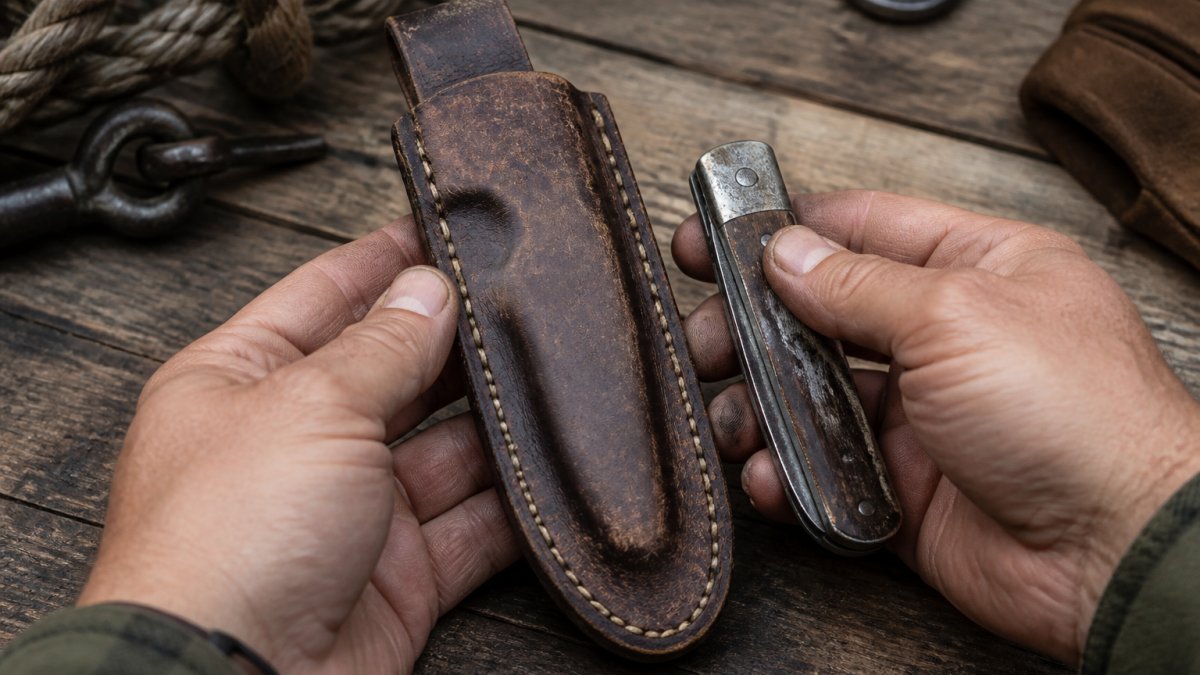
When you're selecting durable everyday carry tools, you're making a long-term investment. The best EDC gear improves with age: leather develops character, steel holds an edge, stitching stays tight.
Material Science and Corrosion Resistance
The material you choose determines how your gear handles moisture, salt, sweat, and time.
For leather goods, vegetable-tanned leather is the gold standard for durability. Unlike chrome-tanned leather, veg tan develops a rich patina, ages beautifully, and gets stronger with handling.
Titanium resists corrosion better than stainless steel and won't degrade in harsh environments. Carbon fiber is lighter than aluminum but requires careful handling to prevent splintering.
Construction Methods That Survive Hard Use
How a tool is assembled matters as much as what it's made from. The strongest stitching method for leather is the saddle stitch, two needles working from opposite ends, creating overlapping stitches that can't unravel if one thread breaks.
Full-tang construction (steel extending through the handle) distributes stress evenly and is stronger than partial tang.
Rivets, when used properly, outlast glue and screws. A well-set rivet creates a permanent connection that won't loosen or corrode.
Best Materials for Durable EDC Gear
Your choice of materials shapes how long your gear survives and how much maintenance it demands. Understanding trade-offs helps you pick gear that matches your actual use case, not just marketing claims.
Vegetable-Tanned Leather vs. Synthetic Options
Vegetable-tanned leather is the benchmark for durability in leather goods. Tanned using tannins from tree bark, it starts stiff and gradually softens, developing a unique patina that tells the story of how you've used it.
Synthetic leather is cheaper and requires zero maintenance, but it degrades after a few years, cracking and becoming brittle. For durable everyday carry tools lasting a decade or more, veg tan is the only choice.
Chrome-tanned leather is softer and breaks in faster than veg tan but doesn't develop character and is less durable long-term.
AnchorsAweighLeather uses premium veg tan leather in all sheaths and wallets.
Steel Grades and Edge Retention
Not all steel is created equal.
High-carbon steel (1095, 1085) holds a razor-sharp edge and is easy to sharpen but requires active maintenance to prevent rust.
Mid-range stainless alloys (154CM, S30V) balance edge retention and corrosion resistance, offering good performance with reasonable maintenance for most everyday carry tools.
The real difference in durability comes from heat treatment. A blade that's hardened too much becomes brittle and chips.
Fixed Blade vs. Folding Knife Utility for Everyday Carry
The choice between fixed and folding blades determines how your knife fits into your daily routine. Fixed blades are stronger but bulkier.
Fixed blades (full-tang) are inherently stronger with no pivot to fail.
Folding knives sacrifice some strength for portability, but a well-made folding knife with a solid locking mechanism is plenty durable for everyday carry tasks.
The best everyday carry knife depends on your actual use case. Office worker who occasionally needs to cut tape? Folding knife.
Multi-Tool Versatility and Functionality
A quality multi-tool consolidates 10+ tools into your pocket. Versatility comes with trade-offs, no single tool matches a dedicated tool, but having something beats having nothing.
Look for multi-tools with tools you'll actually use: pliers, blade, can opener, screwdriver bits, and a file cover 90% of real-world tasks.
The best multi-tools use stainless steel or high-carbon steel for the blade and locking mechanisms that prevent accidental closure. Avoid multi-tools with cheap springs, they wear out fast.
How to Clean Your Leather Knife Sheath and Carry Gear
Leather doesn't clean itself. Regular maintenance prevents dirt buildup, extends the life of your gear, and keeps it looking sharp. The key is routine, small efforts frequently beat emergency interventions.
Routine Cleaning for Long-Term Preservation
Wipe down your leather sheath or wallet every few weeks with a soft, dry cloth to remove dust.
Alta Edition Minimalist Wallet, Minimalist Wallet, Wallet, EDC →
For deeper cleaning, use a soft brush with a leather cleaner designed for vegetable-tanned leather, working in small circles.
After cleaning, condition your leather with neatsfoot oil or a quality leather conditioner every 3-6 months. Apply sparingly, too much oil darkens the leather and makes it sticky.
Treating Stains and Water Damage
Fresh stains are easier to remove than old ones. If you spill something on your leather, blot immediately with a dry cloth.
For water stains, let the leather dry completely at room temperature, then condition to restore suppleness. Water stains often fade as the leather ages.
For stubborn stains (ink, blood, or deep dirt), test a cleaner on a hidden area first. Leather is forgiving, but some cleaners can lighten or discolor the surface.
EDC Maintenance Tips for Extended Longevity
The difference between gear that lasts 3 years and gear that lasts 30 comes down to maintenance discipline. You don't need to do much, but you need to do it consistently.
Honing and Sharpening Schedules
A sharp blade is safer and more pleasant to use than a dull one. Honing (realigning the edge) takes 30 seconds and should happen monthly if you use your knife regularly.
Use a honing steel or ceramic rod for monthly maintenance to realign the edge without removing metal.
Most pocket knives are sharpened at 15-20 degrees per side. Consistency is more important than perfection, sharpen at the same angle every time.
Pivot Tension and Locking Mechanism Care
For folding knives, the pivot point is critical. Too loose and the blade wobbles; too tight and it's hard to deploy and wears faster.
Check pivot tension monthly and tighten slightly if loose. Don't over-tighten, or you'll strip the threads or damage the pivot.
Locking mechanisms (liner locks, frame locks, axis locks) should engage firmly and require intentional pressure to disengage.
Portability and Weight Considerations
Everyday carry is a balance between capability and burden. A tool you don't carry because it's too heavy is useless.
Most people can comfortably carry 2-4 pounds of gear. A quality knife sheath (4-6 oz), wallet (3-5 oz), multi-tool (2-5 oz), and key holder (1-2 oz) reach the practical limit. Go heavier and you'll leave gear at home.

The best durable everyday carry tools are designed for minimalism. A single-blade pocket knife outperforms a heavy multi-tool for most tasks. A slim wallet beats a bulky organizer.
Weight distribution matters too. Gear that sits in a back pocket or on a belt distributes load differently than gear in a front pocket.
Budget-Friendly Durable EDC Essentials
You don't need to spend hundreds to build a durable EDC kit.
A quality pocket knife runs $30-80, a durable leather wallet $35-75, a multi-tool $25-100, and a leather sheath $30-50.
AnchorsAweighLeather offers budget-friendly options without compromising durability: the Alta Edition Minimalist Wallet ($40) uses premium veg tan leather and hand-stitched construction; the Leather Key Holder ($18) includes a 360-degree swivel snap claw; the Custom Leather Knife Sheath ($33) is hand-sewn using saddle stitch and fits most standard pocket knives.

The strategy is simple: invest in the tools you use daily and skip the rest.
| Item | Best Budget Pick | Price | Key Feature | Durability |
|---|---|---|---|---|
| Wallet | Alta Edition Minimalist | $40 | Veg tan, hand-stitched | 10+ years |
| Key Holder | Leather Key Fob | $18 | Swivel snap, neatsfoot oil | 8+ years |
| Knife Sheath | Custom Leather Sheath | $33 | Saddle stitch, fits 1.5" belt | 10+ years |
| Multi-Tool | Quality mid-range | $35-50 | Stainless steel, locking tools | 5-7 years |
Building durable everyday carry tools comes down to choosing quality materials, understanding construction methods, and maintaining your gear consistently.
Frequently Asked Questions
What materials make durable everyday carry tools last the longest?
Vegetable-tanned leather, stainless steel, carbon fiber, and titanium are the standout performers. Veg-tanned leather ages gracefully and gains character over time, while stainless steel resists corrosion without constant maintenance. Carbon fiber and titanium offer exceptional strength-to-weight ratios for tools that endure hard use. The key is matching the material to your environment, coastal climates demand corrosion-resistant options, while general outdoor use benefits from materials with natural patina development.
How do you maintain everyday carry gear to ensure longevity?
Regular maintenance extends EDC tool life significantly. For leather sheaths, clean with a soft cloth and allow air drying after exposure to moisture. For blades, hone the edge every few weeks and sharpen as needed based on use. Check pivot tension on folding knives monthly and adjust if deployment becomes sluggish. Inspect locking mechanisms for wear, and apply light oil to moving parts. Store gear in a dry environment to prevent rust and leather degradation.
Should I choose a fixed blade or folding knife for everyday carry?
Fixed blades offer superior edge retention, faster deployment speed, and full-tang construction that handles extreme stress without failure. Folding knives provide concealment, portability, and reduced bulk for minimalist carry. Choose fixed blades if you prioritize reliability and hard use; folding knives work better for professional or formal settings where a visible blade isn't appropriate. Many EDC enthusiasts carry both, a fixed blade for serious work and a folding knife for daily convenience.
What's the best way to clean a leather knife sheath without damaging it?
Start with a dry cloth to remove dust and debris. For light soiling, use a soft, damp cloth with mild soap and water, then dry immediately. Avoid submerging leather. For stubborn stains, apply a leather-specific cleaner following product instructions. After cleaning, condition the leather with a quality leather conditioner to restore suppleness. Allow the sheath to air dry completely before storing your knife. This routine prevents mold, maintains flexibility, and extends the sheath's functional life.
0 comments