
Table of Contents
- What Makes an Everyday Carry Flashlight Reliable
- Understanding EDC Flashlight Lumens and Brightness Output
- Choosing Between Rechargeable EDC Flashlight Options and Disposable Batteries
- EDC Flashlight Battery Types: What Works Best for Daily Carry
- Durability and Build Quality: The Reliability Checklist
- Waterproof EDC Flashlight Features and Water Resistance Standards
- Size, Weight, and Carry Options for Practical EDC Use
- Frequently Asked Questions
Last Updated: October 5, 2026
What Makes an Everyday Carry Flashlight Reliable
A reliable everyday carry flashlight combines durability, consistent light output, and practical design for daily use. At AnchorsAweighLeather, we understand that gear you carry every day needs to work when it matters most. Reliability means a flashlight won't fail when you need it, holds up to drops and rough handling, and delivers predictable performance over months or years of use.
The best EDC flashlight balances brightness with runtime. It fits your pocket without weighing you down. The controls work smoothly in the dark. Most importantly, it survives the wear and tear of daily life.
What separates a reliable everyday carry flashlight from a disposable one? Build quality. Water resistance. A design that doesn't break after one drop. Battery choice matters too. A flashlight with poor thermal management will dim quickly under stress. One with a cheap switch will fail after a few months of pocket carry.
Understanding EDC Flashlight Lumens and Brightness Output
Lumens measure the total light a flashlight produces. An everyday carry flashlight typically ranges from 100 to 1,000 lumens depending on the model and intended use.
Here's what matters: lumens alone don't tell the whole story. A 500-lumen flashlight is bright enough for most daily tasks. Searching a dark room. Reading in low light. Signaling for help. Most people don't need 1,000 lumens for pocket carry.
Peak lumens versus sustained output. Manufacturers advertise peak brightness, the light output in the first few seconds of use. In real-world carry, sustained brightness matters more.
Thermal step-down and brightness management. High-output flashlights generate significant heat. Quality designs use aluminum bodies and internal thermal sensors to manage heat and prevent damage. When a flashlight gets too hot, it automatically reduces brightness to protect the LED and battery. This step-down is a feature, not a failure.
Candela and beam throw. Lumens measure total light output; candela measures beam intensity and how far that light travels. A tight, focused beam with high candela throws light 100+ feet. A wide beam with lower candela illuminates a large area but doesn't reach far.
Consider your typical use cases and how long you'll use the light continuously:
- Close-range work (reading, finding keys, 30 seconds or less): 100-300 lumens, sustained output less critical
- General outdoor use (hiking, checking property, 2-5 minutes): 300-600 lumens, sustained output should stay above 70% of peak
- Search and rescue scenarios (long-distance visibility, 10+ minutes): 600+ lumens, thermal management and sustained brightness essential
Runtime versus brightness trade-off. A flashlight set to maximum brightness drains the battery in 1-3 hours. Most EDC users run their flashlights on medium brightness (50-70% output) for daily tasks, which extends runtime to 8-20 hours depending on battery capacity. Lower brightness modes can run for 30+ hours.
The real question is whether brightness and thermal performance match your actual needs and use patterns. Test a flashlight's sustained output by running it on high for 5 minutes and observing whether it dims noticeably. Read user reviews that mention real-world brightness after extended use, not just manufacturer specifications.
Choosing Between Rechargeable EDC Flashlight Options and Disposable Batteries
Rechargeable batteries offer convenience and lower long-term cost. Disposable batteries provide simplicity and don't require charging infrastructure.
A rechargeable EDC flashlight eliminates the need to buy new batteries constantly. You charge it at home, at work, or in your vehicle. Over a year, this saves money and reduces waste. The downside: you need access to a charger. If you forget to charge before a trip, you're stuck.
Disposable batteries work anywhere. No charging required. Just replace them and go. The cost adds up over time, especially if you use your everyday carry flashlight frequently. Battery availability can be an issue in remote areas.
The practical choice depends on your lifestyle:
- Choose rechargeable if you have reliable access to power and use the light regularly
- Choose disposable if you travel often or want zero charging hassle
- Choose hybrid (a flashlight that accepts both) if you want maximum flexibility
Many serious EDC users keep a rechargeable as their primary light and carry disposable batteries as backup. This gives you the best of both worlds.
EDC Flashlight Battery Types: What Works Best for Daily Carry
Battery format affects size, weight, and availability. The most common types for everyday carry flashlights are AA, AAA, CR123A, and 18650 lithium-ion cells.
AA batteries are everywhere. Gas stations, grocery stores, convenience stores. Cheap and reliable. An AA flashlight is slightly larger and heavier than AAA but still pocketable. Runtime is longer than AAA for the same brightness level.
AAA batteries fit smaller flashlights. Lighter and more compact. The tradeoff: shorter runtime and less brightness. Good for backup lights or keychain models.
CR123A batteries are single-use lithium cells. Expensive but reliable. They handle extreme temperatures better than alkaline batteries. Common in tactical flashlights.
18650 lithium-ion cells power most rechargeable EDC flashlights. Rechargeable. High capacity. They need a dedicated charger and shouldn't be left in a drawer for months. Great if you use the light regularly.
For everyday carry, AA or AAA batteries win on availability. You can replace them anywhere. A rechargeable 18650 flashlight wins on convenience if you use it frequently. CR123A works for specialized applications but costs more over time.
The best EDC flashlight battery type matches your actual carry pattern. If you use the light weekly, rechargeable makes sense. If you carry it but rarely use it, disposable batteries won't drain sitting in your pocket.
Durability and Build Quality: The Reliability Checklist
Build quality determines how long your everyday carry flashlight survives real-world use. A reliable EDC flashlight passes these durability tests.
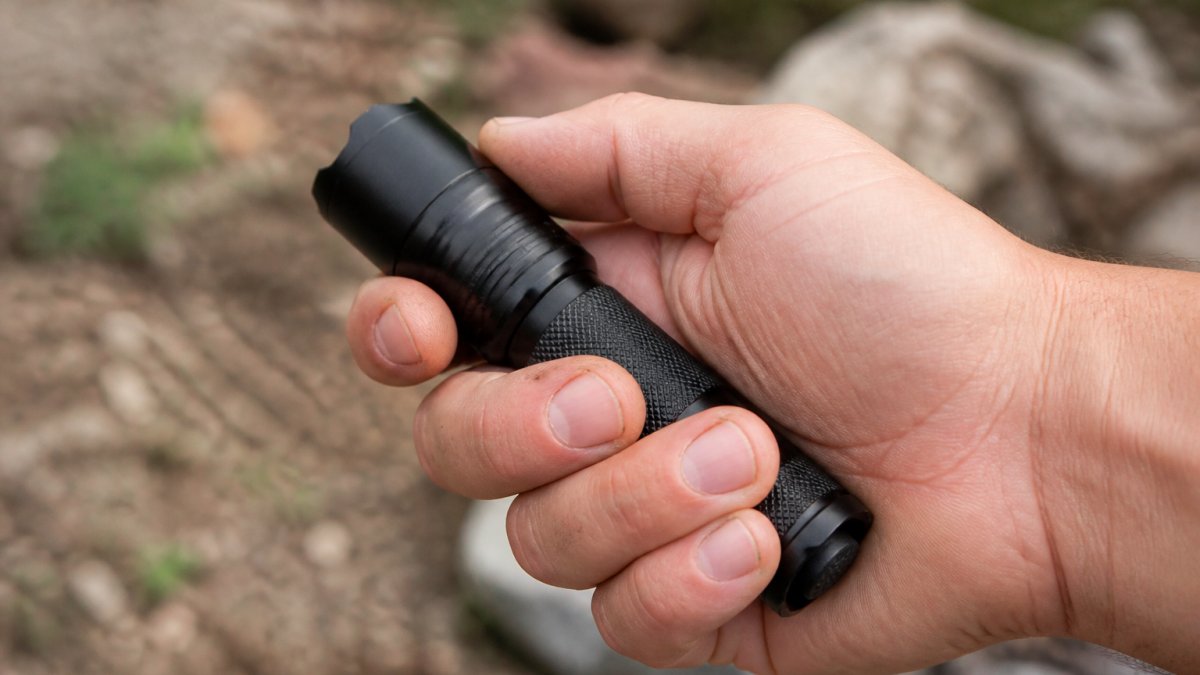
Check the material. Aluminum bodies hold up better than plastic. Anodized aluminum resists corrosion and scratches. Stainless steel components won't rust. Avoid cheap plastic housings that crack easily.
Impact resistance matters. Drop test your flashlight. A reliable EDC flashlight survives 3-foot drops onto concrete without breaking. Some brands test to 10 feet. Read the specs or watch real-world reviews.
Warranty coverage signals confidence. A manufacturer that offers a strong warranty believes in their product. Short warranties suggest the company doesn't expect long-term reliability.
Switch durability gets overlooked. The on-off button gets used thousands of times. A cheap switch fails after months. Quality switches use metal contacts and precise engineering.
Thermal management prevents brightness step-down. A reliable everyday carry flashlight manages heat so it doesn't dim under sustained use. Look for aluminum bodies that dissipate heat effectively.
Bezel design protects the lens. A raised bezel keeps the lens from direct contact with hard surfaces. Scratched lenses reduce light output.
Waterproof EDC Flashlight Features and Water Resistance Standards
Water resistance ratings tell you how much moisture a flashlight handles. Not all everyday carry flashlights are waterproof, and ratings vary widely.
IPX4 rating means splash resistance. Fine for rain and accidental water exposure. Not suitable for submersion.
IPX7 rating means immersion to 1 meter for 30 minutes. Your flashlight survives brief submersion. This works for most EDC users.
IPX8 rating means submersion beyond 1 meter. Professional-grade protection. Often rated for specific depths (10 meters, 30 meters, etc.). Overkill for pocket carry unless you work near water.
A reliable everyday carry flashlight should have at least IPX4 rating. This handles daily rain, spilled drinks, and accidental puddle splashes. IPX7 adds serious water protection without excessive weight or cost.
Seals matter as much as ratings. O-rings around the battery compartment and lens keep water out. Check that seals are replaceable. Over time, rubber degrades.
For most users, IPX7 is the sweet spot. Your flashlight survives wet conditions without the bulk of a fully submersible design.
Size, Weight, and Carry Options for Practical EDC Use
An everyday carry flashlight must fit your pocket or bag without becoming a burden. Size and weight determine whether you'll actually carry it daily. But the best choice depends on matching the flashlight to your specific carry style and how often you actually use it.
Decide your primary carry method first. This choice drives everything else. Pocket carry demands a compact, lightweight design (3-4 inches, under 3 ounces). Bag or backpack carry allows larger lights (4-5 inches, up to 5 ounces). Holster carry prioritizes protection and aesthetics over size.
Match brightness to carry method. Pocket-carry lights often max out at 300-500 lumens because larger batteries and heat-management designs make them too bulky. Bag-carry lights can reach 800+ lumens without weight penalty.
Assess your actual use frequency. This determines whether rechargeable or disposable batteries make sense and how much you should invest in durability. If you use your flashlight multiple times per week, rechargeable 18650 or USB-C charging is convenient and cost-effective over 2-3 years.
Carry clip design and pocket compatibility. A quality carry clip should rotate 360 degrees for different carry angles (tip-up, tip-down, horizontal). The clip should grip securely without scratching your pocket or gear. Test the clip on your actual pocket or bag before committing.
Weight distribution and daily comfort. A 5-ounce flashlight in a shirt pocket feels heavier than a 5-ounce light in a cargo pocket or bag. Pocket carry weight should stay under 3 ounces to avoid noticeable sagging or discomfort after 8+ hours.
Holster and protective carry. A leather or nylon holster adds 1-2 ounces but protects your flashlight from scratches, impacts, and pocket lint. Holster carry works well if you already carry other gear on a belt or bag.
Decision framework by lifestyle:
- Office or urban professional: Pocket carry, 3-4 inches, 100-300 lumens, AA or rechargeable, quality clip. Emphasis on discretion and professional appearance.
- Outdoor enthusiast or tradesperson: Bag or holster carry, 4-5 inches, 300-800 lumens, rechargeable or AA depending on use frequency. Emphasis on brightness and runtime.
- Emergency preparedness: Bag carry with multiple backup lights, 300-600 lumens primary light, disposable batteries for redundancy. Emphasis on reliability and availability.
- Keychain or minimalist: Keychain attachment, 2-3 inches, 50-150 lumens, disposable battery. Emphasis on always-on-you backup, not primary tool.
- Vehicle or home: No strict size limit, 600-1000 lumens, rechargeable preferred. Emphasis on brightness and sustained output for search tasks.
The best size depends on your carry style and actual use patterns. Test your everyday carry flashlight in your real pocket or bag for at least a week. If it feels bulky or you stop carrying it after a few days, it won't become a reliable daily habit. A slightly less bright but genuinely pocketable light beats a powerful light that stays at home.
Frequently Asked Questions
How many lumens do you need in an everyday carry flashlight?
For everyday carry, 100-500 lumens covers most tasks: reading, finding dropped items, and close-range work. High-lumen models (1000+) are overkill for daily use and drain batteries faster. Pick based on your primary use, desk work needs less than outdoor activities. Most reliable EDC flashlights balance brightness with runtime rather than chasing maximum lumens.
Are rechargeable EDC flashlights reliable for everyday carry?
Yes, modern rechargeable EDC flashlights are dependable if you choose quality brands with proven track records. The advantage is eliminating battery replacement costs and waste. The trade-off: you must remember to charge it regularly. USB-rechargeable models offer convenience, but always verify the charging port is durable and the battery holds capacity after 500+ charge cycles. Check warranty coverage for the battery specifically.
What battery type is best for an everyday carry flashlight?
AA and AAA batteries are the most practical for EDC because replacements are universally available and inexpensive. CR123A batteries offer higher energy density in compact flashlights but cost more per unit. Rechargeable 18650 cells work well in dedicated rechargeable models but require a charger and aren't as convenient for quick swaps. Choose based on your carry style and whether you prioritize convenience or minimal size.
What features make an EDC flashlight durable?
Look for aluminum or stainless steel bodies, water resistance, impact resistance (tested from at least 1 meter), and a strong warranty. Reliable EDC flashlights have sealed switches to prevent moisture intrusion, textured grips for wet conditions, and thermal management to prevent brightness step-down under sustained use. Test the carry clip and controls before buying, durability includes usability, not just materials.
0 comments