
Last Updated: October 24, 2026
Quick Summary
Leather holsters skin contact works better than synthetic alternatives because leather breathes, molds to your frame, and absorbs moisture instead of trapping sweat against your skin. The material adapts to your body rather than forcing your body to adapt to it, preventing the irritation and pressure points that rigid polymers create during extended wear.
- Leather is naturally porous and absorbs sweat gradually, while Kydex traps moisture and creates pressure points that cause chafing.
- Leather holsters become more comfortable as they break in over two to four weeks, conforming to your body's unique shape.
- Full-grain leather is superior to bonded leather for skin contact because it breathes better and develops character over time.
- Leather adapts to temperature changes without becoming brittle in cold or losing rigidity in heat like Kydex does.
- Custom leather holsters molded to your firearm and carry position eliminate discomfort from universal designs that don't fit properly.
Table of Contents
- Why Leather Holsters Are Better for Skin Contact
- Leather vs. Kydex Holster: Comfort and Durability Compared
- Leather Holster Break-In: What to Expect in the First Weeks
- How to Clean a Leather Holster for Hygiene and Longevity
- Moisture, Sweat, and Temperature: How Leather Adapts to Your Body
- Full-Grain Leather vs. Bonded Leather: Which Feels Better Against Skin
- Getting Your Custom Leather Holster Fitted for Maximum Comfort
- Frequently Asked Questions
Why Leather Holsters Are Better for Skin Contact
Leather holsters feel different against your body than synthetic alternatives because leather holsters skin contact works better than rigid polymers. The material breathes, molds to your frame, and doesn't create the rigid pressure points that can leave marks or cause irritation after hours of wear. At AnchorsAweighLeather, we've handcrafted leather holsters for everyday carry since 2017, and the feedback is consistent: leather works better for extended skin contact because it adapts to your body rather than forcing your body to adapt to it.
The reason comes down to material properties. Leather is naturally porous. It absorbs moisture, releases it gradually, and doesn't trap sweat against your skin the way hard polymers do. Over time, leather holsters actually become more comfortable as they break in and conform to your body's unique shape. This isn't just about comfort, it's about wearability. A holster that irritates your skin after four hours won't get carried consistently, and an inconsistent carry defeats the purpose of having one.
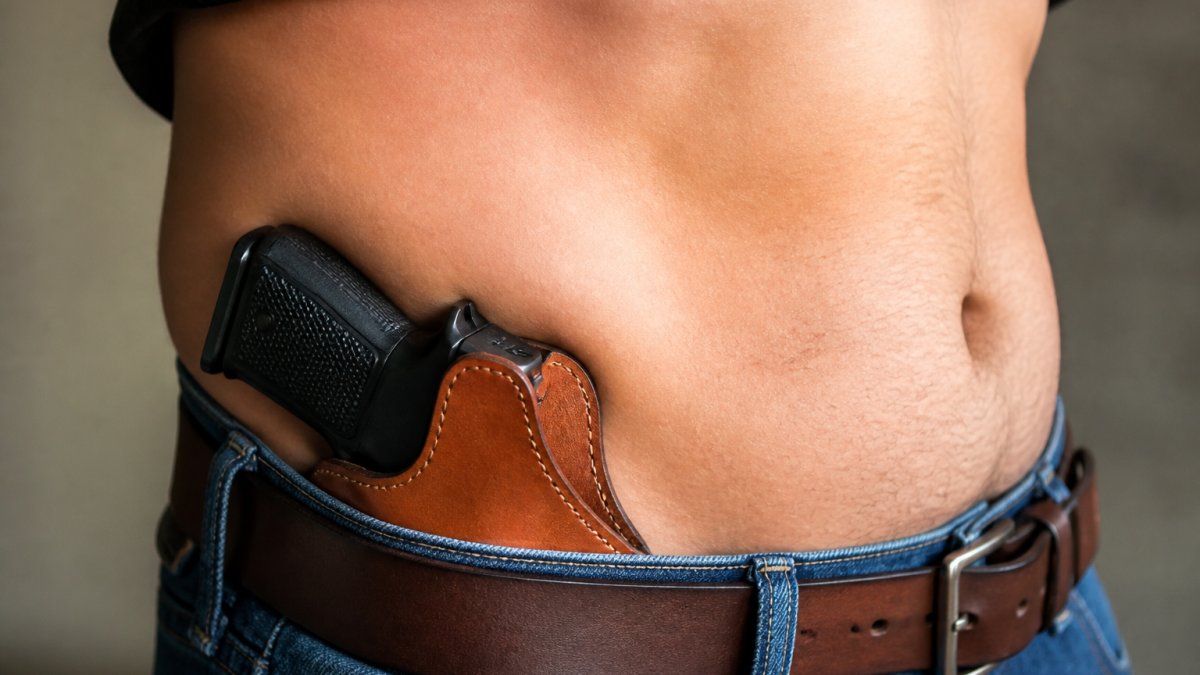
Leather also handles temperature changes better than rigid synthetics. In summer heat, leather stays cooler against skin because it doesn't trap heat the way plastic does. In winter, it doesn't become brittle or uncomfortable. This adaptability is why leather has remained the standard for concealed carry for decades, even as newer materials have emerged.
Leather vs. Kydex Holster: Comfort and Durability Compared
The comparison between leather and Kydex comes down to what you're optimizing for. Kydex, a thermoplastic acrylic-polyvinyl chloride composite, offers excellent retention and doesn't deform under pressure. It's durable, easy to clean, and maintains its shape indefinitely. But that rigidity is exactly the problem when the holster sits against your bare skin for eight hours a day.
Kydex holsters press hard edges and flat surfaces directly into your body. The material doesn't give. It doesn't breathe. And because it's non-porous, any moisture between the holster and your skin gets trapped, creating an environment where irritation develops. For appendix carry or inside-the-waistband positions where skin contact is unavoidable, this matters.
How Kydex Holster Skin Irritation Develops
Kydex irritation typically starts as minor discomfort and escalates if the holster stays in use. The hard plastic creates pressure points where it contacts your skin. Sweat accumulates in the gap between the holster and your body because the material won't absorb it. Within hours, you've got moisture trapped against skin under constant pressure, the exact conditions that cause chafing and irritation.
The problem compounds if you carry consistently. Your body develops red marks or raw spots where the holster's edges press. Many carriers report needing to switch to softer clothing or adjust their carry position to avoid the irritation. Some stop carrying altogether because the discomfort outweighs the security benefit.
Leather solves this at the material level. It absorbs sweat, releases it gradually, and the surface softens with use instead of staying rigid. Leather's ability to adapt to body contours and avoid retention issues that can develop as materials soften over time makes it a preferred choice for skin contact.
Leather and Kydex each excel in different areas, but their material properties create very different experiences against your skin.
| Material | Best For | Skin Contact Issue |
|---|---|---|
| Leather | Extended skin contact | Breathes, absorbs sweat, adapts to body |
| Kydex | Retention and durability | Rigid, traps moisture, creates pressure points |
Leather Holster Break-In: What to Expect in the First Weeks
New leather holsters feel stiff. This is normal and intentional. The leather starts firm to maintain retention and protect your firearm. Over the first two to four weeks of daily carry, the holster begins to soften and mold to your body.
During break-in, you might notice the holster feeling slightly uncomfortable at pressure points. This isn't a defect, it's the leather beginning to adapt. The material is breaking down internal fibers and conforming to your body's shape. By week three or four, most carriers report the holster feeling noticeably more comfortable than it did day one.
The break-in period also allows the leather to develop a patina. This natural aging process darkens the material slightly and creates a finish that's actually more resistant to wear than the original surface. A broken-in leather holster from AnchorsAweighLeather looks better and functions better than a new one.
Don't rush this process by forcing the holster to conform faster. Wear it daily, let your body heat and movement do the work, and the leather will adapt on its own timeline. Forcing it can compromise retention or damage the leather's structure.
How to Clean a Leather Holster for Hygiene and Longevity
Leather holsters need minimal maintenance, but regular cleaning extends their life and keeps them hygienic. Start by removing surface dirt with a soft, dry cloth. For deeper cleaning, use a slightly damp cloth with warm water and mild soap. Wipe down the entire holster, paying attention to seams and creases where dirt accumulates.
Never soak leather or use harsh chemicals. Water is fine in small amounts; excessive moisture can damage the material. After cleaning, let the holster air dry completely before carrying again. This usually takes two to four hours depending on humidity.
For how to clean a leather holster properly, detailed guidance on protecting your firearm's finish while maintaining the holster is essential. Smooth-lined interiors or smooth leather pockets are preferable to suede, which can trap dirt and debris more easily.
Once or twice a year, condition the leather with a leather conditioner designed for gun holsters. This keeps the material supple and prevents cracking. Apply a small amount, rub it in evenly, and let it absorb. Over-conditioning can make the leather too soft, so use restraint.
The HOSS IWB Leather Holster, CCW Holster, Leather Holster, Universal Holster →
Moisture, Sweat, and Temperature: How Leather Adapts to Your Body
Leather's porous structure is its advantage in moisture management. When you sweat, the leather absorbs the moisture instead of trapping it. As your body temperature drops or you move to a cooler environment, the leather releases that moisture gradually. This cycle prevents the buildup of sweat that causes irritation.
Synthetic materials like Kydex can't do this. Moisture stays trapped between the holster and your skin, creating an ideal environment for chafing and discomfort. In summer, this becomes a real problem. Leather stays cooler because it's not holding heat against your body.
Temperature changes also affect material durability differently. Leather becomes slightly more pliable in heat and slightly stiffer in cold, but these changes are gradual and reversible. Kydex can become brittle in extreme cold and lose rigidity in extreme heat. Neither of these is ideal for a holster that needs to maintain consistent retention across seasons.
For everyday carry in variable climates, leather's thermal stability is a genuine advantage. The material adapts without losing its core function.
Full-Grain Leather vs. Bonded Leather: Which Feels Better Against Skin
Not all leather is created equal. Full-grain leather, the highest quality option, includes the entire leather surface with all its natural characteristics. It's durable, develops character over time, and feels soft against skin even when new. Full-grain leather is what AnchorsAweighLeather uses for holsters like The HOSS IWB Leather Holster, priced at $60.50.

Bonded leather is a composite material made from leather scraps held together with adhesive. It's cheaper but inferior for skin contact. Bonded leather doesn't breathe as well, can delaminate over time, and lacks the natural softness of full-grain. For a holster that sits against your body, bonded leather will disappoint.
To understand the durability difference, explore full-grain versus top-grain leather durability and learn why full-grain is the standard for handcrafted holsters. Full-grain leather lasts decades with proper care. Bonded leather typically fails within a few years.
When choosing a leather holster for skin contact, specify full-grain. It costs more upfront but delivers better comfort, longevity, and performance. The investment pays for itself in years of reliable carry.
Getting Your Custom Leather Holster Fitted for Maximum Comfort
A properly fitted holster makes the difference between comfortable all-day carry and constant adjustment. Custom fit matters because firearms vary in size and shape, and your body's dimensions are unique. A universal holster might work, but a custom holster works better.
When ordering a custom holster, provide accurate information about your firearm model and your carry position. Appendix carry has different requirements than 3-5 o'clock carry. Left-handed carriers need different molding than right-handed ones. AnchorsAweighLeather's Custom Leather IWB Holster starts at $43.00 and is molded to your specific firearm.

Ask about holster lining options. A lined interior protects your firearm's finish and reduces noise. Some carriers prefer unlined leather for a thinner profile. Both are valid, it depends on your priorities.
During break-in, a custom holster will feel like it was made for you because leather holsters skin contact adapts as the leather molds to your firearm's shape and your body's contours simultaneously. The leather molds to your firearm's shape and your body's contours simultaneously. This dual adaptation is why custom leather holsters outperform off-the-shelf alternatives for skin contact comfort.
If you're left-handed or carry in an unconventional position, custom work eliminates the frustration of forcing a universal design to work for your needs. AnchorsAweighLeather responds to custom inquiries.
Leather holsters work better for skin contact because the material breathes, adapts to your body, and handles moisture the way synthetic alternatives cannot. If you carry daily and your holster touches skin, leather is the logical choice. AnchorsAweighLeather's handcrafted full-grain leather holsters, including the TEXAS REBEL IWB Conceal Carry Holster at $50.00, are built to last a lifetime and become more comfortable with every day of wear. With free shipping on orders over $100, you're investing in gear that performs when it matters.

Frequently Asked Questions
Are leather holsters more comfortable against bare skin than Kydex holsters?
Yes. Leather naturally molds to your body over time, creating a custom fit that feels softer and less rigid against skin. Kydex, a rigid synthetic plastic, maintains its hard shape and can create pressure points and chafing during long wear. Leather's flexibility and breathability make it the better choice for all-day comfort against bare skin, especially for inside-the-waistband carry where the holster contacts your body directly.
Does a leather holster absorb sweat, and is that a problem?
Leather does absorb moisture, but this is actually beneficial for skin contact. It wicks sweat away from your body rather than trapping it like plastic does, reducing the risk of skin irritation and bacterial growth. To maintain your holster, clean it regularly with a damp cloth and allow it to air dry. Conditioning with leather balm every few months keeps it supple and resistant to moisture damage while preserving its protective qualities.
What is the leather holster break-in period like?
Full-grain leather holsters typically require 1-2 weeks of regular wear to break in. During this time, the leather softens and begins conforming to your body and firearm. You may notice slight stiffness initially, but this decreases with daily use. The break-in period is normal and results in a custom-fitted holster that feels increasingly comfortable. After break-in, the leather reaches its optimal balance of retention and comfort.
How often should I clean a leather holster that touches my skin?
Clean your leather holster every 2-4 weeks if you wear it daily against bare skin. Use a slightly damp cloth to wipe away sweat, dirt, and oils, then let it air dry completely. For deeper cleaning, use a leather cleaner designed for firearms holsters. Regular maintenance prevents salt buildup from sweat, keeps the leather from becoming stiff or cracked, and extends the life of your holster while maintaining hygiene and comfort against your skin.

0 comments