
Table of Contents
- What You'll Need Before Cleaning Your Full Grain Leather Wallets
- Step 1: Empty the Wallet and Remove Loose Debris
- Step 2: Wipe Away Surface Dust and Dirt
- Step 3: How to Remove Stains from Leather
- How to Condition a Leather Wallet After Cleaning
- How to Dry a Wet Leather Wallet
- Choosing the Right Leather Wallet Cleaner
- Common Mistakes to Avoid When Cleaning Full Grain Leather
- Frequently Asked Questions
Last Updated: October 10, 2026
What You'll Need Before Cleaning Your Full Grain Leather Wallets
Gather these supplies before starting to clean full grain leather wallets:
Here's what to have on hand:
- Soft microfiber cloth or cotton cloth
- Damp cloth (plain water)
- Mild soap or leather-specific cleaner
- White vinegar (optional, for tough stains)
- Small bowl of lukewarm water
- Cotton balls or Q-tips for detail work
- Leather conditioner
- Dry towel for final drying
Avoid harsh chemicals and abrasive materials. At AnchorsAweighLeather, we craft wallets from premium vegetable-tanned leather that improves with age. Proper maintenance keeps that natural beauty intact.

Step 1: Empty the Wallet and Remove Loose Debris
Start simple. Empty everything from your wallet completely. Remove all cash, cards, and receipts. This gives you full access to every surface and pocket.
Removing Loose Debris from Exterior and Seams
Shake out loose debris gently by tapping the wallet against a trash can. Use a soft brush or old toothbrush to dislodge stubborn particles from card slots and seams where dust accumulates.
Cleaning the Interior: Card Slots, Seams, and Lining
The interior collects dust from your pocket, lint from cards, and paper fragments in card slots and lining.
For card slots: Fold a soft cloth into a thin strip and slide it gently into each slot, moving back and forth to dislodge dust. Don't stretch the slot. A soft toothbrush also works, brush gently inside each slot.
For seams: Use a Q-tip or soft cloth corner to wipe along each seam, removing surface dust from the leather.
For the lining: Use a dry cloth to wipe gently. Avoid moisture, water can cause shrinking or separation. If soiled, use a barely damp cloth and pat dry immediately.
For stubborn debris: Use a soft brush or cloth with gentle, repeated motions. Never pick with fingernails or sharp objects.
Step 2: Wipe Away Surface Dust and Dirt
Use a dry microfiber cloth first, wiping with gentle circular motions from top to bottom. Let the cloth do the work without pressing hard.
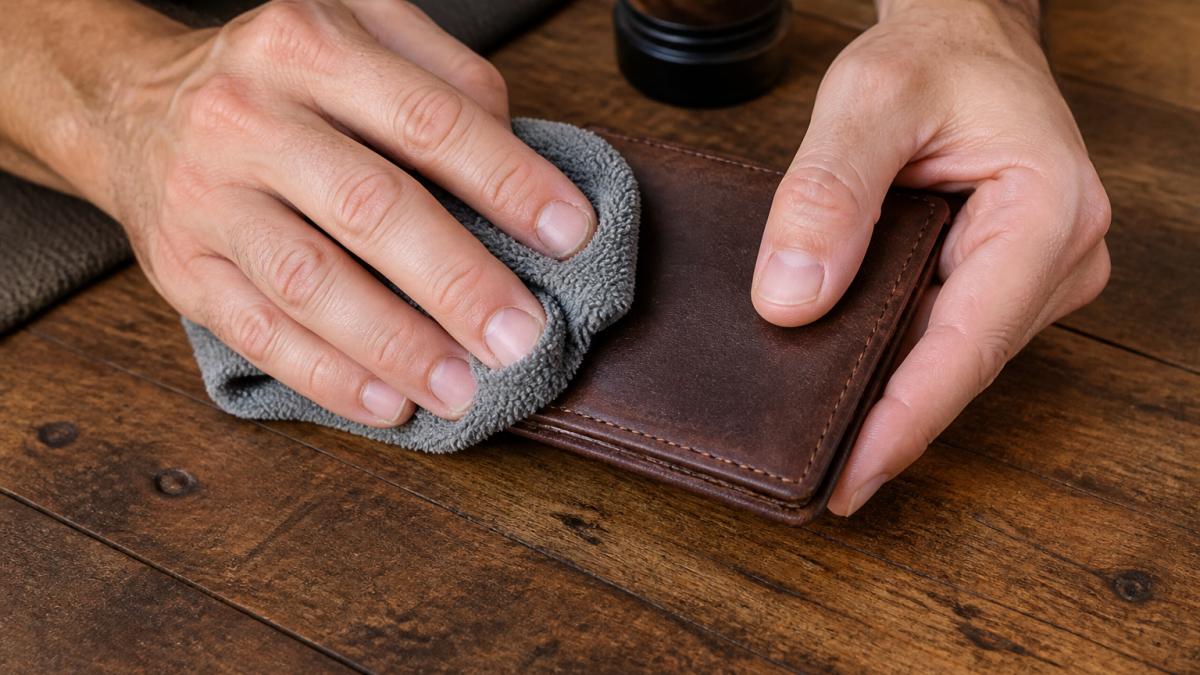
Dampen a cloth slightly with plain water and wipe again to remove remaining dust. Pat dry immediately with a clean towel.
Focus on high-touch areas where hands contact the leather most, as these accumulate oils and dirt faster.
Step 3: How to Remove Stains from Leather
Stains happen. The good news: most come out with the right approach. The method depends on what caused the stain.
Water Marks and Light Stains
Water marks appear as dark spots or rings. Mix mild soap with lukewarm water and gently wipe the stain in circular motions without scrubbing aggressively.
Pat dry immediately. Repeat if needed. The leather may look darker while wet but fades as it dries.
Grease and Oil Stains
Grease stains penetrate deeper. Blot with a clean, dry cloth to remove surface grease without pushing it deeper.
For stubborn grease, dampen a cloth with white vinegar and wipe gently. Follow with plain water to remove residue and pat dry.
Test vinegar on a hidden area first. Some leather finishes react to vinegar. Your wallet's interior is a safe spot for testing.
Ink and Stubborn Marks
Ink marks are toughest. Dampen a Q-tip with white vinegar or diluted rubbing alcohol and dab repeatedly in the same spot.
Switch to a fresh Q-tip and continue until the mark fades. Follow with plain water.
Permanent markers are harder to remove. The goal is to fade them significantly.
How to Condition a Leather Wallet After Cleaning
Conditioning restores moisture and protects leather. Wait until the wallet is completely dry (at least 24 hours) before conditioning.
Apply conditioner sparingly with a soft cloth in circular motions. Less is more, nourish the leather without soaking it.
Focus on areas that show wear: corners, edges, and the back where the wallet sits in your pocket.
Condition every three to six months for everyday wallets. Dry climates need conditioning every three months; humid environments need it less frequently.
How to Dry a Wet Leather Wallet
Accidents happen. Your wallet gets rained on or falls in water. The drying process matters enormously.
Pat the wallet dry with a clean towel using gentle pressure only. Don't squeeze or wring it.
Place the wallet in a well-ventilated area at room temperature with card slots slightly open. Never use direct heat, it causes cracking and shrinkage.
A wet wallet needs 48 to 72 hours to dry completely. Check progress after 24 hours, the leather should feel slightly damp but not wet.
Once dry, condition the wallet. Water removes natural oils from leather. Conditioning restores them. This prevents the wallet from becoming stiff or brittle.
Mens leather wallet, leather wallet, leather billfold →
| Drying Scenario | Time Required | Best Practice |
|---|---|---|
| Light dampness | 12-24 hours | Air dry at room temperature |
| Moderate wetness | 24-48 hours | Pat dry, open slots, ensure ventilation |
| Soaked | 48-72 hours | Pat dry, separate layers slightly, condition after |
Choosing the Right Leather Wallet Cleaner
Not all cleaners work for full grain leather wallets. Full grain leather is more porous and absorbent than corrected or bonded leather, so products can penetrate and stain it permanently.
Why Full Grain Leather Requires Careful Product Selection
Full grain leather has no protective coating, so cleaners soak in rather than sit on top. This is why it develops character over time, but also why wrong products cause lasting damage.
Safe Cleaning Products for Full Grain Leather
Water and mild soap are safest. Use plain castile soap or unscented hand soap. Mix one drop with one cup of lukewarm water.
White vinegar cuts through oils and grease but is acidic and can lighten finishes. Always test first. Use only on stains, not routine cleaning. Use a 1:1 ratio with water.
Leather conditioners labeled for vegetable-tanned leather are appropriate after cleaning. These typically contain natural oils like mink oil or neatsfoot oil. Avoid silicone-based conditioners, which clog the leather's pores and create a plastic-like feel over time. Read the label: if it lists silicone, dimethicone, or heavy waxes as primary ingredients, skip it.
Saddle soap is effective but heavy-duty. It's designed for work boots and saddles that need deep conditioning. For wallet maintenance, it's overkill and can leave residue. Reserve saddle soap for occasional deep cleaning (two to three times yearly at most).
Products to Avoid
Bleach and ammonia-based cleaners strip color from leather and weaken the fibers. Never use these, even diluted.
Acetone and rubbing alcohol (above 70% concentration) are solvents that dissolve leather's natural oils and can cause cracking. Diluted rubbing alcohol (50% or less) is acceptable for ink stains in a pinch, but it should be a last resort.
Silicone-based products (furniture polish, car wax) leave a waxy buildup that prevents the leather from breathing. Over time, the leather becomes stiff and cracks.
Harsh commercial leather cleaners with surfactants and chemical fragrances often contain ingredients designed for synthetic materials. They strip natural oils faster than mild soap and leave residue that attracts dirt.
How to Spot-Test a Cleaner Before Using It
Before applying any product to visible surfaces, test it on a hidden area. This takes two minutes and prevents costly mistakes.
-
Choose a test spot. The interior of a card slot, the back of the wallet where it touches your pocket, or the underside of a flap all work. Pick a spot you won't see in normal use.
-
Apply a small amount. Use a cotton ball or Q-tip. Dampen it with the cleaning solution (not soaked, just damp). Dab the test area gently.
-
Wait 10 minutes. Let the product sit. This shows whether it will lighten, darken, or stain the leather.
-
Wipe and dry. Use a clean, damp cloth with plain water to remove the test product. Pat dry with a towel.
-
Inspect in daylight. Check whether the test area matches the surrounding leather. If the color changed, the product is not safe for your wallet. If it matches, proceed with confidence.
This test is especially important for vinegar, alcohol, and any product you've never used on leather before. It takes minimal time and eliminates guesswork.
Common Mistakes to Avoid When Cleaning Full Grain Leather
Most damage comes from good intentions applied incorrectly. Know what not to do.
Soaking or over-wetting. Water is leather's enemy in large quantities. A damp cloth is fine. Submerging your wallet is not.
Using harsh cleaners. Bleach, acetone, and strong solvents destroy leather. These strip color and damage the fibers. Stick with mild options.
Applying heat to dry. Hair dryers, ovens, and radiators cause cracking and shrinkage. Air drying takes longer but preserves the leather. Patience wins here.
Ignoring interior care. The wallet's inside matters as much as the outside. Dust and debris accumulate in card slots and seams.
Skipping the conditioner. Cleaning removes moisture. Conditioning restores it. Skip this step and your wallet becomes stiff and brittle. Conditioning is not optional, it's essential maintenance.
Rubbing aggressively. Circular motions with light pressure work. Hard scrubbing damages the leather finish. Gentle, patient work produces better results every time.
| Mistake | Why It Happens | The Fix |
|---|---|---|
| Over-wetting | Thinking more water = cleaner | Use a damp cloth, not soaked |
| Harsh chemicals | Assuming stronger = better | Stick with mild soap and water |
| Heat drying | Wanting faster results | Air dry at room temperature |
| Skipped conditioning | Forgetting maintenance | Condition every 3-6 months |
| Aggressive rubbing | Trying to remove stains faster | Use gentle, patient motions |
A common mistake when caring for clean full grain leather wallets is treating leather like synthetic material. Leather is skin.
Keeping your full grain leather wallet clean extends its life dramatically. The process is straightforward: empty it, wipe it, treat stains, condition it, and dry it properly.
AnchorsAweighLeather wallets are built from premium vegetable-tanned leather that improves with age. Our handcrafted billfold and roper wallets start at $45 and include free personalization.

Frequently Asked Questions
Can you use soap and water to clean a leather wallet?
Yes, but with caution. Use only mild soap mixed with minimal water on a damp cloth. Full grain leather can absorb moisture, so avoid soaking or over-wetting. Test on a hidden area first. For vegetable-tanned leather like AnchorsAweighLeather wallets, a lightly dampened cloth with a few drops of mild soap works well for general cleaning. Always pat dry immediately after.
How often should you clean and condition a leather wallet?
Clean your wallet as needed when you notice dust or stains, typically every few weeks with regular use. Condition every 3 to 6 months to maintain the leather's suppleness and protect the finish. Full grain leather develops character with age, but regular conditioning prevents cracking and extends durability. Handcrafted wallets like those from AnchorsAweighLeather benefit from consistent maintenance to preserve their quality.
What should you avoid when cleaning a leather wallet?
Avoid harsh cleaners, solvents, and bleach, which damage leather finish and color. Don't soak the wallet or use excessive water. Never use a washing machine or dryer. Avoid high heat sources when drying. Don't scrub aggressively or use rough materials. Steer clear of silicone-based products that leave residue. For full grain leather, stick to gentle methods and products designed specifically for leather care.
How do you dry a leather wallet after accidental soaking?
Remove excess water by gently pressing with a soft cloth. Stuff the wallet loosely with unprinted paper towels to absorb interior moisture, changing them every few hours. Place the wallet in a warm, dry room away from direct heat, sunlight, or air vents. Air dry at room temperature for 24 to 48 hours, depending on how wet it became. Never use a hair dryer or place it near a heater, as rapid drying causes cracking in full grain leather.
0 comments