

Best Appendix Carry Leather Holsters: 2026 Guide
Table of Contents
- What Is Appendix Carry (AIWB) and Why Leather?
- How We Evaluated the Best Appendix Carry Leather Holsters
- Top Appendix Carry Leather Holsters Compared
- Leather vs. Kydex vs. Hybrid: Which Wins for AIWB?
- Custom Leather IWB Holster: When to Order One
- Leather Holster Maintenance Tips for Daily Carry
- Which Appendix Carry Leather Holster Should You Choose?
- Conclusion
Last Updated: August 26, 2026
What Is Appendix Carry (AIWB) and Why Leather?
Appendix inside the waistband carry positions your firearm at the 1 to 2 o'clock position, directly in front of the hip. The draw is fast, the gun stays close to your centerline, and concealment under a t-shirt is achievable. For seated carry, appendix keeps the pistol accessible rather than pinned against a car seat.
A well-made leather AIWB holster conforms to your body over time in ways no polymer shell can replicate. Full-grain leather develops a custom fit through use, distributes pressure across a wider surface, and eliminates hard edges that make all-day carry uncomfortable. Quality molded leather, properly broken in and maintained, holds friction fit reliably.
According to the Bureau of Alcohol, Tobacco, Firearms and Explosives concealed carry resource page, holster selection is one of the most consequential decisions a concealed carrier makes. Trigger guard coverage, retention, and reholstering safety are non-negotiable criteria regardless of material.
How We Evaluated the Best Appendix Carry Leather Holsters
Every holster in this guide was assessed against three criteria: retention and trigger guard coverage, concealability with cant adjustment, and reholstering safety.
Retention and Trigger Guard Coverage
Full trigger guard coverage is the baseline. Passive retention in a leather holster comes from molded leather pressing against the pistol's frame and slide. The holster should require deliberate upward pressure to draw, and the pistol should click audibly when reholstered. If the gun drops in with no resistance, retention is insufficient for AIWB carry.
Concealability, Cant Adjustment, and Ride Height
Printing is the enemy of concealed carry. A good appendix leather holster manages printing through ride height and cant. A concealment wing or claw, attached to the holster and pressing against the inside of the belt, rotates the grip inward, reducing profile under a cover garment.
Reholstering Safety and Reinforced Mouth
Reholstering is statistically where most negligent discharges happen during holstered carry. A leather holster without a reinforced mouth collapses when the pistol is drawn, making one-handed reholstering dangerous. Metal-reinforced mouths and extra-layer leather stiffening both solve this problem.
Top Appendix Carry Leather Holsters Compared
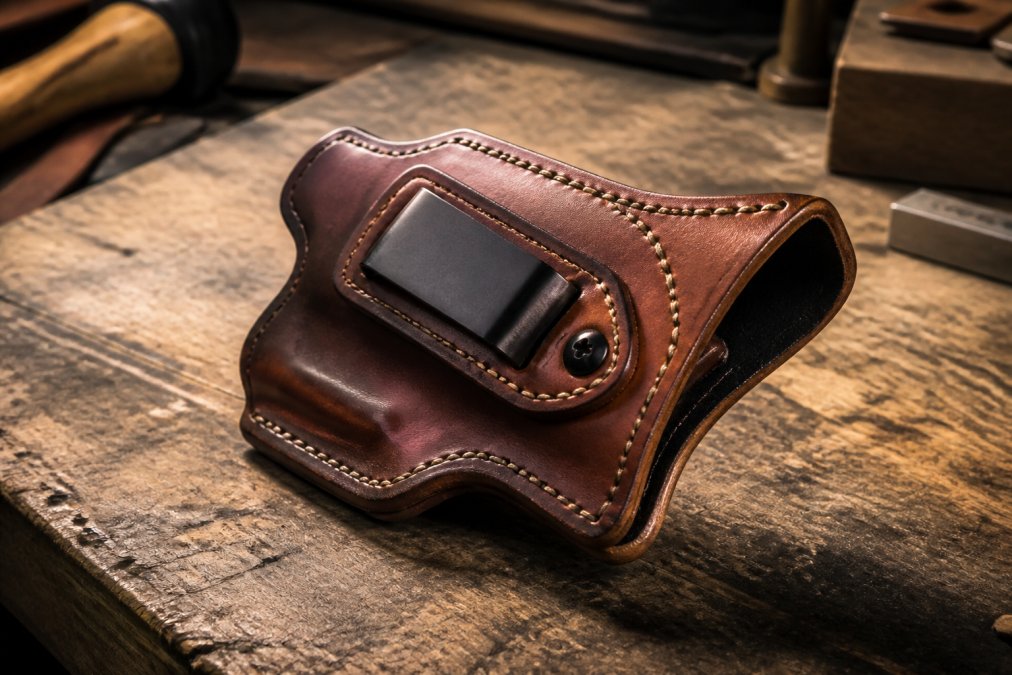
The five holsters below represent the range of what's available in the leather AIWB market, from handcrafted American-made options to European full-grain designs.
| Holster | Material | Reinforced Mouth | Claw/Wing | Magazine Pouch | Best For |
|---|---|---|---|---|---|
| AnchorsAweighLeather Handcrafted IWB | Premium steerhide, American-made | Yes | Custom option | Custom option | EDC carriers wanting bespoke fit |
| Galco Stow-N-Go | Quality gun leather | Metal-reinforced | No | No | Minimalist everyday carry |
| Craft Holsters A110 Harrier | Natural Italian leather | Leather-reinforced | No | Integrated | Carriers wanting spare mag access |
| Falco A634L Timeless | Full-grain Italian leather | Extra leather layer | Optional claw | No | Traditional craftsmanship, 2 o'clock carry |
| Kusiak Leather Minimalist | Pressed-molded leather | Molded retention | No | No | Lightweight, unobtrusive AIWB |
AnchorsAweighLeather Handcrafted IWB Holster
AnchorsAweighLeather produces handcrafted IWB holsters from premium steerhide. As a veteran-owned business operating since 2017, the shop offers custom orders. Properly broken-in molded leather creates passive retention specific to your firearm's exact dimensions.
Best for: Carriers who want an American-made, custom-fit leather AIWB holster built to outlast alternatives.
Pros:
- Handcrafted from high-quality leather in the USA
- Custom orders available for left-hand draw and specific firearms
- Built to last; veteran-owned, established 2017
- Free shipping on orders over $100
Cons:
- Lead time on custom orders; confirm availability before a scheduled trip
Galco Stow-N-Go IWB Leather Holster
The Galco Stow-N-Go is the benchmark for proven, widely available leather IWB options. The metal-reinforced mouth stays open after the draw, enabling safe one-handed reholstering. Galco fits many firearm models, making it practical if you carry multiple platforms. The limitation is that retention relies on friction fit without user-adjustable screws.
Best for: Minimalist everyday carry with reliable reholstering safety.
Pros:
- Metal-reinforced mouth keeps holster open for safe reholstering
- Comfortable for all-day wear
- Broad firearm compatibility
Cons:
- No retention adjustment
- No claw or wing for concealment enhancement
Craft Holsters A110 Harrier AIWB with Magazine Pouch
The A110 Harrier solves the practical problem of carrying a spare magazine without a separate pouch. The integrated magazine pouch sits alongside the holster body, and reinforced leather keeps the holster open for reholstering. Natural Italian leather construction holds up over time. The trade-off is bulk; an integrated magazine pouch adds width and can print more than a single-gun holster.
Best for: Carriers who prioritize spare ammunition access and don't mind additional profile.
Pros:
- Integrated magazine pouch adds practicality without a second belt attachment
- Reinforced mouth supports safe reholstering
- Sweat guard separates the firearm from the body
Cons:
- Bulkier than single-gun AIWB holsters
- Pricing requires direct inquiry
Falco A634L Timeless Open-Top IWB Leather Holster
The Falco A634L is built for 2 o'clock appendix carry with a mouth reinforced by an extra leather layer. The optional claw rotates the grip inward against the belt, reducing printing significantly. Full-grain Italian leather construction and a steel clip that prevents holster movement round out a well-considered design. Plan for two to three weeks of break-in before the leather fully conforms.
Best for: Traditional leather craftsmanship with genuine concealment optimization.
Pros:
- Optional claw for enhanced concealment
- Steel clip prevents holster shift during carry
- Durable full-grain Italian leather
Cons:
- Pricing requires direct contact
- Break-in period required
Kusiak Leather Minimalist IWB/AIWB Holster
Pressed-mold construction creates a friction fit tighter than hand-molded alternatives. The minimalist design keeps weight and bulk minimal, making it one of the lighter leather AIWB options available. Handmade in Texas, it shares the same regional craftsmanship ethos as AnchorsAweighLeather.
Best for: Carriers who want maximum concealment with minimum holster bulk.
Pros:
- Pressed-mold fit provides secure passive retention
- Lightweight and unobtrusive for AIWB carry
- Handmade in Texas
Cons:
- Break-in period typical of all-leather construction
- Pricing requires direct inquiry
Leather vs. Kydex vs. Hybrid: Which Wins for AIWB?
Kydex wins on consistency; retention remains the same on day one and year five, unaffected by sweat or moisture. Leather wins on comfort and long-term body conformity. Hybrid holsters attempt both and partially succeed at each.
Longevity: Full-Grain Leather vs. Hybrid Construction
Full-grain leather, maintained correctly, outlasts most hybrid constructions. The failure point in hybrid holsters is typically the leather backer, which compresses faster than the Kydex shell wears out. A quality full-grain leather holster, double-stitched along the welt and treated regularly with conditioner, can remain serviceable for a decade or more of daily carry.
According to the Leather Industries of America's guide to leather grades, full-grain leather retains the complete grain layer of the hide, making it the most durable grade for load-bearing applications. If you're buying once and carrying for years, full-grain leather is the better investment.
Body Type Specificity and Comfort Differences
AIWB carry is body-type-specific in ways strong-side carry is not. Carriers with more abdominal depth often find rigid Kydex digs in when seated. Leather, once broken in, conforms to that contour and distributes pressure more evenly. For larger body types, the flexibility of leather and the body shield effect of a wider sweat guard make a real difference over an eight-hour carry day.
Custom Leather IWB Holster: When to Order One
A custom leather IWB holster makes sense when you carry a firearm lacking off-the-shelf leather support, you're left-handed, your body type requires non-standard cant or ride height, or you want a holster built to last rather than replaced every two years. Custom makers like AnchorsAweighLeather fill the gap with holsters molded to your exact firearm and configured to your carry preferences. Contact the maker directly to confirm lead times before ordering.
Leather Holster Maintenance Tips for Daily Carry
Daily carry exposes leather to sweat, body heat, and pressure, all of which affect the leather's structure over time. Proper maintenance extends service life and preserves the retention and structural integrity that make the holster safe.
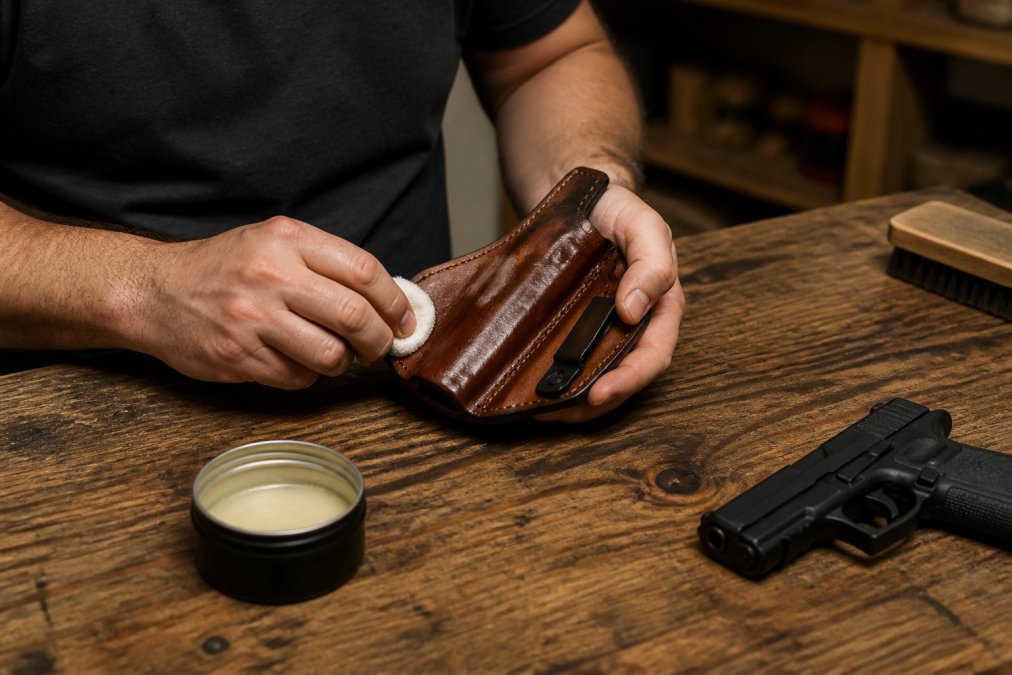
As documented in the American Leather Chemists Association's technical resources on leather care, leather requires periodic conditioning to prevent drying, cracking, and structural failure under repeated stress.
Break-In Procedures for a New Leather Holster
A new leather holster will feel stiff, which is correct. The break-in process typically takes two to four weeks of regular carry and draw practice:
- Draw and reholster your unloaded, verified-clear firearm 20-30 times per session
- Use a snap cap or dummy round to simulate loaded weight
- Apply a light coat of leather conditioner after the first week to soften the leather without collapsing the structure
- Avoid soaking the leather with water or petroleum-based products
The holster will feel too tight at first and too loose at week three, then settle into correct retention by week four.
Safety Protocols Specific to Leather Holsters
Leather introduces one safety consideration that Kydex does not: the holster mouth can collapse if the leather softens from moisture or age. Inspect the holster mouth monthly. If the mouth collapses with minimal pressure, the holster needs replacement or re-stiffening before continued carry.
Additional safety protocols:
- Inspect trigger guard coverage every 30 days; leather can stretch away from the trigger guard over time
- Check stitching along the welt for fraying; broken stitches compromise holster structure
- Verify the belt clip remains secure and doesn't flex excessively
- Confirm passive retention with an unloaded firearm before each carry day
- Replace any holster showing cracking, separation at the welt, or mouth collapse
Which Appendix Carry Leather Holster Should You Choose?
The right holster depends on your firearm, body type, and how much customization you need.
For EDC carriers who want a holster built to their exact specifications and are willing to invest in American-made craftsmanship, AnchorsAweighLeather is a strong option. Custom orders accommodate left-hand draw, specific compact pistols, and non-standard configurations that off-the-shelf options can't address.
If you need an immediately available option with broad firearm compatibility and proven reholstering safety, the Galco Stow-N-Go is a reliable off-the-shelf leather AIWB holster.
Carriers who prioritize spare ammunition access should look at the Craft Holsters A110 Harrier. The integrated magazine pouch adds bulk but solves the second-magazine problem without a separate belt attachment.
For those who want traditional full-grain leather craftsmanship with a genuine concealment feature, the Falco A634L with the optional claw is a strong European-made option.
If your carry situation is standard, buy off the shelf. If anything about your setup is non-standard, hand dominance, firearm, body type, or optic, order custom. The price difference is smaller than most carriers expect, and the fit difference is substantial.
| Situation | Recommended Option |
|---|---|
| Custom fit, American-made, left or right hand | AnchorsAweighLeather custom IWB |
| Immediate availability, broad compatibility | Galco Stow-N-Go |
| Integrated magazine access | Craft Holsters A110 Harrier |
| Concealment claw, traditional leather | Falco A634L Timeless |
| Minimalist, lightweight, pressed-mold fit | Kusiak Leather Minimalist |
According to the United States Concealed Carry Association's holster selection guide, the best holster is the one you'll actually carry every day, which means comfort and concealability matter as much as retention specifications on paper.
Choosing the right appendix carry leather holster is harder than most gear guides make it look, because the variables are personal: your firearm, your body, your daily routine. AnchorsAweighLeather builds handcrafted, American-made leather IWB holsters with custom orders available for carriers who need something the production market doesn't offer. With premium steerhide construction, veteran-owned craftsmanship since 2017, and free shipping on orders over $100, it's the place to start if you're done settling for holsters that almost fit. Visit AnchorsAweighLeather and get a holster built for how you actually carry.
Frequently Asked Questions
Q: Are leather holsters safe for appendix carry?
A: Yes, when built correctly. A safe appendix carry leather holster must provide full trigger guard coverage with no gaps, a reinforced or stiffened mouth that stays open during reholstering, and passive retention that holds the firearm securely without a manual lock. The critical safety habit is never reholstering under a cover garment, always visually confirm the path is clear. A well-molded, double-stitched leather holster from a reputable maker meets these requirements reliably.
Q: How should a leather appendix holster fit for maximum concealment?
A: The holster should sit at roughly the 1 o'clock position for most right-handed carriers, with ride height adjusted so the grip sits just below the beltline. A slight forward cant, typically 10 to 15 degrees, reduces printing by angling the grip away from the body. A concealment claw or wing that presses against the belt and rotates the grip inward makes a significant difference. Slim, single-clip designs generally conceal better than two-clip setups for appendix carry.
Q: What are the benefits of a custom leather IWB holster over a standard Kydex option?
A: A custom leather IWB holster is molded to your exact firearm model, which produces a precise friction fit without adjustment screws. Leather conforms to body heat and shape over time, making it more comfortable for all-day wear against skin. Full-grain leather also outlasts most Kydex shells when properly conditioned, decades of use are realistic. Custom options also accommodate left-handed draw strokes, optic cuts, and specific cant angles that off-the-shelf Kydex holsters often cannot.
Q: How do you maintain a leather holster for daily carry?
A: Clean the holster monthly with a dry or slightly damp cloth to remove sweat and debris. Apply a leather conditioner, not a wax-based polish, every one to three months to prevent the leather from drying and cracking. Avoid petroleum-based products, which degrade stitching over time. Store the holster with a snap cap or training barrel inserted to preserve the molded shape. Inspect stitching and the reinforced mouth regularly; any fraying or collapse requires immediate attention before the holster is used again.
Q: Who makes the best leather IWB holster for everyday carry?
A: The best leather IWB holster depends on your firearm, body type, and carry goals. Veteran-owned makers like AnchorsAweighLeather offer handcrafted, American-made options with custom fitment for specific compact pistols. Established names like Galco provide metal-reinforced mouths and broad model compatibility. For carriers who want an integrated magazine pouch, options like the Craft Holsters A110 Harrier add practicality. Evaluate trigger guard coverage, retention quality, and reholstering ease before any other feature.
This article was written using GrandRanker