
Table of Contents
- Why Custom Leather Holsters Stand Apart
- IWB vs OWB Leather Holster Pros and Cons
- Materials That Last: Full-Grain Leather and Beyond
- How to Break In a Leather Holster Properly
- Custom Leather Holster Maintenance Tips for Longevity
- Handcrafted Quality and Custom Fit Matters
- What to Know Before You Order Online
- Frequently Asked Questions
Last Updated: September 21, 2026
Why Custom Leather Holsters Stand Apart
Custom leather holsters represent a fundamentally different approach to firearm carry than mass-produced alternatives. The difference isn't just aesthetic, it's about how the holster performs when it matters. A handcrafted holster from AnchorsAweighLeather is molded specifically for your firearm, your body, and your carry style, which means retention stays consistent, draw speed improves, and comfort doesn't degrade after months of daily use.
Most people don't realize that off-the-shelf holsters are engineered for the average shooter. There's no such thing as average when you're carrying a firearm daily. Your body shape, your preferred cant angle, your draw speed, these variables compound. A custom leather holster accounts for them all. The hand-boning process creates a molded fit that generic holsters simply cannot match, no matter how much you spend on a mass-market alternative.

Here's what separates the best from the rest: genuine full-grain leather develops character over time. It breaks in to your specific body and firearm, becoming more comfortable and reliable the longer you carry. Budget holsters use bonded leather or thin genuine leather that degrades. AnchorsAweighLeather builds custom leather holsters from premium materials designed to outlast the firearm itself.
IWB vs OWB Leather Holster Pros and Cons
Understanding the difference between inside-the-waistband and outside-the-waistband carry is foundational to choosing the right custom leather holster for your needs. Each carry method presents distinct trade-offs in concealment, accessibility, and comfort.

Inside-the-Waistband (IWB) Carry
Inside-the-waistband carry means your firearm sits inside your waistband, with the holster secured between your body and your belt. This is the dominant choice for concealed carry because it offers the best concealment profile. Your clothing covers the entire holster and firearm, making detection difficult even in close quarters.
IWB holsters work best for appendix carry, hip carry, and rear waistband positions. Draw speed is quick, your hand moves directly to the firearm without sweeping past your body. The HOSS IWB Leather Holster from AnchorsAweighLeather delivers this performance through universal fit design and hand-boned molding that keeps your firearm secure and your draw smooth.
The trade-off is comfort during extended sitting. IWB carry presses the holster against your torso, which can create discomfort if the holster isn't properly molded to your body shape. Cheap IWB holsters dig into ribs or hips. A custom leather holster is molded specifically to your frame, distributing pressure evenly and eliminating hot spots.
Retention is another consideration. IWB holsters must be tight enough to stay secure during movement but not so tight that your draw becomes sluggish. Hand-boned retention achieves this balance by creating a molded pocket that grips your firearm's profile while allowing smooth re-holstering.
| Carry Type | Concealment | Draw Speed | Comfort (Sitting) | Best For |
|---|---|---|---|---|
| IWB | Excellent | Fast | Variable | Everyday concealed carry |
| OWB | Good | Very Fast | Excellent | Open carry, duty wear |
Outside-the-Waistband (OWB) Carry
Outside-the-waistband carry positions your holster on the outside of your waistband, typically at the hip or appendix position. Your clothing must cover the holster for concealment, but OWB carry offers superior comfort for extended wear. The holster doesn't press against your body, it hangs from your belt.
Draw speed from OWB is fastest because your hand has a direct, unobstructed path to the firearm. Law enforcement and security professionals favor OWB carry for this reason. The Avenger OWB Leather Holster from AnchorsAweighLeather combines this speed advantage with the durability of veg tan leather that develops a rich patina over years of use.
OWB holsters excel during active work. Ranchers, hunters, and outdoor professionals choose OWB because the holster stays accessible and doesn't create pressure points during long days in the field. The trade-off is concealment, OWB carry requires deliberate clothing choices or open carry acceptance.
Retention in OWB holsters relies on the holster's design and the fit of your firearm. A well-molded OWB holster grips your firearm's profile securely while allowing smooth draws. Hand-stitched construction and quality leather ensure that retention remains consistent through thousands of draws.
Materials That Last: Full-Grain Leather and Beyond
The material your custom leather holster is made from determines how long it will serve you. Full-grain leather is the gold standard because it retains the hide's natural surface, which includes the grain pattern and character marks. This surface is more durable than sanded or bonded alternatives because it hasn't been compromised by finishing processes.
Full-grain leather develops a patina, a darkening and softening of the surface, over time. This patina is a sign of quality. It means the leather is aging gracefully, becoming more supple while remaining structurally sound. Cheap leather doesn't patina; it cracks. AnchorsAweighLeather sources full-grain leather specifically for this property, ensuring your custom leather holster improves with age rather than degrades.
Thickness matters as much as material quality. Most quality holsters use 7-8 oz leather, which provides rigidity for retention without becoming uncomfortable. Thinner leather (4-6 oz) feels softer initially but loses shape faster. Thicker leather (9+ oz) offers durability but can be stiff and uncomfortable for all-day carry. The TEXAS REBEL IWB Conceal Carry Holster uses this optimal thickness range to balance retention and comfort.
The HOSS IWB Leather Holster, CCW →

Veg tan leather, used in the Avenger OWB holster, is vegetable-tanned rather than chrome-tanned. This process takes longer and costs more, but the result is leather that lasts decades. Veg tan develops character through use, scratches, scuffs, and marks become part of the holster's story rather than signs of failure.
How to Break In a Leather Holster Properly
A new leather holster requires a break-in period. This isn't a flaw, it's a feature. The leather is stiff initially, and the holster needs to conform to your firearm's exact profile and your body's specific shape. Rushing this process or skipping it entirely leads to retention problems and discomfort.
Start your break-in with dry practice. Insert and remove your firearm from the holster 20-30 times in your first session. This works the leather and begins molding it to your firearm's profile. You'll notice the holster becomes slightly more flexible. Repeat this daily for the first week.
After the first week, transition to wearing the holster during normal daily activities without carrying a firearm. This allows the leather to conform to your body without the added weight and pressure of a loaded firearm. Wear it for 2-3 hours daily for another week. Your body heat accelerates the molding process, and the leather begins conforming to your specific frame.
By week three, the holster is ready for loaded carry. The leather has softened enough to be comfortable but remains rigid enough to maintain proper retention. The break-in period isn't arbitrary, it's the time required for full-grain leather to conform to your unique profile.
During break-in, apply a leather conditioner once per week. This keeps the leather supple and prevents cracking as it flexes and molds. A small amount goes a long way. Work it into the leather with your fingers, focusing on areas that flex most during draw and re-holster.
Custom Leather Holster Maintenance Tips for Longevity
Proper maintenance extends your custom leather holster's life by decades. The goal is to keep the leather supple and protected without over-treating it or trapping moisture.
Clean your holster monthly by wiping it with a dry cloth. Remove dust, sweat residue, and debris that accumulate during daily carry. This simple step prevents buildup that can degrade the leather over time. Pay special attention to the interior where your firearm sits, debris here can scratch the gun or interfere with retention.
Condition your holster quarterly with a quality leather conditioner.
Handcrafted Quality and Custom Fit Matters
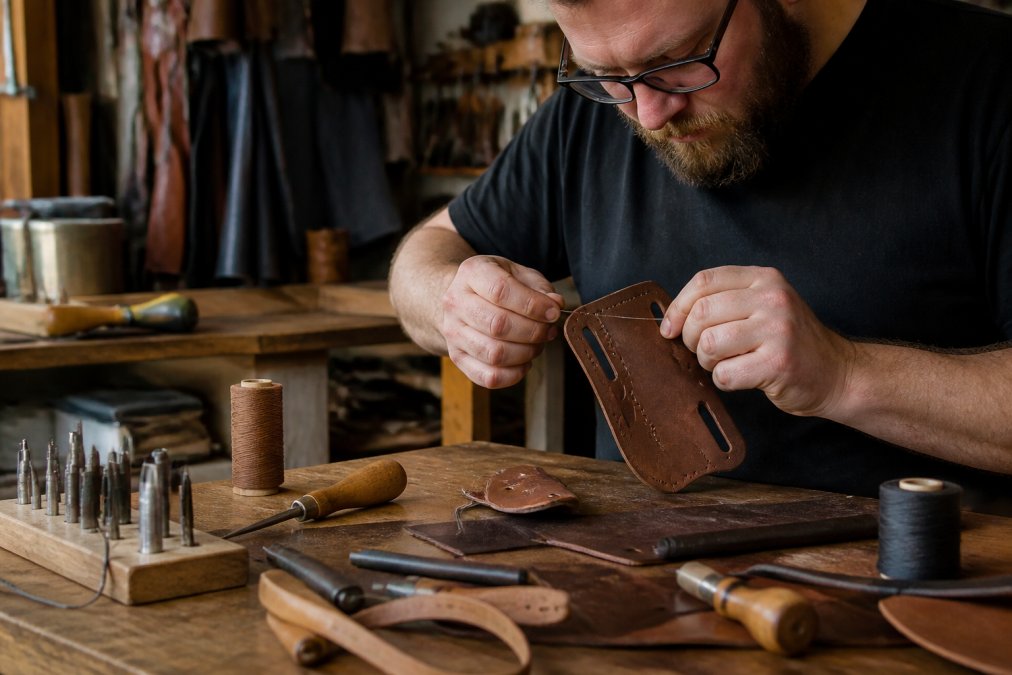
The difference between a handcrafted custom leather holster and a mass-produced alternative comes down to precision and intention. When a holster is hand-boned by a craftsperson who knows your specific firearm and your carry preferences, every detail is deliberate. The retention is tuned to your gun. The cant is set to your body. The concealment works for your clothing choices.
What to Know Before You Order Online
Ordering a custom leather holster online requires clear communication about your specific needs. The holster maker needs to understand your firearm, your preferred carry method, and your body type to create something that works perfectly.
Frequently Asked Questions
How long does it take to receive a custom leather holster when ordering online?
Lead times vary by maker. If you need a holster for an upcoming trip, check the maker's current timeline before ordering. Always confirm the expected delivery date when you place your order to avoid surprises.
What's the difference between IWB and OWB leather holsters for concealed carry?
IWB (inside-the-waistband) holsters sit inside your pants and offer maximum concealment, ideal for everyday carry when you want no one to know you're armed. OWB (outside-the-waistband) holsters ride on your belt outside your clothing and provide faster draw access and better comfort for longer wear. Choose IWB if concealment is your priority; choose OWB if you value speed and comfort.
How do I know a custom leather holster will actually fit my specific firearm?
Legitimate custom holster makers ask for your exact firearm model and barrel length before crafting. Hand-molded holsters are shaped to your specific gun, not a universal template. Provide your firearm's make, model, and barrel measurement. Ask the maker about their fit guarantee and return policy, reputable craftspeople stand behind their work and will adjust or remake a holster that doesn't perform as promised.
Why does a handcrafted custom leather holster cost more than mass-produced alternatives?
Custom leather holsters are hand-molded and hand-stitched to your specifications using premium full-grain leather, not stamped from molds like factory holsters. This labor-intensive process takes weeks and demands skilled craftsmanship. The result is a holster that fits your exact firearm, retains its shape for years, and often outlasts cheaper options by a decade or more. You're paying for durability, precision fit, and American-made quality.
0 comments