
Table of Contents
- Why Leather Holsters Crack: The Core Causes
- How to Condition a Leather Holster
- Leather Holster Maintenance Guide
- Signs of a Worn Out Holster
- Cold Weather Effects and Thermal Stress
- Material Quality and Tanning Methods Matter
- Frequently Asked Questions
Last Updated: September 19, 2026
Why Leather Holsters Crack: The Core Causes
Leather holsters crack because they lose moisture and natural oils over time, especially when exposed to heat, humidity swings, and improper storage. Most cracks are preventable with the right care.
Leather needs moisture to stay flexible. When it dries out, the fibers become brittle and lose structural integrity. Temperature swings, sunlight, or rough handling accelerate cracking.
Here's what actually causes leather holsters to crack:
- Dehydration from heat and dry air removes natural oils that keep leather supple
- Humidity fluctuations cause the leather to expand and contract repeatedly
- Improper drying after moisture exposure locks in damage and creates stress points
- Stitching tension concentrates stress on seams where cracks often start
- Cold weather makes leather brittle and prone to cracking under pressure
- Poor conditioning history leaves the material vulnerable to environmental stress
The real problem is the combination: a holster in a dry closet for months, then rained on, then dried too fast in direct sunlight will crack.
Dehydration and Loss of Natural Oils
Leather naturally contains oils that give it flexibility and water resistance. In dry climates or air-conditioned spaces, these oils evaporate quickly. A holster stored in a heated room during winter can lose significant moisture in just a few weeks, causing stress cracks at flex points where the holster bends during draw.
Humidity and Moisture Exposure
Too much humidity swells leather fibers; when it drops, they shrink unevenly, creating stress lines that become cracks. The worst scenario: wet leather drying too fast, with the outside hardening while moisture remains trapped inside, creating internal pressure the fibers cannot handle.
Improper Drying After Moisture
Never use direct heat, which dries the outside while trapping moisture inside. Instead, air dry in a cool, shaded spot for 24-48 hours. Stuff the holster with newspaper, changing it every few hours to absorb internal moisture and ensure even drying.
| Drying Method | Result | Outcome |
|---|---|---|
| Direct heat | Outer layer hardens fast | Cracks appear in 1-2 weeks |
| Sunlight exposure | Uneven drying | Stress lines and brittleness |
| Proper air drying | Even moisture release | Leather stays intact |
| Newspaper stuffing | Controlled internal drying | Minimal stress on fibers |
How to Condition a Leather Holster
Conditioning replaces natural oils leather loses over time, keeping it flexible and resistant to cracking. A properly conditioned holster develops a richer patina and ages beautifully.
Understanding Leather Chemistry and Conditioner Selection
Leather loses flexibility when fibers lose moisture and bond tightly. Conditioners restore oils between fibers. Leather's natural pH is 4.5-5.5; conditioners must match this pH to penetrate effectively. Household oils like coconut or olive oil are pH-neutral and can raise leather's pH, promoting mold and accelerating cracking.
Mink oil, neatsfoot oil, and lanolin-based conditioners are effective because their small molecular structures penetrate deep into leather and contain natural fatty acids.
Step-by-Step Conditioning Process
Step 1: Clean the holster with a soft cloth. Step 2: Apply a dime-sized drop of conditioner per section, rubbing in circular motions around stress points and seams. Step 3: Let absorb for 15-30 minutes. Step 4: Buff with a clean cloth until matte. The process takes 30-45 minutes. For daily-carry holsters, condition every 3-4 months; for stored holsters, once or twice yearly.
Leather Holster Maintenance Guide
Maintenance prevents problems before they start. A holster that gets regular attention lasts decades. One that's neglected cracks within a few years.
Regular Inspection and Cleaning
Check your holster monthly for dull grain, stiffness, stress lines, or discoloration. Clean with a soft, dry cloth for everyday use; use a slightly damp cloth for deeper cleaning but never soak. Pay special attention to seams and stress points, wrinkles around stitching indicate moisture and stress buildup.
Storage Environment Optimization
Store your holster in a cool, dry place at room temperature (65-75°F), away from basements, attics, and direct sunlight. Maintain humidity between 40-60%; in dry climates, place a small open dish of water nearby. Never store in plastic bags or sealed containers; wrap long-term storage in loose cotton cloth instead.
The HOSS IWB Leather Holster, CCW →
Signs of a Worn Out Holster
Not all leather damage means the holster is finished. You need to know the difference between cosmetic wear and structural failure. This distinction is critical because a holster with compromised structural integrity will not retain your firearm safely.
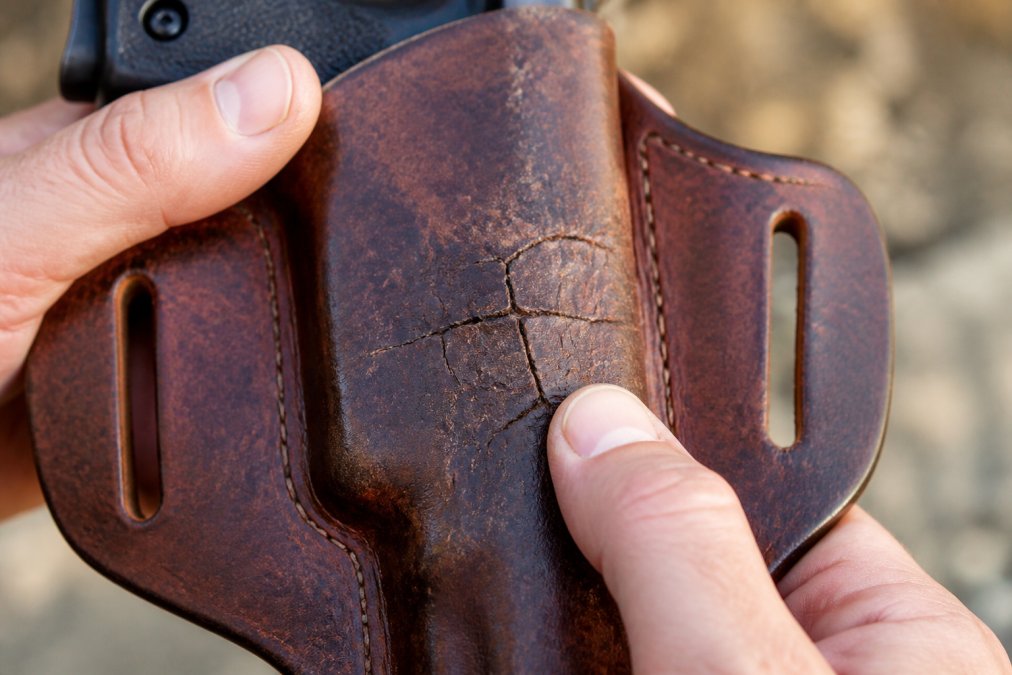
Visual and Tactile Diagnostic Guide
Surface Wrinkles and Character Lines (Normal Aging): Fine, shallow lines following the natural grain, radiating from flex points. The leather feels smooth and supple; wrinkles close when pressed. Develops slowly over months or years without deepening. Cosmetic only, this is how quality leather ages.
Stress Lines and Early Creasing (Early Warning)
- Appearance: Slightly deeper than wrinkles; often concentrated around stitching, seams, or the mouth of the holster where it flexes most during draw
- Feel: You can feel a slight depression when you run your finger across it, but no gap or separation
- Pressure test: Press on both sides; the line may partially close but doesn't fully disappear
- Progression: Develops over weeks to months; may deepen if conditioning is neglected
- Verdict: Early structural stress. Increase conditioning frequency to every 2-3 months. This is your signal to act before cracks form.
Structural Cracks (Failure)
- Appearance: Visible splits or gaps in the leather; often dark or discolored along the crack; may expose lighter inner layers
- Feel: Run your finger across it and you feel a distinct gap or separation; the leather does not bridge the crack
- Pressure test: Press on both sides; the crack remains open or only partially closes; you may hear a slight cracking sound
- Location: Often found at seams, stress points (trigger guard area, holster mouth), or areas of repeated flexing
- Progression: Once formed, cracks deepen and spread, especially if the holster continues to be used
- Verdict: Structural damage. The holster's ability to retain your firearm is compromised.
Danger Signs That Indicate Replacement Is Necessary
If your holster shows any of these, it's time for a new one:
- Cracks running through or parallel to stitching: Stitching holds the holster's shape and structural integrity. Cracks here mean the leather can no longer support the seam, and the holster may fail during draw.
- Multiple cracks in the same area or radiating from a single point: This indicates the leather has lost structural integrity in that region. Stress will concentrate there and spread.
- Leather that is brittle and breaks easily when flexed: If the leather snaps or splinters rather than bending, the fibers have lost all flexibility. It will fail under normal use.
- Seams that are pulling apart or separating from the leather: This means the leather around the seam has weakened and can no longer hold the stitching. The holster will not retain your firearm.
- Deep splits that expose the inner layers or backing material: Once the outer layer is breached, moisture will enter the inner structure and accelerate failure.
- Visible mold, mildew, or discoloration that doesn't clean off: This indicates moisture damage inside the leather. The fibers are compromised and will continue to deteriorate.
The Flex Test
Perform this simple test monthly:
- Hold the holster in both hands at the mouth and heel.
- Gently flex it as if you were drawing a firearm (don't force it).
- Listen and feel for cracking sounds or sensations.
- Examine the flex points for new cracks or deepening stress lines.
If you hear cracking, feel sharp resistance, or see new damage, the holster is approaching failure. If you see visible cracks that don't close when you release the flex, the holster should be replaced immediately.
Cold Weather Effects and Thermal Stress
Cold makes leather brittle. This is one of the most underestimated causes of cracking.
Material Quality and Tanning Methods Matter
Not all leather is created equal. The tanning process and material quality determine how resistant the leather is to cracking.
Frequently Asked Questions
What are the primary causes of leather holster cracking?
Leather holsters crack primarily due to dehydration, which depletes the natural oils that keep leather flexible. Humidity fluctuations cause the leather to expand and contract, creating stress on the fibers. Improper drying after moisture exposure accelerates brittleness, and cold weather reduces fiber elasticity. Low-quality leather or poor tanning methods also increase cracking risk. Regular conditioning and proper storage prevent most cracks from forming.
How can I prevent my leather holster from drying out and cracking?
Condition your holster every 3-6 months with a quality leather conditioner to restore natural oils and maintain fiber saturation. Store it in a climate-controlled environment away from direct heat, sunlight, and extreme humidity. After exposure to moisture, air-dry slowly at room temperature, never use heat sources. Avoid prolonged storage in plastic bags, which trap moisture.
Is a cracked leather holster still safe to use?
Surface cracks and wrinkles are cosmetic and don't affect safety or function. However, structural cracks that penetrate deep into the leather or compromise stitching tension can reduce retention and allow movement. Stress lines at flex points (where the holster bends during draw) may worsen over time. If cracks are minor, conditioning can slow progression. For severe structural damage affecting retention or seam integrity, the holster should be replaced to ensure reliable firearm security.
What is the best way to condition a leather holster?
Use a quality leather conditioner formulated to restore natural oils without over-saturating. Apply a thin, even layer with a soft cloth, working it into the leather grain. Let it absorb for 15-30 minutes, then buff away excess with a clean cloth. Avoid conditioners with silicone or harsh chemicals that can damage the leather's surface finish. Condition before storage and after exposure to harsh conditions.
0 comments