
Table of Contents
- Why Custom Leather Holsters Stand Out for Concealed Carry
- Leather vs. Kydex Holster: Material Comparison That Matters
- Leather Holster Comfort and Fit: All-Day Carry Without Compromise
- Custom Molding and Retention: How Handcrafted Design Secures Your Firearm
- How to Break In a Leather Holster: Timeline and Best Practices
- Leather Holster Care: Maintenance for Long-Term Durability
- Choosing the Right Custom Leather Holster for Your Carry Style
- Conclusion
- Frequently Asked Questions
Last Updated: October 8, 2026
Why Custom Leather Holsters Stand Out for Concealed Carry
When you carry daily, the holster matters more than most people realize. A poorly fitting holster causes constant discomfort, shifts during movement, and forces adjustments throughout the day. Custom leather holsters solve this by conforming to your body and firearm, delivering security and comfort off-the-shelf options cannot match.

The difference comes down to precision. A custom fit means the holster is molded to your exact firearm model, body type, and preferred carry position, eliminating the gaps and movement that plague universal designs. At AnchorsAweighLeather, we handcraft each custom leather holster from premium full-grain leather, supporting your carry style whether that's inside-the-waistband.
Beyond fit, custom leather holsters offer tangible advantages over mass-produced alternatives. The material breaks in to your body over time, becoming more comfortable with use rather than less, molding to your shape and improving with age. Serious carriers invest in custom leather because it works better next year than it does now.
Leather vs. Kydex Holster: Material Comparison That Matters
Kydex dominates the budget holster market because it's cheap to manufacture and requires no break-in period. But that affordability comes with real trade-offs that matter for daily carry.
Kydex is a rigid plastic composite that holds its shape permanently, meaning zero adaptation to your body. It feels the same on day one as day 365, and that rigidity creates pressure points, especially during prolonged sitting or driving. Kydex also produces a distinctive plastic-on-metal sound when drawing, a problem if concealment matters.
Leather adapts. A custom leather holster starts firm but gradually softens and molds to your waistline, hip contour, and movement patterns, eliminating pressure points Kydex can never address. Leather also absorbs sound, making your draw quieter and more discreet.

Durability favors leather when you maintain it properly. Leather, when cared for, lasts decades. A well-maintained custom leather holster from AnchorsAweighLeather can outlive multiple firearms.
| Material | Break-In Period | Comfort Over Time | Durability | Discretion | Maintenance |
|---|---|---|---|---|---|
| Leather | 2-4 weeks | Improves | 10-20+ years | Excellent | Regular conditioning |
| Kydex | None | Static | 3-5 years | Audible | Minimal |
| Nylon | None | Degrades | 2-4 years | Fair | Occasional cleaning |
Leather Holster Comfort and Fit: All-Day Carry Without Compromise
Comfort during all-day carry depends entirely on fit. A holster that doesn't match your body creates friction points, shifts position, and forces constant readjustment. Custom leather holsters eliminate these problems by being molded to your dimensions.
A proper fit means the holster sits naturally against your body without gaps and moves with you when bending, sitting, driving, or reaching. No pinching at the waistline, no pressure on your hip bone, no rubbing against your ribs. The leather distributes pressure evenly, which is why custom leather feels dramatically more comfortable than universal designs after a few days of wear.
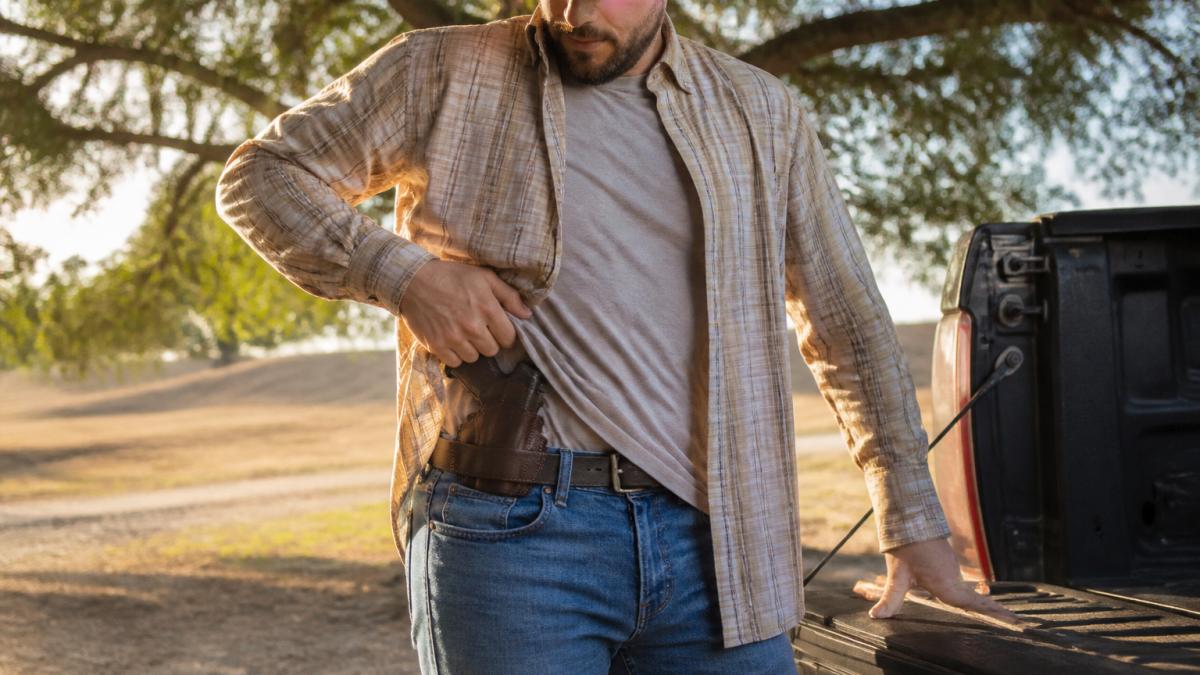
Body type matters. A holster that works for a slim build may create pressure for a larger frame, and custom leather accounts for this. Whether you carry at appendix, 3 o'clock, or 4 o'clock, a custom holster is molded to that exact location. Universal holsters compromise to fit everyone and end up fitting no one well.
Leather also breathes better than synthetics. During warm weather or extended wear, it allows air circulation that reduces sweat buildup.
Custom Molding and Retention: How Handcrafted Design Secures Your Firearm
Retention is where custom molding proves its value. A holster must hold your firearm securely during movement, drawing, and reholstering. Generic holsters use universal retention devices that work adequately for many firearms but perfectly for none. Custom molding creates a fit so precise the holster provides retention through shape alone.
When a leather holster is custom molded to your firearm, the leather forms around the trigger guard, slide profile, and grip contours, creating mechanical retention. The firearm cannot move within the holster because the leather is shaped to its exact dimensions, giving you security without relying solely on friction devices or straps.
The trigger guard receives particular attention in custom molding. A properly molded leather holster covers the trigger guard completely, protecting it from accidental contact during the draw. This is a critical safety feature that mass-produced holsters often compromise on to accommodate multiple firearm models. At AnchorsAweighLeather, each custom leather holster is designed around your specific firearm, ensuring complete trigger coverage and maximum safety.
Retention devices, whether leather straps or snap closures, work better in a custom molded holster because they're designed for your firearm's dimensions. A universal strap might be loose on one gun and tight on another; a custom strap provides consistent, reliable retention every time.
How to Break In a Leather Holster: Timeline and Best Practices
New leather is stiff, which is normal and expected. The break-in period is when the leather transforms from rigid material to custom-fitted carry solution. Understanding this timeline helps you distinguish normal break-in from genuine fit problems.
The first week is the adjustment phase. Your new custom leather holster will feel firm and may create minor pressure points as your body adjusts. Wear it 2-3 hours daily, then remove it and let the leather rest, allowing it to soften gradually without overwhelming your body.
Weeks two through four bring significant molding. The leather conforms to your body shape, and week-one pressure points diminish. Continue wearing it daily, increasing duration as comfort improves. By week four, most carriers report the holster feels substantially more comfortable than initially.
After four weeks, your custom leather holster should feel like it was made for you, because it was. The leather has molded to your body, retention has settled into its proper feel, and the holster moves with you naturally.
A few practical tips accelerate break-in without damage. Wear the holster with the same clothing you'll use for daily carry, since the specific shirt, belt, and pants affect how it sits and ensure the leather molds to your actual carry configuration. Avoid forcing break-in by wearing it excessively long during the first week; gradual introduction produces better results.
Custom Leather IWB holster, Leather Holster, Conceal Carry Holster →
Never attempt to artificially soften leather with heat or chemicals. This damages the material and can compromise retention and safety. Let the leather break in naturally through wear. This takes longer, but the result is a holster that will last for decades.
Leather Holster Care: Maintenance for Long-Term Durability
A custom leather holster is an investment. Proper maintenance ensures it performs reliably for years and actually improves with age rather than deteriorating.
Leather needs conditioning to remain supple and prevent cracking. Condition your holster every 3-6 months with a quality leather conditioner to replenish natural oils lost through exposure to air and moisture. A well-conditioned holster stays flexible, resists cracking, and continues molding to your body for years.
Moisture is leather's primary enemy. If your holster gets wet, dry it slowly at room temperature, never near direct heat or sunlight, since rapid drying causes uneven shrinking and cracking. If soaked, remove your firearm, stuff the holster loosely with newspaper to maintain shape, and let it dry naturally over several days, changing the newspaper as it absorbs moisture.
Sweat and salt accumulate on leather over time. Wipe your holster occasionally with a soft, dry cloth to remove surface salt and debris, preventing buildup that damages leather. A damp cloth works for heavier cleaning, but always dry thoroughly afterward.
Store your holster in a cool, dry place when not in use, avoiding direct sunlight that fades leather and causes uneven color changes. A closet or drawer is ideal. If storing for extended periods, condition it before returning to daily use to ensure the leather hasn't dried out.
Choosing the Right Custom Leather Holster for Your Carry Style
Selecting a custom leather holster requires understanding your carry position, firearm, and body type, which determine which design serves you best.
Carry Position Matters
Inside-the-waistband (IWB) carry is the most popular concealed carry method. An IWB holster sits inside your pants, with the belt riding over the top. This position offers excellent concealment and comfort when properly fitted. The Custom Leather IWB Holster from AnchorsAweighLeather is designed for this exact purpose, handcrafted from premium full-grain leather and molded to your specific firearm for secure, comfortable all-day wear.
Firearm Fit is Non-Negotiable
A holster must be molded to your specific firearm model. A holster designed for a Glock 19 won't properly fit a Glock 43X. The dimensions, slide profile, and grip shape differ enough that retention and safety are compromised. Custom leather holsters are molded to your exact firearm, ensuring perfect fit and maximum security.
If you own multiple firearms, you need multiple holsters. This is why serious carriers often have several custom leather holsters, one for each regular-carry gun. The TEXAS REBEL IWB Conceal Carry Holster and The HOSS IWB Leather Holster from AnchorsAweighLeather are both available.

Body Type and Comfort
Your body shape determines how a holster should be molded. A slim build requires different molding than a larger frame, and custom leather accounts for your actual dimensions, not an average shape. That's why custom leather feels dramatically more comfortable than universal designs.
Consider your typical clothing too. Belt thickness, pants fit, and shirt fabric all affect how a holster sits and feels. A quality custom leather holster is molded with your actual carry configuration in mind, ensuring it works with the clothing you wear daily.
Conclusion
Custom leather holsters deliver security, comfort, and durability off-the-shelf options cannot match. Custom molding, premium full-grain leather, and handcrafted construction create a carry solution that improves with time rather than degrading. If you carry daily and want a holster that works better next year than today, custom leather is the answer.
At AnchorsAweighLeather, we handcraft every custom leather holster to your specifications using premium full-grain leather, ensuring each holster is molded to your exact firearm and carry position. Our veteran-owned business has built a reputation for quality construction and durability that lasts. Start your custom order today and experience the difference a properly fitted holster makes, with free shipping on orders over $100, there's no better time to invest in gear built to last a lifetime.
Frequently Asked Questions
What are the main benefits of a custom leather holster for concealed carry?
Custom leather holsters conform to your body and firearm over time, delivering superior comfort and retention compared to mass-produced options. Handcrafted designs account for your specific body shape, clothing preferences, and carry position, whether appendix or strong-side. Full-grain leather develops a custom fit through break-in, while the material's durability means your holster lasts years rather than months.
How does a custom leather holster compare with a Kydex holster?
Leather holsters offer superior comfort and a discreet profile because the material naturally molds to your body and clothing, reducing printing. Leather requires break-in and maintenance but rewards you with all-day wearability and a classic aesthetic. For concealed carry, leather's flexibility and custom molding typically win on comfort.
How long does it take to break in a leather holster?
Most leather holsters reach a comfortable, molded state within 2-4 weeks of regular wear. The first few days may feel stiff, but daily use softens the leather and allows it to conform to your body and firearm. You'll notice the leather becoming more pliable and the holster settling into your preferred position.
What's involved in caring for a leather concealed-carry holster?
Regular maintenance keeps your leather holster supple and extends its lifespan. Wipe it clean with a dry cloth after each use to remove dirt and sweat. Apply a quality leather conditioner to prevent cracking and maintain pliability. Avoid prolonged moisture exposure; if your holster gets wet, air-dry it away from direct heat. Store it in a cool, dry place when not in use. Proper care prevents the leather from drying out, maintains its molded shape, and ensures your holster performs reliably for years.
0 comments