
Table of Contents
- Why Your Leather Wallet Needs a Maintenance Routine
- Daily Habits to Maintain Leather Wallets and Prevent Damage
- How to Clean Your Leather Wallet Safely
- Choosing the Best Leather Conditioner for Wallets
- Building a Leather Wallet Care Routine That Works
- How to Clean Leather Knife Sheath and Other Gear
- Common Leather Care Mistakes to Avoid
- Conclusion
- Frequently Asked Questions
Last Updated: September 9, 2026
Why Your Leather Wallet Needs a Maintenance Routine
A leather wallet is an investment in daily utility, not just an accessory. Unlike synthetic materials, leather is porous and natural, requiring deliberate care to maintain leather wallets effectively. Without a routine, it dries out, loses its supple feel, and cracks along the fold lines.
At AnchorsAweighLeather, we handcraft wallets from vegetable-tanned leather, a material prized for its durability and its ability to develop a rich patina over time. That patina only appears with proper maintenance. The core principle is simple: leather needs its natural oils replenished, and it needs protection from the elements that strip those oils away.

A wallet faces harsher conditions than a belt or jacket. It sits in a back pocket, absorbing body heat and moisture, compressed by your weight and rubbing against denim. This friction accelerates fiber breakdown. A few minutes of preventative maintenance every couple of months dramatically extends its lifespan.
Daily Habits to Maintain Leather Wallets and Prevent Damage
The most effective way to maintain leather wallets is to build small protective habits into your daily routine. These habits prevent damage before it starts, which is far easier than repairing it later.
- Empty your pockets before sitting: Remove your wallet before long drives or sitting on hard surfaces. This prevents unnecessary compression and stretching of the leather grain.
- Avoid overstuffing: A wallet stretched to capacity puts constant stress on the stitching and leather pores. If your wallet has 6 card slots, don't try to cram 12 cards into it. Overstuffing is a leading cause of premature stretching and misshapen wallets.
- Keep it away from moisture: Your wallet should not share a pocket with a water bottle or sit near a heat source. Sweat is a particular concern; consider a front pocket carry if you live in a humid climate.
- Rotate your carry: If you have multiple wallets, rotate them regularly to allow each one to rest and recover its natural shape.
How to Clean Your Leather Wallet Safely
Cleaning is where most people cause irreversible damage. Use the gentlest method that works, cleaning every two to three months or immediately if visibly dirty or wet.
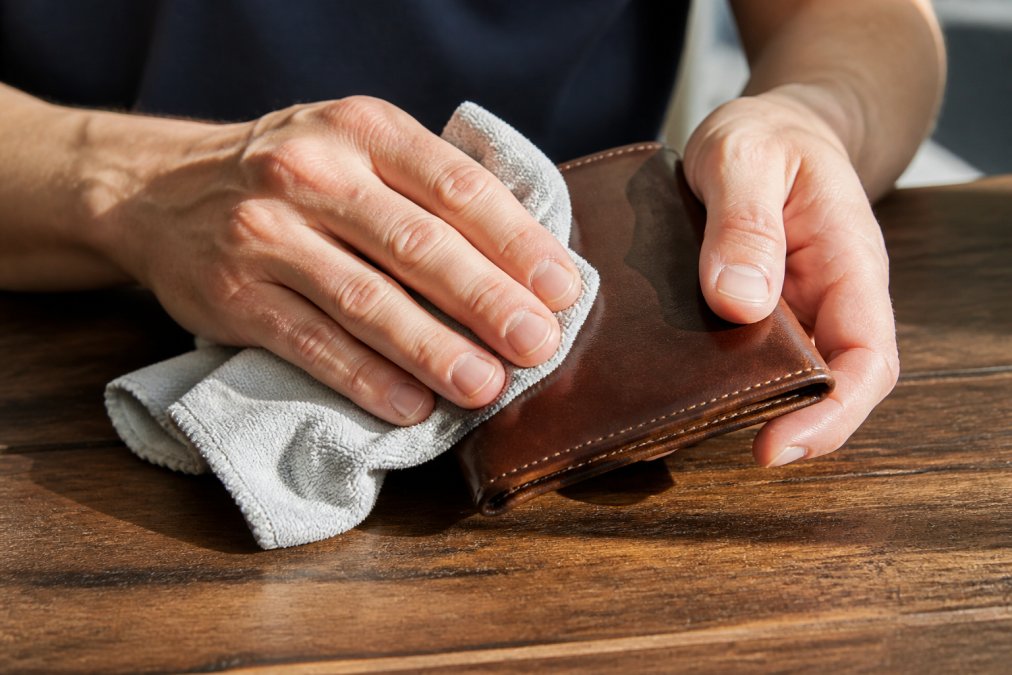
Start by removing all cards and cash. Use a soft, dry microfiber cloth to wipe away surface dirt and dust. For stubborn grime, slightly dampen the cloth with distilled water. Wring it out thoroughly so it is only damp, never wet. Wipe the wallet down, then immediately dry it with a separate dry cloth.
For stains, use a pH-neutral leather cleaner. Apply it to a soft cloth, not directly to the wallet, working in gentle circles. Air dry at room temperature, away from sunlight and heat; never use a hairdryer or radiator.
Choosing the Best Leather Conditioner for Wallets
Conditioning keeps leather supple and prevents cracking, but finding the best leather conditioner for wallets requires understanding your leather type. A conditioner replaces natural oils lost through use and cleaning.
The critical mistake is treating all leather the same. A conditioner that works on a rugged full-grain bifold can ruin a delicate suede cardholder. Match the conditioner to your specific hide.
Vegetable-Tanned Leather
Vegetable-tanned leather, which we use at AnchorsAweighLeather, is tanned with tree bark and natural tannins, leaving it porous and absorbent, hence the coveted patina. A high-quality leather balm with beeswax and natural oils (jojoba or neatsfoot) is the gold standard. Apply sparingly, a pea-sized amount for an entire wallet, and buff thoroughly. Over-application darkens leather and leaves a sticky residue.
Full-Grain and Top-Grain Leather
Full-grain and top-grain leathers often have a protective topcoat that seals the surface, so conditioners sit on top rather than soaking in. Use a lighter conditioner with lanolin or a cream-based formula. Heavy pastes or mink oil clog pores and attract dirt. A thin layer of cream, buffed to a shine, maintains the finish without darkening.
Suede and Nubuck
Suede and nubuck are napped leathers with a brushed texture. Never apply a traditional conditioner to them, oils flatten the nap permanently and create dark spots. Instead, use a suede brush and eraser to lift dirt and revive the nap. For protection, use a silicone-based suede protector spray, testing on an inconspicuous area first.
Exotic Leathers (Alligator, Ostrich, Lizard)
Exotic leathers have unique grain patterns and a delicate topcoat. They require a conditioner formulated for exotics, a gentle cream with minimal oils. Avoid petroleum or silicone, which break down the finish and lift scales or quill follicles. Condition no more than twice a year with a product labeled for that hide.
The Conditioner Selection Checklist
| Leather Type | Recommended Product | Key Ingredients | Frequency | Warning |
|---|---|---|---|---|
| Vegetable-Tanned | Leather balm | Beeswax, jojoba, neatsfoot | Every 3-4 months | Over-application darkens leather |
| Full-Grain / Top-Grain | Cream conditioner | Lanolin, light oils | Every 4-6 months | Avoid heavy pastes |
| Suede / Nubuck | Suede brush + protector spray | Silicone-based spray | As needed | Never use oil-based conditioners |
| Exotic | Exotic-specific cream | Gentle, non-darkening | Every 6 months | Avoid petroleum and silicone |
Apply a thin, even layer with a soft cloth. Let it absorb for 10-15 minutes, then buff with a clean dry cloth. Condition every three to six months, or whenever the leather feels dry.
Building a Leather Wallet Care Routine That Works
A leather wallet care routine is simple but must be consistent. Divide tasks into daily habits, monthly checks, and quarterly deep care.
Daily: Wipe the wallet with a dry cloth before bed to remove surface dirt and oils from your hands. This takes ten seconds and prevents buildup.
Monthly: Inspect the wallet for signs of wear. Check the stitching for loose threads and the leather for dry spots or stretching. Address any issues immediately to prevent them from worsening. This is also the time to clean out any debris from the card slots.
Quarterly: Perform a full clean and condition cycle. This is when you remove all contents, clean the leather with a damp cloth or pH-neutral cleaner, let it air dry, and apply a leather conditioner. This quarterly routine is the single most effective way to maintain leather wallets and ensure they last for decades.
How to Clean Leather Knife Sheath and Other Gear
The principles for wallet care apply to all your leather gear, including how to clean leather knife sheath items and holsters. These pieces face different stresses, so they require slightly different attention.
For a leather knife sheath, remove the knife and use a soft brush or dry cloth to remove dirt from inside and out. Pay special attention to the interior, where blade residue accumulates. A damp cloth works for the exterior, but avoid wetting the interior, which can soften the leather and ruin its grip on the blade.
Condition a knife sheath less frequently than a wallet, perhaps twice a year. Never condition the interior, as oils transfer to the blade and attract dirt. Focus on the exterior and belt loop. The same applies to holsters: clean regularly, condition sparingly, and dry completely before storing.
Common Leather Care Mistakes to Avoid
The biggest threat to leather longevity isn't wear and tear; it's well-intentioned but misguided care. Avoiding these mistakes is as important as following the correct routine.
- Using the wrong cleaners: Household soaps, detergents, and alcohol-based wipes are too harsh. They strip natural oils and can damage the leather's finish.
- Over-conditioning: Applying too much conditioner, or doing it too often, makes the leather soft and spongy. This can lead to stretching and a loss of shape.
- Drying with heat: Never use a hairdryer, radiator, or direct sunlight to dry a wet wallet. Heat causes leather to shrink, warp, and crack. Always air dry at room temperature.
- Ignoring water exposure: If your wallet gets soaked, don't just let it dry. Gently pat it dry with a towel, then let it air dry slowly. Once dry, apply a conditioner to replenish lost oils.
- Storing in plastic: Never store a leather wallet in a plastic bag, which traps moisture and promotes mildew growth. Store it in a breathable cotton dust bag instead.
How to Repair Common Damage
Prevention is ideal, but even careful owners face scuffs, scratches, or faded corners. Here is how to address common damage without making things worse.
Scuffs and Surface Scratches: Minor scuffs are often just surface abrasions. Rub gently with your fingertip or a soft cloth, natural body oils may blend the scuff in. For deeper scuffs, apply a tiny amount of conditioner and buff in circles. If still visible, use a matching leather repair cream or shoe polish, applied with a cotton swab.
Cracking Along Fold Lines: Cracking results from leather drying out. If caught early, faint lines before fibers split, clean the area, apply a generous amount of leather balm, and let it absorb overnight. Repeat weekly for a month. Once split, no conditioner will repair the tear; a leather repair adhesive or professional cobbler is your only option.
Color Fading: Sunlight and friction cause faded edges. For vegetable-tanned leather, fading is part of the patina and often desirable. For dyed leather, restore color with a matching leather dye or colored cream polish, applied in thin layers and sealed with a leather finish. Test on an inconspicuous area first.

Loose or Broken Stitching: Catch a loose thread early by securing it with a tiny drop of clear nail polish or fabric glue. If a seam has pulled apart, do not attempt a DIY fix, leather requires a saddle-stitch with waxed thread and two needles. Take it to a cobbler; a professional re-stitch costs less than replacing the wallet.
A Note on Wallet Hygiene
Wallets are high-touch items that can harbor bacteria, but you cannot sanitize leather like plastic. Alcohol wipes and antibacterial sprays strip natural oils. Wipe with a slightly damp microfiber cloth and dry immediately. For deeper sanitization, use a leather-safe cleaner with mild antibacterial agents, or diluted distilled water with a few drops of white vinegar. Test first and always condition afterward.
Conclusion
Maintaining a leather wallet is about respecting the material. Leather rewards consistent, gentle care with decades of service. Protect it daily, clean it gently every few months, and condition it to keep it supple and strong.
A quality wallet is built to last, but only with proper maintenance. At AnchorsAweighLeather, we craft our wallets from vegetable-tanned leather, knowing they will be carried daily for years. Our handcrafted construction and American-made materials are designed to stand the test of time, and with the right care, your wallet will look better with age, developing a rich patina that tells your story.
Get started with a handcrafted leather wallet built to last, and pair it with a simple care routine to keep it in top condition for life.
Frequently Asked Questions
How often should you condition a leather wallet?
Condition your leather wallet every 3 to 6 months, depending on use and climate. If you carry it daily in a dry or hot environment, lean toward every 3 months. A simple test is to place a drop of water on the leather; if it soaks in quickly, it is time to condition. Over-conditioning can clog the leather pores, so stick to a consistent schedule rather than guessing.
Can you use olive oil to condition a leather wallet?
Avoid olive oil, vegetable oil, or other cooking oils on your wallet. These oils are not pH-neutral and can go rancid over time, producing an unpleasant odor and attracting dirt. They can also darken the leather unevenly and break down the fibers. Stick to products made specifically for leather, like a leather balm or conditioner containing beeswax or mink oil.
How do you remove stains from a leather wallet?
For surface dirt, wipe with a slightly damp cloth and let it air dry. For water stains, lightly dampen the entire surface with a cloth to blend the mark, then let it dry naturally away from heat. Test any cleaning method on a small, hidden spot first.
What is the best way to store a leather wallet when not in use?
Store your leather wallet in a cool, dry place away from direct sunlight and heat sources. Avoid plastic bags, which trap moisture and encourage mildew. Instead, wrap it in a soft cotton cloth or a dust bag. Stuff the wallet with acid-free tissue paper to help it keep its shape, and do not place heavy objects on top of it.
0 comments