
Table of Contents
- Define Your Minimalist EDC Philosophy
- Assess Your Daily Threat Landscape and Carry Requirements
- Build Your Minimalist EDC Essentials List
- Optimize Weight and Bulk: Modular Loadout Design
- How to Organize Everyday Carry Gear for Daily Access
- How to Clean and Maintain Your Leather Knife Sheath
- Common Mistakes to Avoid When Building Your Kit
- Frequently Asked Questions
Last Updated: September 30, 2026
Define Your Minimalist EDC Philosophy
A minimalist everyday carry kit strips away excess and keeps only what solves real problems. It's not about owning the fewest items. It's about owning the right items.
The core principle is simple: every piece must earn its place. Before you buy anything, ask yourself: "Will I use this today? Will I regret not having it?" If the answer to both isn't yes, it doesn't belong in your kit.
Start with your actual daily routine, not a gear list. What problems do you face? What tasks do you handle? Build your kit from there.
Assess Your Daily Threat Landscape and Carry Requirements
Your EDC needs to match your actual environment and routine, not someone else's fantasy scenario.
Your kit should reflect your reality. Urban professionals, office workers, and outdoor enthusiasts have different requirements.
Map your day: Where do you spend most of your time? What tasks require tools? What unexpected situations have you faced recently? This assessment shapes everything. Urban carriers might prioritize a light and blade; outdoor users might weight first aid differently; professionals might focus on discretion.
The key is honest self-assessment. Don't build a kit for the person you want to be. Build one for the person you are right now.
Build Your Minimalist EDC Essentials List
A solid minimalist everyday carry kit contains five core categories: a blade, illumination, a multi-tool, first aid, and a wallet. But modern minimalism also includes a sixth category: digital security essentials.
Physical Essentials: Blade, Light, Tool, First Aid, Wallet
A slim card holder is the foundation of pocket organization. The British Tan Slim Leather Elite Card Holder from AnchorsAweighLeather holds up to four cards and cash, measures 3.8 × 2.9 inches, and features vegetable-tanned leather that improves with age.

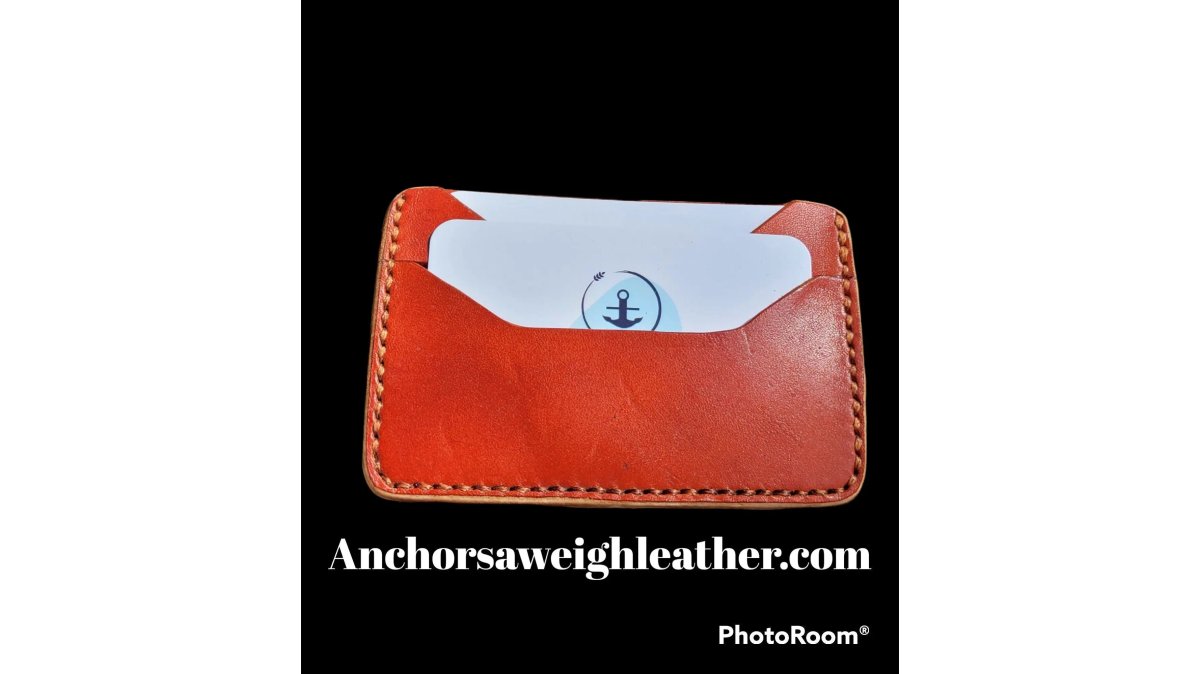
Vegetable-tanned leather is durable, develops character, and doesn't crack like synthetics. The Burgundy/Black and Orange/Black variants follow the same minimalist design. A dedicated card holder keeps cards from shifting and bending while improving access.


Multi-Tool and Blade Selection
A quality blade is non-negotiable in any minimalist everyday carry kit. It solves more problems than any other single tool.
A blade between 2 and 3.5 inches handles nearly everything you'll encounter without the discretion and carry problems of larger blades.
Compliance matters. Check your local regulations before carrying. Some jurisdictions restrict blade length. Others restrict blade type. Know the rules where you carry.
Choose compact multi-tools with a blade, pliers, and basic bits that fold cleanly without snags. Anything more creates unnecessary bulk.
Illumination and First Aid Basics
A compact AAA flashlight is essential. Simple, reliable, and small beats rechargeable models that add complexity.
Carry only what you've actually used: bandages, antibiotic ointment, pain relief. Keep items in a small pouch to prevent spreading and maintain organization.
Digital EDC: The Overlooked Sixth Category
Authentication and identity verification: A hardware security key (such as a YubiKey or Titan key) weighs less than 0.5 ounces and secures access to email, financial accounts, and sensitive services without vulnerability to malware. Unlike software-based authentication, these keys last indefinitely and require no batteries or updates.
Encrypted storage: A small encrypted USB drive (2-4 ounces) carries sensitive documents and recovery codes more securely than physical copies.
Digital hygiene practices: Use a password manager, enable two-factor authentication, and maintain offline recovery code backups. These practices weigh nothing but provide significant security.
Integration with physical carry: Use a small notebook to record encrypted backup codes rather than storing them digitally. This hybrid approach combines physical backup security with minimalism.
Why this matters for minimalists: The minimalist philosophy applies equally to digital and physical domains. Weak passwords or reused credentials undermine a lightweight physical kit. Integrated digital and physical EDC creates a coherent system where security, weight, and utility align.
British Tan Slim Leather ELite Card →
Optimize Weight and Bulk: Modular Loadout Design
Minimalism isn't about achieving the lowest possible weight, it's about optimizing the weight-to-utility ratio of every item you carry.
The Weight-to-Utility Framework
Evaluate each item by frequency of use, severity of problem solved, weight cost, and redundancy. A AAA flashlight (0.6 ounces) used 5-6 times weekly justifies its weight. A specialized item used once in two years may not.
Modular Design Reduces Unnecessary Weight
Modular design means building a system where pieces work together without redundancy. You don't need two blades. You don't need two lights. You need one of each that's reliable and serves multiple purposes where possible.
Think about your carry method. Front pocket carry requires smaller, flatter items, typically under 3 ounces total for comfort. Appendix carry allows slightly larger items (up to 6-8 ounces). Bag carry gives you more flexibility but introduces the risk of items you don't actually access regularly. Your carry method shapes what fits and what weight you can sustain.
Rotation Reduces Daily Load
Rotation is part of minimalist EDC. You don't need to carry everything every day. Some items rotate based on your schedule. A person heading to the office might carry a slim wallet, blade, and light (total: ~2 ounces). Someone spending the day outdoors might add a small first aid pouch and a multi-tool (total: ~5 ounces). Someone traveling might add a backup power source or additional first aid (total: ~7 ounces).
This approach keeps your baseline carry light while maintaining preparedness for specific scenarios. The key is knowing in advance which items rotate in and out based on your planned activities.
Weight Reduction Through Dual-Purpose Design
Weight reduction comes from choosing items that do multiple jobs without compromise. A multi-tool blade reduces the need for a separate cutting tool if the blade quality is acceptable for your tasks. A flashlight with a pocket clip serves as both light and retention device. A leather sheath with a fire steel loop adds functionality without adding weight.
However, dual-purpose items only work if both functions are actually useful to you. A multi-tool with 12 functions you'll never use adds weight without utility. A flashlight with a strobe feature you'll never activate is wasted engineering.
How to Organize Everyday Carry Gear for Daily Access
Organization determines whether your EDC actually gets used or sits in a drawer.
Accessibility is the first rule. Items you use frequently should be easiest to reach. Items you use rarely can be deeper in your pocket or bag.
Consistency matters. Once you establish a system, stick with it. Your brain learns where things are. You can deploy items without thinking. This is the real advantage of a practiced EDC setup.
Keep related items together. Your blade and sheath stay together. Your light and batteries stay together. Your first aid items stay in their pouch. This prevents losing pieces and makes your kit feel cohesive.
Test your organization in real situations. Carry your setup for a week. Notice what you reach for first. Notice what stays untouched. Adjust based on what you actually use.
How to Clean and Maintain Your Leather Knife Sheath
A quality leather knife sheath protects your blade and extends its life. Proper maintenance keeps it functional for decades.
Clean your sheath regularly. Dust and debris accumulate in the leather grain.
Common Mistakes to Avoid When Building Your Kit
Most people fail at minimalist EDC because they violate the core principle: every item must earn its place.
Frequently Asked Questions
What are the best items to include in a minimalist everyday carry list?
Start with the essentials: a slim wallet for cards and cash, a reliable multi-tool, a compact light source, a small first aid kit, and a quality knife with a protective sheath. The best items depend on your daily routine and threat assessment. Urban professionals need different gear than outdoor enthusiasts. Focus on tools with multiple functions to reduce bulk while maintaining preparedness. A minimalist EDC essentials list prioritizes redundancy in utility rather than quantity of items.
How can I keep my everyday carry kit lightweight?
Select tools that serve multiple purposes instead of single-function items. Choose compact, durable materials like titanium or aluminum over heavier alternatives. A slim leather wallet like the British Tan Slim Leather Elite Card Holder (3.8 inches long, 2.9 inches tall) reduces bulk compared to traditional wallets. Rotate seasonal gear based on threat assessment and daily routine. Avoid redundant items that duplicate functionality. Weight-to-utility ratio analysis helps identify which tools earn their pocket space.
How do I know if my minimalist kit actually covers emergencies?
Build your kit around realistic scenarios from your daily routine. Include basic first aid supplies, a light source for visibility, cordage or paracord for problem-solving, and a multi-tool for repairs. Review your kit quarterly and adjust based on seasonal changes or new threats you encounter. Minimalism doesn't mean ignoring preparedness; it means choosing versatile, durable gear that handles multiple scenarios without excess weight or bulk.
What's the difference between a minimalist EDC kit and a bug-out bag?
A minimalist everyday carry kit contains items you use daily and keep on your person or in a small bag. A bug-out bag is a larger emergency pack for extended survival or evacuation scenarios. Your EDC kit focuses on daily utility and routine preparedness, while a bug-out bag emphasizes survival supplies and sustained independence. Many people maintain both: a lightweight daily loadout for normal carry and a modular system that expands when conditions warrant it.
0 comments