
Table of Contents
- How Long USA Made Leather Wallets Last
- Full Grain Leather Wallet Durability and Material Quality
- Factors Affecting Leather Wallet Lifespan
- Signs of a High-Quality Leather Wallet
- How to Maintain Leather Wallets for Maximum Lifespan
- When to Repair vs. Replace Your Wallet
- Environmental Impact and Sustainable Leather Choices
- Frequently Asked Questions
Last Updated: September 29, 2026
How Long USA Made Leather Wallets Last
A quality leather wallet should outlast several cheaper alternatives combined. The difference comes down to material selection, construction technique, and how you treat it. A quality leather wallet should outlast several cheaper alternatives combined. The gap isn't accidental, it reflects fundamental differences in how the leather is sourced, tanned, and stitched together.
This guide breaks down what determines wallet longevity, how to identify quality wallets, and how to maintain them for decades of use.
Full Grain Leather Wallet Durability and Material Quality
The material you choose determines roughly 60% of your wallet's lifespan. Not all leather is created equal, and the differences are visible if you know what to look for.
Full-Grain vs. Top-Grain vs. Genuine Leather
Full-grain leather is the entire hide with the top layer intact, including natural markings and scars. It has maximum tensile strength and develops a rich patina over time, deepening color and texture that makes old leather look distinguished rather than worn out.
Top-grain leather has the top layer sanded and refinished to hide blemishes, which removes some structural integrity. It lasts longer than genuine leather but won't age as beautifully as full-grain.
Genuine leather is a marketing term for leather made from leftover hide scraps bonded together with adhesives. It's technically leather, but the structural integrity is compromised. Genuine leather wallets typically fail within 2-3 years of regular use.
For a wallet that lasts, full-grain is non-negotiable. It's what AnchorsAweighLeather uses in our handcrafted billfolds and roper wallets.
Vegetable-Tanned Leather and Patina Development
Vegetable-tanned leather is processed using tannins from tree bark instead of chemicals. Most mass-market wallets skip this method because it costs more, but the payoff is remarkable: vegetable-tanned leather develops a patina that tells the story of how you've used it.
The patina isn't damage, it's natural oxidation that strengthens the leather's surface. A five-year-old wallet looks completely different from a new one and is more resistant to further wear because the leather fibers have hardened into a protective layer.
New vegetable-tanned leather is stiff, but most people notice significant softening within the first month of daily carry. By month three, the leather conforms to your pocket and hand, the fibers relaxing into their final form, not degrading.
Factors Affecting Leather Wallet Lifespan
Several specific factors determine how long your wallet actually lasts. Material quality sets the ceiling, but these factors determine whether you hit that ceiling or fall short.
Stitching Quality and Saddle Stitch Construction
The stitches holding your wallet together will outlast the leather itself if they're done correctly. Saddle stitching is the gold standard. Each stitch passes completely through the leather and back again, creating a double line of thread. If one stitch breaks, the others hold. Machine stitching uses a single line of thread that, if broken, can unravel the entire seam.
Saddle stitching is done by hand, which is why it costs more. AnchorsAweighLeather uses saddle stitching on every wallet. The stitching integrity directly correlates with wallet lifespan. A wallet with perfect leather but poor stitching will fail at the seams first.
Look at the stitching on any wallet you're considering. The thread should be thick and visible, with consistent spacing. Loose or uneven stitches are a red flag. The stitches should be tight enough that you can't slide a fingernail between the thread and leather.
Daily Carry and Pocket Placement Impact
How you carry your wallet matters significantly. Back pocket carry creates constant pressure and flexing; front pocket carry is gentler but can cause creasing. Rotating carry locations, back pocket, front pocket, jacket pocket, reduces stress.
Pocket friction accelerates wear. A wallet in a tight back pocket experiences hundreds of micro-abrasions daily, breaking down leather fibers faster. Loose pockets reduce this stress significantly.
Temperature and humidity matter too. A wallet in a hot back pocket experiences moisture and heat that accelerate degradation. Keeping it in a cool, dry location when not carrying it extends its life measurably.
Hardware Durability and Edge Burnishing
The snaps, rivets, or closures on your wallet need to survive as long as the leather. Cheap hardware fails first. Stainless steel or solid brass hardware lasts decades. Plated hardware can corrode after 2-3 years.
Edge burnishing is the process of sealing and smoothing the leather edges. Unburnished edges fray and deteriorate quickly. Burnished edges stay clean and protected. This detail separates wallets built to last from disposable ones. When you examine a quality wallet, run your finger along the edges. They should feel smooth and sealed, not rough.
Signs of a High-Quality Leather Wallet
Before you buy, you need to know what quality actually looks like. These markers tell you whether a wallet is built for 20 years or 2 years.
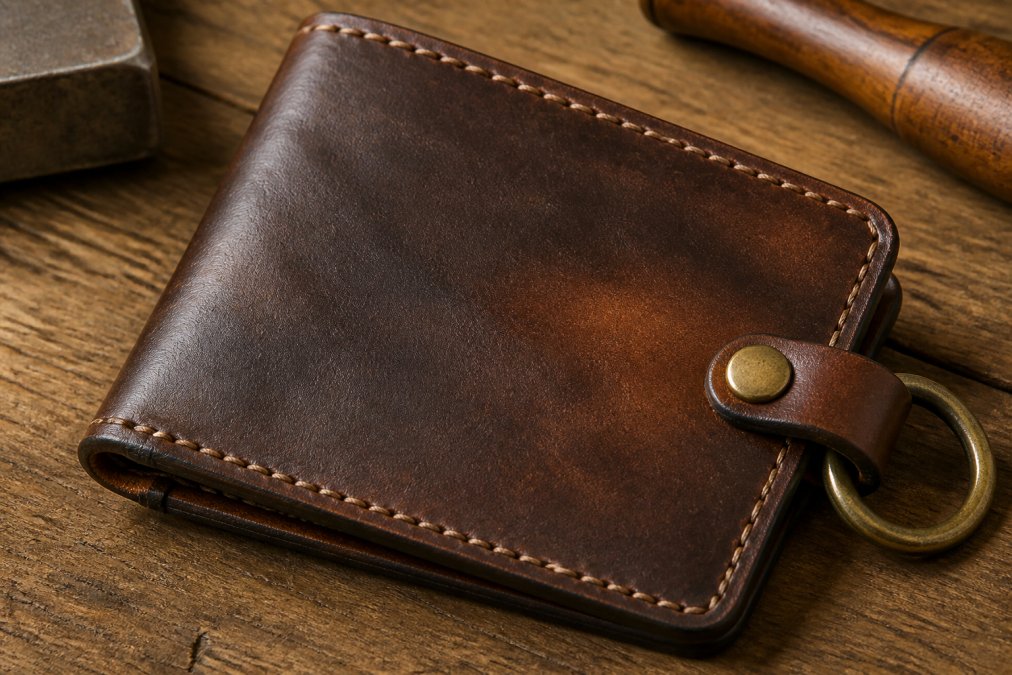
Identifying Craftsmanship and Hide Quality
A quality wallet feels substantial and resists gentle flexing, springing back. Cheap wallets are thin and flimsy, staying bent.
Mens leather wallet, leather wallet →
Full-grain leather shows natural variation, color differences, healed scars, and texture changes. Perfectly uniform leather has been sanded and refinished, top-grain or worse.
Craftsmanship shows in small details: reinforced card slot corners, sealed and finished edges, consistent tight stitching, and a natural leather scent rather than chemical smell.
A quality leather wallet is heavier than expected, reflecting dense high-quality hides. Light wallets are made from thin or low-grade leather.
Recognizing Wear Patterns and Break-In Period
New leather wallets from quality makers feel stiff, normal for a 4-8 week break-in period during which the leather softens and molds to your pocket or hand.
After break-in, the wallet should feel broken in but structurally sound, with uniform wear patterns. If one area wears much faster than others, the leather quality is inconsistent.
A wallet with proper patina development shows darkening in high-contact areas, your thumb naturally darkens one spot when opening it. This means the leather is hardening and darkening with use, not falling apart.
How to Maintain Leather Wallets for Maximum Lifespan
The best wallet will fail early if you don't maintain it. Proper care is the difference between a 5-year wallet and a 20-year wallet.
Leather Conditioning and Moisture Absorption
Leather needs moisture to stay supple. Completely dry leather cracks; oversaturated leather develops mold. Balance matters.
Condition your wallet 2-3 times per year with quality leather conditioner to replace natural oils that evaporate. Apply sparingly with a soft cloth using circular motions, then let it absorb for 24 hours before use.
Avoid water exposure. If your wallet gets wet, dry it slowly at room temperature, never with direct heat. Fast drying causes cracking. Air dry on a shelf for 24-48 hours to prevent permanent damage.
Moisture absorption is natural and necessary, skin oils and sweat transfer to the leather as part of patina development. Regular conditioning prevents the leather from drying out completely while moisture content fluctuates.
Maintenance Routine and Storage Best Practices
Keep your wallet in a cool, dry place when not carrying it. Temperature swings and humidity fluctuations stress the leather. A desk drawer beats a car dashboard; a closet beats a bathroom.
Wipe your wallet monthly with a dry cloth to remove dust and dirt. Inspect stitching and edges to catch small problems before they become big ones.
Avoid overstuffing. A wallet designed for 8 cards shouldn't carry 15. Extra pressure stresses the leather and stitching.
When to Repair vs. Replace Your Wallet
Most quality wallets will need minor repairs before they need replacement. Knowing the difference saves money and extends your wallet's life.
Environmental Impact and Sustainable Leather Choices
The leather industry has environmental consequences. Understanding them helps you make better choices.
| Material Type | Lifespan | Patina Development | Repairability | Best For |
|---|---|---|---|---|
| Full-grain vegetable-tanned | 15-20+ years | Excellent | High | Daily carry, long-term investment |
| Top-grain leather | 8-12 years | Moderate | Medium | Regular use, lighter budget |
| Genuine leather | 2-3 years | Minimal | Low | Temporary wallets, disposable use |
Key Takeaways:
- Full-grain vegetable-tanned leather outlasts alternatives by 5-10x when properly maintained
- Saddle stitching is non-negotiable for wallets expected to last a decade or more
- How you carry your wallet (pocket placement, temperature, friction) significantly impacts durability
- Regular conditioning every 2-3 months prevents leather degradation and extends lifespan
- A quality wallet lasting 20 years has lower environmental impact than replacing cheap wallets repeatedly
Frequently Asked Questions
How long should a genuine leather wallet last?
A genuine USA made leather wallet constructed from full-grain vegetable-tanned leather typically lasts 10 to 20+ years with proper care. The lifespan depends on material quality, stitching integrity, and maintenance routine. Full-grain leather develops a rich patina over time and actually improves with age, unlike synthetic alternatives that degrade. Wallets with saddle stitching and thick hide construction withstand daily carry stress better than thin, glued wallets.
Does full-grain leather last longer than top-grain?
Yes. Full-grain leather retains the entire hide structure, including the grain surface, which provides superior tensile strength and abrasion resistance compared to top-grain. Top-grain has the outer layer sanded away, removing natural fibers that contribute to durability. Full-grain wallets develop protective patina as leather fibers condition with oil saturation from daily use. This natural aging process strengthens the material, while top-grain lacks this advantage and shows wear more visibly.
What makes a USA made leather wallet more durable than mass-market alternatives?
USA made wallets prioritize material longevity through vegetable tanning and hand-stitching with saddle stitch technique. Handcrafted construction allows makers to select premium hides with superior grain structure and apply edge burnishing that protects leather fibers from moisture absorption and abrasion. The result is structural integrity that lasts decades rather than months.
How often should I condition my leather wallet?
Condition your wallet every 6 to 12 months, or when the leather appears dry or starts showing signs of cracking. Light conditioning every few months is acceptable for wallets in heavy daily carry. Use a leather conditioner designed for vegetable-tanned leather to maintain flexibility and moisture balance. Over-conditioning can cause excessive oil saturation and weaken the hide, so apply sparingly. Regular conditioning prevents leather fibers from becoming brittle and extends the break-in period benefits that make your wallet more comfortable over time.
0 comments