
Table of Contents
- Why Texas-Made Leather Gear Outlasts the Rest
- What Defines Authentic Handcrafted Leather Goods
- Handcrafted Leather Holster Durability: Built for Daily Carry
- The Best Leather Wallet for Men 2026: Roper and Minimalist Styles
- Custom Knife Sheaths and Outdoor Gear for the Field
- How to Care for Full-Grain Leather So It Lasts Decades
- Choosing Your Rugged Leather Gear Texas Made
- Frequently Asked Questions
Last Updated: September 6, 2026
Mass-produced holsters and wallets from big-box retailers crack, stretch, or split within a season. Rugged leather gear Texas made is built by hand from full-grain hides and stitched to outlast the carrier. This guide from AnchorsAweighLeather, a veteran-owned San Antonio shop established in 2017, explains what separates heirloom-grade craftsmanship from factory filler.
The core difference is material and method: cheap gear uses bonded leather and machine stitching that fails under stress; real Texas-made gear starts with a single full-grain hide, cut, molded, and hand-sewn by someone who signs their work.
Why Texas-Made Leather Gear Outlasts the Rest
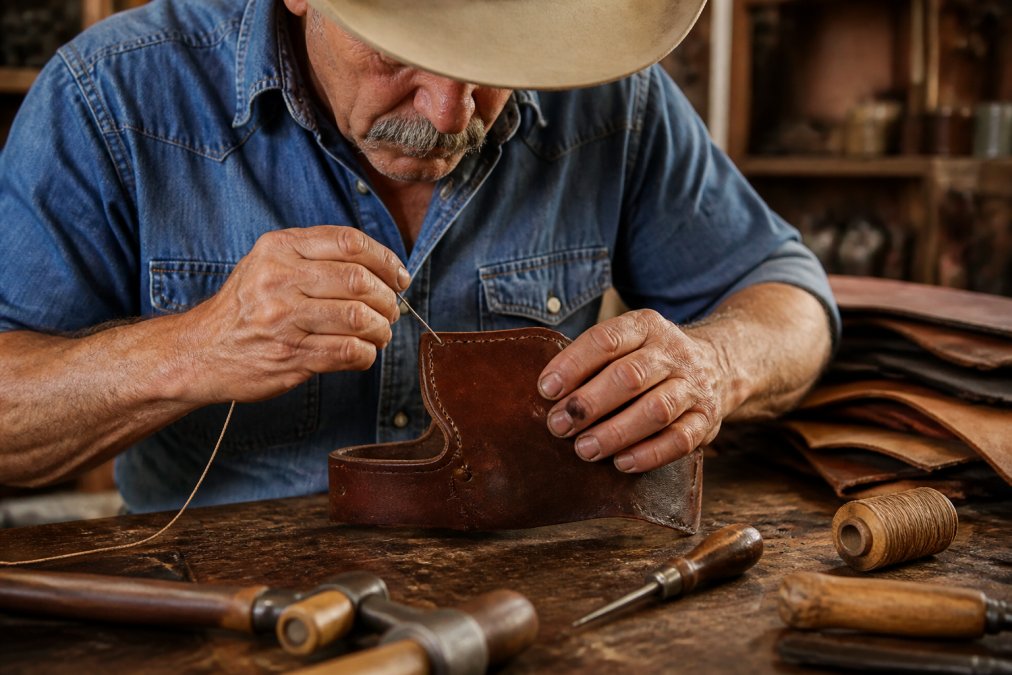
Texas-made leather gear outlasts imports because it uses thicker, vegetable-tanned full-grain leather and saddle stitching, where two needles pass through each hole in opposite directions. If one thread breaks, the other holds the seam, why a hand-stitched holster can serve two decades while a machine-stitched import unravels in months.
The hides themselves matter just as much. Vegetable-tanned leather, often cut at 7-9 ounces for holsters, is firm enough to hold its molded shape for a firearm while remaining comfortable against the body. The Leather Working Group's tannery protocol sets environmental and quality standards that serious American tanneries follow, which is why sourcing transparency matters when you are trusting a holster with a loaded firearm.
What Defines Authentic Handcrafted Leather Goods
Authentic handcrafted leather goods are defined by three markers: the tannery source, the tanning process, and the maker's willingness to customize. Genuine handmade pieces show slight irregularities in dye and texture that factory goods lack, proof a human cut and finished that hide.
Full-Grain vs. Top-Grain vs. Bonded Leather
Full-grain leather is the hide's top layer with the natural grain intact, retaining dense fibers that resist tearing and develop a rich patina. Top-grain leather has the rough outer layer sanded off, making it thinner and less durable. Bonded leather is shredded scraps glued together, which delaminates quickly under daily stress.
For rugged use, full-grain is the only rational choice, visible in the cut edge: full-grain shows tight, solid fibers; bonded leather shows a crumbly composite. A quality maker will tell you exactly which hide they use, so ask before you buy.
Vegetable-Tanned vs. Chrome-Tanned: What It Means for Rugged Use
Most buyers stop at "full-grain" and never ask the question that matters more for outdoor gear: how was the hide tanned? The answer determines how your gear holds up to sweat, rain, and decades of reholstering.
Vegetable tanning uses tannins from tree bark and plant matter, taking 40 to 60 days. The resulting leather is firm, dense, and naturally water-resistant. It holds molded shapes, critical for a holster locking a firearm securely, and develops a rich patina as hand oils absorb into the fibers. When wet and dried, it stiffens back into shape rather than stretching out of fit.
Chrome tanning uses chromium salts and completes in about one day, producing soft, supple, stretchy leather, great for upholstery or fashion bags, but wrong for rugged gear. It stretches under a holstered firearm's repeated pressure, loses its molded fit within months, and lacks the same characterful patina.
A common pattern among serious Texas leather makers is vegetable tanning exclusively, often sourcing hides from American tanneries that follow The Leather Working Group's tannery protocol for environmental and quality standards. When you see a maker advertise "veg-tan," that is shorthand for a slower, more expensive process that produces a stiffer, longer-lasting product.
Leather Sourcing Transparency: Why the Tannery Matters
Here is a question almost no leather brand wants you to ask: where was the hide tanned, and by whom? Most mass-market "genuine leather" comes from overseas tanneries with opaque supply chains and inconsistent quality control, one facility's hide may be soft and pliable; another's may be brittle and prone to cracking.
Serious American makers treat sourcing as part of the product, naming their tannery, the region the cattle were raised, and the hide's approximate thickness. This transparency matters practically: a holster carries a loaded firearm against your body, and a sheath protects a blade you may need in an emergency. The tannery is the first link in that safety chain.
When evaluating rugged leather gear, ask three sourcing questions: Is it full-grain? Is it vegetable-tanned? Can you name the tannery? Vague or evasive answers mean the gear is probably not what the marketing claims.
How Texas-Made Leather Ages: The 5-10 Year Patina Picture
One of the strongest arguments for full-grain, vegetable-tanned leather is how it looks after half a decade of hard use. A cheap bonded-leather wallet disintegrates into flakes; a chrome-tanned holster sags and loses retention. A well-made vegetable-tanned piece does the opposite, it gets better.
Year one: the leather is stiff, light tan or honey-colored, with a dry surface and minor scuffs from holstering. This is normal.
Year three: body oils darken the leather to warm caramel. The holster has molded perfectly to your firearm and hip, scuffs blend into a uniform sheen, and sharp edges burnish smooth from clothing contact.
Year five to ten: the leather deepens to rich chestnut or mahogany with a glossy patina no factory finish can replicate. Saddle stitching remains intact, and the holster locks the firearm with day-one retention because vegetable-tanned leather does not fatigue like softer leathers.
This aging process is visual proof of durability, a well-worn Texas-made holster at a gun show is ten years of evidence the construction works. That is why heirloom-grade gear is worth the upfront cost: it is the last holster or wallet you will need to buy.
Handcrafted Leather Holster Durability: Built for Daily Carry
A handcrafted leather holster offers durability kydex and nylon cannot match because it molds to your specific firearm and body shape over the first weeks of carry, locking the weapon securely while distributing pressure across your hip instead of concentrating it in hard spots.
The TEXAS REBEL IWB Conceal Carry Holster from AnchorsAweighLeather is our top pick for daily inside-the-waistband carry. At $50.00, it is handcrafted from premium full-grain leather, custom-molded for a secure fit, and designed for all-day comfort on the ranch or in the city. The pancake-style Cattleman Saddle Holster, at $47.00, suits Ruger LCP 380 and Smith & Wesson Bodyguard 380 owners preferring strong-side carry with double-stitched reinforcement and secure belt-loop retention.

The Best Leather Wallet for Men 2026: Roper and Minimalist Styles
The best leather wallet for men 2026 balances storage capacity with a slim profile that does not wreck your back when sitting on it for eight hours. Roper wallets, the long western style, remain the top choice for cash, cards, and a checkbook, while minimalist bifolds suit front-pocket carriers.
AnchorsAweighLeather's San Antone Roper Wallet, at $75.00, is hand-sewn with the saddle stitch technique from durable veg-tan leather at 1-2 mm thickness, offering five card slots, three cash compartments, and a western look that ages beautifully. The Cattleman Roper Wallet delivers the same construction for $60.00 with a lighter profile. The Longhorn Minimalist Wallet at $65.00 pairs hand-tooled longhorn detailing with a basket weave pattern in a front-pocket-friendly design.

| Wallet Model | Price | Card Slots | Best For |
|---|---|---|---|
| San Antone Roper | $75.00 | 5 | Full EDC carry, checkbook |
| Cattleman Roper | $60.00 | 4 | Lighter daily carry |
| Longhorn Minimalist | $65.00 | Multiple | Front-pocket, slim profile |
Custom Knife Sheaths and Outdoor Gear for the Field
Custom knife sheaths protect your blade investment by holding it securely without scratching the finish or letting it rattle. A properly fitted sheath is wet-molded around your knife, creating a friction fit that locks the blade while allowing a smooth, reliable draw.
The Custom Texas Pancake Knife Sheath, starting at $45.00, is handcrafted to fit your exact knife, whether standard pocket or foldable. For a ready-made option fitting Buck 382 or Trapper-style knives, the Texas Lineman Pancake Sheath at $43.00 uses 7-8 oz vegetable-tanned leather with a forward cant and accommodates belts up to 1.5 inches wide. These sheaths carry flat against the belt, practical for field work where snagging on brush is a concern.

How to Care for Full-Grain Leather So It Lasts Decades
Caring for full-grain leather is simple: clean it, condition it, and let it dry naturally. Overconditioning is the most common mistake, it softens the leather and ruins the molded fit of holsters and sheaths.
The 4-Season Care Cycle for Texas Climate
Texas weather is not one climate, it is several. A holster worn in Houston humidity faces different stress than one in El Paso desert air. Adjust your care routine to your region and season.
Spring (humid, rainy): Moisture is your main enemy. Wipe down leather after rain or heavy sweat, air dry completely before storing, and apply a light conditioner once at season's start to maintain flexibility without oversaturating.
Summer (heat, intense sun, heavy sweat): This is the harshest season. Sweat salts wick into fibers, drying them out or corroding hardware. Wipe with a slightly damp cloth weekly during summer carry, then dry immediately. Do not leave gear in a parked car, dashboard heat can reach 160°F, cooking oils out of leather and causing brittleness and cracking.
Fall (mild, dry): This is the ideal time for deep conditioning, moderate temperatures allow oils to penetrate evenly. Apply conditioner, let it sit for 15 minutes, then buff off excess.
Winter (cold snaps, occasional freezing): Cold makes leather stiffer and more prone to cracking if flexed. If carrying in freezing temperatures, the leather will feel harder, this is normal. Bring the holster inside at night rather than leaving it in a cold truck. Avoid conditioning in extreme cold; oils thicken and do not absorb properly.
Product-Specific Care: Holsters vs. Wallets vs. Sheaths
Each gear type has different stress points requiring slightly different attention.
Holsters face the most demanding environment: constant firearm pressure, clothing friction, and body sweat. The critical step is preserving the molded fit. After conditioning, re-mold by inserting your firearm wrapped in a plastic bag and letting it dry. Check tension monthly, if the firearm rattles or moves freely, the leather has stretched and needs re-molding.
Wallets live in your back pocket, absorbing body heat and sitting pressure. The main risk is overflexing at the fold line. If carrying a Roper wallet, rotate pockets occasionally to distribute wear. Clean with a dry cloth monthly to remove skin oils that can darken leather unevenly.
Knife sheaths face abrasion from the blade edge during insertion and removal; the interior wears faster than the exterior. If the blade scratches the interior leather, apply a thin layer of conditioner inside only to reduce friction. Never oil the blade before sheathing, the oil transfers to the leather and softens it.
The 5 Most Common Mistakes That Ruin Leather Gear
-
Overconditioning. Applying oil or conditioner more than every 3-6 months softens leather and destroys molded fit. A holster that has lost its shape is a safety hazard.
-
Drying with direct heat. A holster dried on a heater, in a microwave, or in direct Texas sun will shrink and crack irreversibly. Always air dry at room temperature, away from heat sources.
-
Using saddle soap too often. Saddle soap is a cleaner, not a conditioner. Weekly use strips natural oils, leaving leather dry and chalky. Reserve it for deep cleaning once or twice a year, then follow with conditioner.
-
Storing in plastic bags. Leather needs to breathe. Storing a damp holster in a Ziploc bag promotes mildew that permanently stains and weakens fibers. Store in a cloth bag or open air.
-
Ignoring hardware corrosion. Belt clips, snaps, and rivets can corrode from sweat. Wipe metal hardware dry after heavy use and apply a tiny drop of oil to moving parts annually.
When to Condition: The Water-Bead Test
A simple water test tells you when conditioning is needed. Place a single drop of water on the leather surface. If it beads up and rolls off, the leather still has adequate oils. If it soaks in within 30 seconds, the leather is dry and needs conditioning.
This works because properly conditioned full-grain leather is naturally water-resistant, oils create a barrier causing water to bead. When oils deplete, the leather becomes absorbent and vulnerable to moisture damage.
The Annual Deep-Clean Routine
Once a year, typically in the fall, give your gear a full maintenance session:
- Remove dust or debris with a soft, dry brush.
- Wipe with a slightly damp cloth to remove surface grime.
- Apply a thin, even layer of neatsfoot oil or quality leather conditioner with a soft cloth.
- Let it absorb for 15 minutes.
- Buff off excess with a clean, dry cloth.
- For holsters, re-mold with your firearm wrapped in plastic.
- Let the piece rest for 24 hours before use.
[EXTERNAL_LINK: The goal is not to make the leather soft and supple, it is to keep it firm, water-resistant, and structurally sound for decades of service. The goal is not to make the leather soft and supple, it is to keep it firm, water-resistant, and structurally sound for decades of service.
Choosing Your Rugged Leather Gear Texas Made
Choosing rugged leather gear Texas made means verifying three things before purchase: the leather is full-grain or vegetable-tanned, the stitching is hand-done with the saddle technique, and the maker will customize the fit to your specific gear. If a product checks all three boxes, it will likely outlive cheaper alternatives by decades.
AnchorsAweighLeather meets every criterion. Every holster, wallet, and sheath is handcrafted and hand-sewn in San Antonio from premium full-grain or veg-tan leather. Custom orders are standard practice, and all work is done by hand by a veteran-owned business. Free shipping applies to orders over $100.
Frequently Asked Questions
What makes leather gear from Texas higher quality?
Texas leather goods are often made by small shops that select full-grain hides and use saddle stitching, a method where two needles cross through each hole. This creates a stitch that holds even if one thread breaks. Many of these craftspeople, like veteran-owned AnchorsAweighLeather in San Antonio, build gear to handle ranch work, hunting, and daily carry. The focus is on function and longevity, not mass production, which means each piece gets more attention to detail and stronger materials than typical factory-made imports.
How can you tell if leather gear is truly handcrafted?
Look for saddle stitching with visible, evenly spaced diagonal lines, which indicates handwork rather than a machine. Check the leather edges: handcrafted items are often burnished smooth with gum tragacanth, not painted. Ask about the tannery and leather type. A true handcrafted piece uses full-grain leather, which retains the natural surface and develops a patina. Irregularities in the leather grain are a good sign, as they prove the hide was not sanded down or covered with a plastic coating.
What are the benefits of buying veteran-owned leather goods?
Veteran-owned businesses like AnchorsAweighLeather are built on discipline and precision. They stand behind their work because their reputation is tied to their service. You get direct communication with the maker, and a product that is inspected by someone who cares about the outcome. Many veteran-owned shops also offer free shipping over a certain amount, such as the $100 threshold at AnchorsAweighLeather.
How do I maintain rugged leather gear for long-term durability?
Condition your leather every three to six months with a product made for full-grain leather, like neatsfoot oil or a quality leather balm. Apply a thin coat, let it absorb, and buff off the excess. Keep the gear away from prolonged direct heat and moisture. If it gets wet, let it dry naturally at room temperature. For holsters, avoid over-oiling the inside, as it can soften the leather and reduce retention. With this routine, a quality Texas-made piece will age well and last for decades.
The challenge with leather gear is resisting the cheap import that fails in a year. It is not worth the frustration or the risk. AnchorsAweighLeather builds holsters, wallets, and sheaths that are hand-stitched, custom-fitted, and made from full-grain leather that develops character with every season of use. Get started with AnchorsAweighLeather and carry gear that earns its keep from the first day to the decades after.
0 comments