
Table of Contents
- Understanding Holster Retention and Why It Matters
- How to Check Holster Retention Before You Adjust
- Leather Holster Break-In: What to Expect
- How to Loosen a Tight Leather Holster
- Fixing a Leather Holster That Is Too Loose
- Safe Adjustment Procedures for Molded Leather Holsters
- Common Mistakes to Avoid When Adjusting Retention
- When to Stop Adjusting and Contact the Maker
- Frequently Asked Questions
Last Updated: October 12, 2026
Understanding Holster Retention and Why It Matters
Holster retention is the amount of grip your leather holster maintains on your firearm. It's the difference between a holster that holds your gun securely during movement and one that lets it shift or fall out.

At AnchorsAweighLeather, we build every holster with this balance in mind, and we design our products so you can adjust retention leather holsters to match your specific needs. Our handcrafted leather holsters are molded to fit your specific firearm, which gives us a starting point.
The real problem most people face is not knowing whether their holster needs adjustment at all. You might think it's too loose when it's actually fine, or too tight when it just needs more break-in time.
How to Check Holster Retention Before You Adjust
Before you make any changes to your holster, you need to know exactly what you're working with. Testing retention properly takes the guesswork out of the process. There are two straightforward ways to evaluate whether your holster's grip is where it should be.
The Unloaded Firearm Test
The unloaded firearm test is your first checkpoint. Remove all ammunition from your firearm and ensure the chamber is clear. Hold your holster in one hand and insert your unloaded gun into it. Now tilt the holster upside down slowly.
If your gun drops immediately, your holster is too loose.
This test works best with your actual firearm. If you don't have access to your gun, a replica or training model works in a pinch, but weight and dimensions matter. A lighter replica might feel more secure than your actual firearm would.
The Draw Resistance Check
Draw resistance is how much effort it takes to remove your firearm from the holster during a normal draw stroke. This is different from the tilt test because it accounts for the angle and speed of a real draw.
Holster your unloaded firearm in the position you normally carry it. Now perform your regular draw motion at normal speed. The gun should come out smoothly without binding or catching, but you should feel deliberate resistance, not a loose slide.
If your draw feels effortless with almost no resistance, your holster might be too loose. If you have to fight hard against the leather to pull the gun out, it's probably too tight.
Leather Holster Break-In: What to Expect
New leather holsters feel stiff. This is not a flaw, it's normal.
In the first week, your holster will feel tight. The leather hasn't had time to compress around your gun. Your draw will require more effort. This is fine.
By week two, you'll notice the leather starting to soften slightly. The draw becomes easier. This is the leather beginning to mold to your specific firearm's shape.
After three to four weeks of regular carry, most leather holsters reach their sweet spot.
The entire break-in process depends on how often you carry. Daily carry accelerates break-in. Occasional carry extends it. Leather also responds to temperature and humidity.
How to Loosen a Tight Leather Holster
If your holster feels too tight after break-in, you have two main approaches to adjust retention leather holsters: adjusting retention screws or conditioning the leather to encourage controlled stretching.
Adjusting Retention Screws
Many leather holsters, including our Custom Leather IWB Holster and The HOSS IWB Leather Holster, use retention screws to fine-tune grip. These screws compress the leather around your firearm. Loosening them reduces tension.

Locate the retention screws on your holster. They're typically on the inside of the holster near the muzzle or along the sides.
Turn each screw counterclockwise about a quarter turn. Stop and test your draw. Repeat this process in small increments until your draw feels smooth without being loose. Never loosen screws more than necessary.
After loosening, perform the unloaded firearm test again. Your gun should still stay in place when you tilt the holster, even if the draw is now easier.
Controlled Stretching and Conditioning
Leather naturally stretches over time with use. You can speed this process safely using conditioning products designed for leather.
Work the conditioner into the leather using your fingers or a soft cloth. Let it sit for a few hours, then wipe away excess. The leather will soften slightly as the conditioner absorbs.
Repeat this process every two to three weeks if you need further loosening. Conditioning takes longer than adjusting screws, but it's gentler on the leather and produces more gradual changes.
Fixing a Leather Holster That Is Too Loose
A loose holster is a more serious problem than a tight one because it compromises security. Your firearm can shift during movement or potentially fall out. Tightening requires different techniques than loosening.
Tightening Retention Screws
If your holster has retention screws, tightening them is straightforward. Turn each screw clockwise about a quarter turn. Test your draw after each adjustment. Continue in small increments until retention feels secure but the draw doesn't bind.
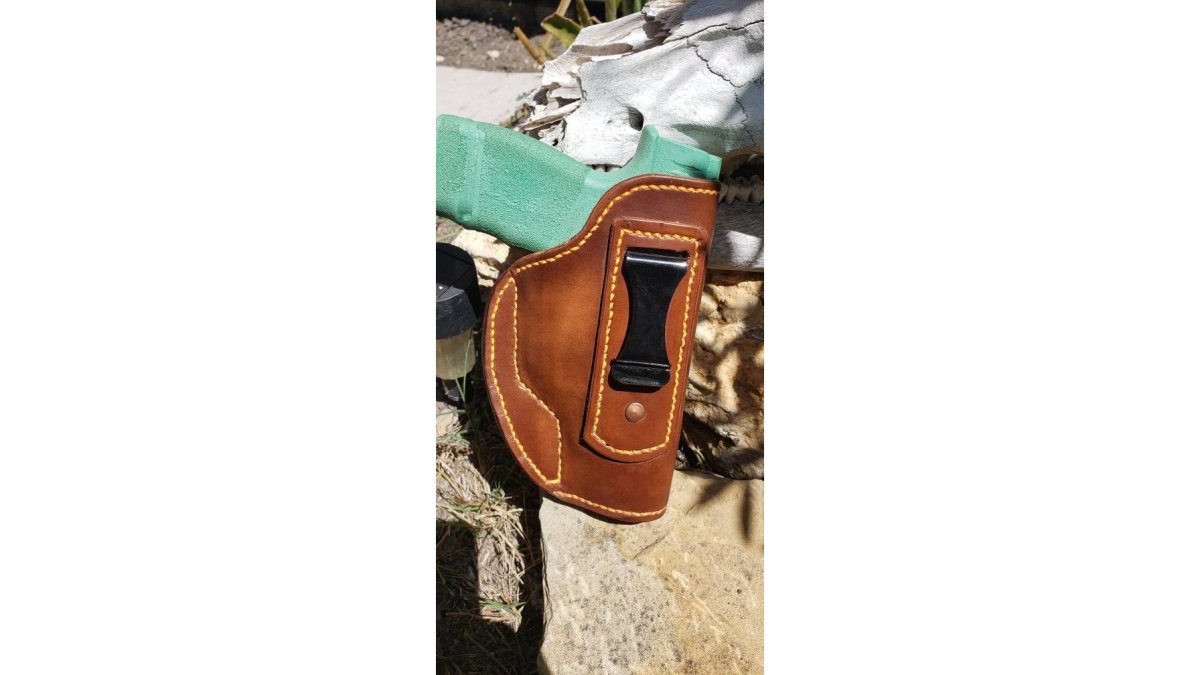
Custom Leather IWB holster, Leather Holster, Conceal Carry Holster →
The key is not over-tightening. Excessive screw tension can compress the leather too much, making the holster uncomfortable and difficult to draw from. You want firm retention, not a vice grip.
After tightening, perform the unloaded firearm test. Your gun should not fall out when you tilt the holster, and your draw should require deliberate effort but not feel stuck.
Molding and Conditioning for Better Fit
Loose holsters often result from the leather stretching beyond its ideal shape. You can help re-mold the leather by using heat and moisture carefully. Dampen a cloth with warm water and wipe the inside of the holster where it contacts your firearm.
Insert your unloaded firearm while the leather is still damp. Let it sit for several hours or overnight. As the leather dries, it will mold more tightly around your gun. This works best with full-grain leather because it holds shape better than softer leather.
Never use direct heat like a hair dryer or heat gun on leather holsters. Excessive heat damages the material and can cause permanent warping. Damp cloth and air drying is the safe method.
Safe Adjustment Procedures for Molded Leather Holsters
Molded leather holsters require special care because they're shaped specifically for your firearm. Aggressive adjustments can damage the molding and ruin the holster's fit.
Using a Protective Barrier
When you're testing retention or breaking in a new holster, use a protective barrier between your firearm and the holster during extended wear. Plastic bags work well. Wrap your unloaded firearm loosely in a plastic bag before inserting it into the holster.
The barrier reduces friction during the break-in process and protects both your firearm and the holster from unnecessary wear. It also lets you carry your gun while the holster is still adjusting without worrying about the leather being too tight.
Use this method for the first two weeks of carry if your holster feels particularly stiff. Remove the barrier once the leather has softened enough for comfortable draws.
Testing and Stopping Criteria
Know when to stop adjusting. After each small change, perform your retention tests. If your firearm stays secure during the tilt test and your draw feels smooth, your holster is properly adjusted. Stop there.
Many people over-adjust because they're chasing a feeling rather than a functional goal. Your holster doesn't need to feel loose. It should feel secure but not restrictive. That's the target.
Test your adjusted holster during actual carry for at least a week before making further changes. The holster will continue to break in and mold to your firearm. What feels tight on day one of adjustment might feel perfect by day five.
Common Mistakes to Avoid When Adjusting Retention
The most common mistake is adjusting too much too fast. People loosen a screw, find the draw still feels tight, and loosen it more. Then they over-correct and the holster becomes too loose.
Another mistake is adjusting before the holster has broken in. New leather needs time to soften naturally.
Never use improvised stretching methods like submerging your holster in water or applying heat directly. These damage the leather and can warp the holster permanently. Controlled conditioning with proper leather products is the only safe approach.
Don't ignore retention issues because you're worried about damaging your holster. Proper adjustment actually extends holster life by ensuring your firearm isn't shifting and creating wear patterns.
When to Stop Adjusting and Contact the Maker
Some holsters can't be fixed with simple adjustments.
Holsters that are molded incorrectly for your firearm need to be re-molded or replaced. This isn't something you can fix at home.
If your holster has damaged retention screws, stripped threads, or torn leather around the screw holes, professional repair is necessary.
AnchorsAweighLeather offers custom work and can adjust or remake holsters that don't fit properly. We stand behind our handcrafted holsters because we build them to last.
| Adjustment Issue | Best Solution | When to Contact Maker |
|---|---|---|
| Tight holster, new leather | Wait 2-3 weeks for break-in | If still too tight after break-in |
| Loose holster after break-in | Tighten retention screws gradually | If screws are already maxed out |
| Uneven retention | Adjust one screw at a time | If adjustment doesn't balance retention |
| Damaged screw or threads | Stop adjusting immediately | Contact maker for repair or replacement |
| Holster won't mold to firearm | Use damp leather molding method | If molding doesn't improve after one week |
A properly adjusted leather holster is the foundation of reliable everyday carry.
Our handcrafted leather holsters at AnchorsAweighLeather are built with premium full-grain leather and molded specifically for your firearm.
Frequently Asked Questions
How do you check whether a leather holster holds a firearm securely?
Perform the unloaded firearm test: insert an unloaded firearm into the holster and invert it at a 45-degree angle. The firearm should stay in place without falling out. Next, perform the draw resistance check by drawing and reholstering the firearm 10 times. The draw should feel consistent, not too tight that it binds, and not so loose that the firearm shifts during the draw stroke. If the firearm falls out or moves excessively, retention needs adjustment.
Can you adjust retention on a leather holster?
Yes, most leather holsters can be adjusted if they have retention screws or if the leather can be safely conditioned and molded. Molded leather holsters with adjustable retention systems allow fine-tuning through screw adjustment. Holsters without screws can be adjusted through controlled stretching, conditioning with leather oil, or by molding the leather around your specific firearm model. Always use unloaded firearms and protective barriers during adjustment to maintain safety.
What should you avoid when breaking in a new leather holster?
Avoid forcing an unloaded firearm in and out repeatedly or using excessive heat to speed up the break-in process. Do not apply harsh chemicals or improvised stretching methods that can damage the leather or compromise retention integrity. Avoid adjusting retention during the first 1-2 weeks of normal carry, as leather naturally molds to your firearm and body position. Never leave the holster in direct sunlight or extreme heat, and do not over-oil the leather, which can weaken stitching and reduce retention.
How long does a leather holster break-in period typically last?
Most full-grain leather holsters require 1-3 weeks of regular carry before they reach optimal fit and retention. During this time, the leather naturally molds to your firearm's shape and your body position, and retention may feel slightly tighter than it will after break-in. Handcrafted holsters like those from AnchorsAweighLeather are individually molded before shipment, so break-in is shorter than with off-the-shelf options. Avoid major adjustments during the first two weeks to allow the leather to settle into its intended shape.
0 comments