
Table of Contents
- Are Leather Holsters Safe for Polymer Pistols: The Core Safety Question
- Material Properties: Leather vs. Polymer Frame Durability
- Retention and Shape Retention in Leather Holsters
- Leather vs Kydex Holster Safety: What You Need to Know
- Trigger Guard Integrity and Negligent Discharge Prevention
- Leather Holster Maintenance Tips for Long-Term Safety
- Best Appendix Carry Leather Holster for Polymer Pistols
- Inspection Protocols and When to Replace Your Holster
- Frequently Asked Questions
Last Updated: September 28, 2026
Are Leather Holsters Safe for Polymer Pistols: The Core Safety Question
The question of whether are leather holsters safe for polymer pistols sits at the intersection of material science, firearm mechanics, and everyday carry reality. At AnchorsAweighLeather, we've seen this debate play out countless times among EDC enthusiasts, and the answer is more nuanced than a simple yes or no.
Leather holsters can be safe for polymer pistols when properly designed and maintained. The real risk isn't the leather itself, it's negligence in construction, material selection, and ongoing care. A poorly made leather holster can degrade in ways that compromise trigger guard integrity, moisture retention that accelerates corrosion, and finish wear that weakens the firearm's protective coating. But a well-crafted holster made from premium full-grain leather, molded correctly, and inspected regularly poses no greater safety risk than any other holster type.

The critical distinction comes down to how the holster is constructed. A reinforced mouth that maintains its shape, proper trigger guard coverage, and consistent retention all depend on the leather's quality and the craftsman's attention to detail. This guide covers what separates a safe leather holster from a dangerous one.
Material Properties: Leather vs. Polymer Frame Durability
Full-grain leather and polymer frames interact in predictable ways when you understand the mechanics. Leather is a natural material that absorbs and releases moisture, develops patina, and gradually softens with use. Polymer frames, by contrast, are engineered for consistency and resist chemical breakdown, but they're susceptible to abrasion and can degrade under sustained pressure.
The real concern isn't that leather damages polymer. It's that low-quality leather breaks down faster than the pistol's lifespan, creating gaps and movement where there should be security. Premium full-grain leather, properly tanned and finished, remains stable for years. Cheaper leather, often chrome-tanned or poorly sealed, absorbs sweat and moisture, loses its shape, and can develop cracks that allow the firearm to shift inside the holster.
When you carry a polymer-framed striker-fired pistol in a leather holster, the leather must maintain consistent contact with the frame. Any slippage or movement during the draw introduces risk. The thermoformed structure of a quality leather holster molds to your specific firearm, creating passive retention through friction and shape. This works reliably only if the leather retains its form.
AnchorsAweighLeather uses premium full-grain leather specifically because it resists the degradation that compromises safety. The material is sourced for durability, tanned to resist moisture absorption, and hand-molded to maintain its shape for years of daily carry.
Retention and Shape Retention in Leather Holsters
Shape retention is where leather holsters prove themselves or fail. A holster that collapses when you draw your firearm introduces a cascade of safety problems: the gun catches on the leather during re-holstering, the trigger guard loses its protective covering, and your draw speed suffers.
Quality leather holsters use passive retention, the leather's friction against the firearm's frame creates the hold. This requires the leather to maintain consistent tension and shape. When leather begins to stretch or soften excessively, passive retention fails. The firearm becomes loose, movement increases, and the holster no longer secures the gun reliably.
The break-in period matters here. New leather is stiff and requires wear to mold properly to your firearm. During the first few weeks, the leather softens slightly and conforms to the gun's shape. This is normal and expected. What you want to avoid is ongoing softening, leather that continues to break down month after month, losing its grip on the firearm.
Many carriers prefer leather's comfort, aesthetics, and the way it breaks in to fit their specific firearm perfectly.
Leather vs Kydex Holster Safety: What You Need to Know
Leather offers comfort and concealment that Kydex struggles to match. A properly molded leather holster conforms to your body, moves with you, and creates less printing under clothing. The aesthetic appeal matters too, leather develops character over time, patinas beautifully, and feels like a crafted tool rather than a plastic shell. For all-day appendix carry, many shooters find leather more comfortable simply because it's softer against the body.
The safety question hinges on construction quality. A poorly made leather holster can collapse, absorb moisture, and lose its shape. Safety isn't determined by material, it's determined by design and execution.
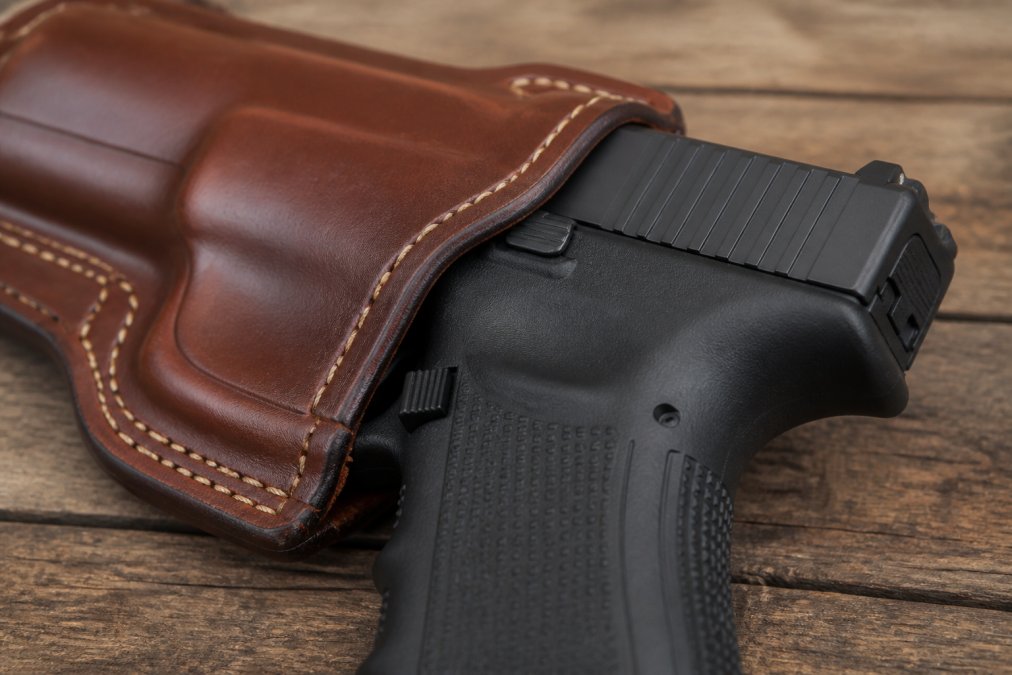
Trigger Guard Integrity and Negligent Discharge Prevention
This is where the safety conversation gets specific. The trigger guard must remain protected at all times, during carry, the draw, and re-holstering. Any design that allows the trigger to contact foreign objects (including the holster material itself) creates negligent discharge risk.
With leather holsters, trigger guard integrity depends entirely on the holster's construction. The mouth of the holster must be reinforced enough to maintain its shape and keep the trigger guard covered. Cheap leather, improperly molded, can collapse inward and contact the trigger during re-holstering. This is the single biggest safety failure mode for leather holsters.
The HOSS IWB Leather Holster, CCW →
A well-designed leather holster has a reinforced mouth that's stiff enough to hold its shape even when you're forcing the firearm back in quickly. The leather around the trigger guard should be thick enough to maintain rigidity without becoming uncomfortable. Premium full-grain leather, properly molded and edge-finished, accomplishes this reliably.
The break-in period is critical here. During the first few weeks, the leather softens slightly. If the holster is well-designed, this softening is minimal and doesn't compromise trigger guard coverage. If the holster is poorly designed or made from inferior leather, the mouth can collapse too much, creating a safety hazard.
Inspection is non-negotiable. Every time you re-holster, you should feel the leather's resistance and hear the click of a secure fit. If either is missing, your holster has degraded beyond safe use.
Leather Holster Maintenance Tips for Long-Term Safety
Maintenance directly impacts safety. Neglected leather deteriorates faster, loses its shape, and becomes unreliable. A simple maintenance routine extends your holster's life and preserves its safety characteristics.
Clean your holster monthly. Use a dry cloth to remove dust and sweat residue. If you've been in moisture-heavy environments, wipe it down more frequently. Moisture is leather's enemy, it accelerates degradation and can lead to mold growth in humid climates.
Condition your leather every three to six months, depending on your climate and how much you carry. A quality leather conditioner replenishes oils and prevents the material from drying out and cracking. Use sparingly, over-conditioning can soften leather excessively and compromise retention. A thin coat applied with a cloth and buffed dry is all you need.
Inspect the trigger guard area regularly. Run your finger along the inside of the holster where the trigger guard sits. Look for soft spots, cracks, or areas where the leather has thinned. These are warning signs that your holster is degrading and needs replacement.
Store your holster in a cool, dry place when not in use. Avoid direct sunlight, which can fade the leather and cause uneven degradation. If you live in a humid climate, consider storing your holster with a silica packet to absorb excess moisture.
Best Appendix Carry Leather Holster for Polymer Pistols
Appendix inside-the-waistband (IWB) carry places unique demands on a holster.
The HOSS IWB Leather Holster offers a universal fit alternative. Handcrafted from the same premium full-grain leather and designed for quick deployment, it's ideal if you carry multiple firearms or prefer the versatility of a universal design. At $60.50, it's a premium option that doesn't sacrifice quality for flexibility.
Inspection Protocols and When to Replace Your Holster
Regular inspection is the difference between a safe holster and a liability. Establish a monthly inspection routine and replace your holster at the first sign of critical degradation.
Frequently Asked Questions
What are the primary safety risks of using worn-out leather holsters with polymer pistols?
Worn leather loses its structural integrity, which can fail to protect the trigger guard from accidental depression, a critical concern with striker-fired pistols that lack a manual safety. Deteriorated leather also collapses during re-holstering, increasing negligent discharge risk. Additionally, moisture absorption in aged leather promotes corrosion on the firearm's finish and internal components. Regular inspection for cracks, separation at seams, and loss of retention is essential to catch degradation before it becomes dangerous.
How do you know when a leather holster is no longer safe to use?
Replace your holster if you notice visible cracks or tears in the leather, separation of stitching at stress points, loss of passive retention (the holster no longer grips the firearm securely), holster collapse during draw or re-holstering, or a break-in period that extends beyond normal use. Moisture stains, discoloration, or soft spots indicate water damage and potential corrosion risk. If the trigger guard area shows wear or deformation, the holster can no longer reliably protect against negligent discharge.
What is the safest material for a holster for everyday carry with a polymer pistol?
Quality leather holsters remain safe when properly maintained and constructed with reinforced mouth design and active retention features. Full-grain leather handcrafted with attention to trigger guard integrity, like those molded specifically for your firearm model, provides reliable everyday carry when inspected regularly and maintained with appropriate conditioning.
Do leather holsters cause more wear on polymer finishes than Kydex?
Leather can cause finish wear through friction during draw and re-holstering, especially if the holster's interior isn't smooth or if debris accumulates. However, quality leather holsters molded precisely to your firearm's contours minimize contact and friction. The real risk with leather is moisture retention, sweat and environmental moisture can cause corrosion on the polymer frame's metal components (barrel, springs, pins) rather than visible finish wear on the polymer itself.
Is a break-in period normal for leather holsters, and how long does it last?
Yes, leather holsters require a break-in period as the material conforms to your firearm's shape through repeated draws. A quality full-grain leather holster typically needs 50-100 draws before reaching optimal retention and draw speed. During break-in, passive retention may feel loose, but this is normal. After break-in, the leather should grip your firearm securely without excessive friction. If retention doesn't improve within this window or the holster feels unsafe, the molding may be incorrect for your specific firearm model.
0 comments