
Table of Contents
- What Makes a Compact Everyday Carry Knife Worth Carrying
- Criteria for Choosing an EDC Knife That Fits Your Pocket
- Best Blade Steel for Everyday Carry Performance
- Legal Blade Length for Pocket Knives You Should Know
- How to Clean Leather Knife Sheath and Protect Your Investment
- Locking Mechanisms and Long-Term Durability Explained
- Top Compact EDC Knife Sheaths for Secure Carry
- Maintenance and Sharpening Tips for Daily Use Blades
- Frequently Asked Questions
Last Updated: September 27, 2026
What Makes a Compact Everyday Carry Knife Worth Carrying
A compact everyday carry knife sits in that perfect sweet spot between utility and practicality. You need something sharp enough to handle real tasks, light enough to forget you're carrying it, and durable enough to survive years of pocket wear without falling apart. The best compact everyday carry knife balances pocketability with performance, giving you a reliable tool without the bulk.
Most people overthink knife selection. They chase specs they'll never use or buy something so heavy it becomes a burden instead of a tool. The reality is simpler: a good compact everyday carry knife should deploy smoothly, hold an edge through regular use, and feel comfortable in your hand for extended cutting tasks.
What separates a genuinely useful compact everyday carry knife from the drawer filler is construction quality and material choice. Blade steel matters because it determines edge retention and corrosion resistance. Handle materials affect grip and durability. Locking mechanisms determine whether your knife stays safely closed or fails when you need it most. Get these fundamentals right, and you've got a knife that earns its pocket space for decades.
Criteria for Choosing an EDC Knife That Fits Your Pocket
Picking the right compact everyday carry knife requires understanding what actually matters for your lifestyle. You're not buying based on marketing claims or YouTube reviews. You're buying based on how the knife performs in your hands, every single day.
Pocketability and Weight-to-Strength Ratio
Pocketability is the first filter. If your knife feels heavy or bulky, you'll leave it at home. A truly portable compact everyday carry knife should weigh under 4 ounces and fit comfortably in a front pocket without creating a visible outline through your pants.
Weight-to-strength ratio determines whether you can actually use the knife for real work. A titanium handle might save half an ounce, but if it's so light that the knife feels fragile, you won't trust it when you need to apply pressure. The sweet spot is a knife that feels substantial without being burdensome, with enough mass to generate cutting force without requiring you to muscle through the work.
Blade Geometry and Deployment Speed
Blade geometry shapes how the knife performs. A drop point blade offers versatility for most cutting tasks. A clip point gives you a sharp tip for detail work. A sheepsfoot design prioritizes safety by eliminating a sharp point. Your choice depends on what you actually cut.
Deployment speed matters more than people admit. A knife that takes three seconds to open is slower than a fixed blade you can draw from a sheath. Look for mechanisms that open smoothly and reliably. A ball bearing pivot or flipper tab should deploy with one hand, every time, without hesitation.
Best Blade Steel for Everyday Carry Performance
Blade steel is where material science meets real-world performance. The best blade steel for everyday carry balances edge retention, corrosion resistance, and sharpening ease. You want a steel that holds a sharp edge through extended use but doesn't require a professional sharpener every month.
Stainless steels offer corrosion resistance at the cost of edge retention. They're forgiving if you neglect maintenance. Carbon steels hold sharper edges longer but require more careful cleaning. Many modern compact everyday carry knives use powder metallurgy steels that split the difference, offering decent edge retention with stainless corrosion resistance.
The practical reality: any decent blade steel will outperform your sharpening ability. Focus on finding steel that's easy to sharpen at home. A knife you can maintain yourself is more useful than one with theoretically superior edge retention that requires professional service.
Legal Blade Length for Pocket Knives You Should Know
Blade length laws vary significantly by state and local jurisdiction. Most states allow pocket knives with blades up to 3.5 inches without restriction. Some cities impose tighter limits. A few states restrict automatic knives or push-button deployment mechanisms regardless of blade length.
Check your local regulations before carrying. The last thing you need is a legal problem over a tool. Many compact everyday carry knife designs stay under 3 inches specifically to avoid legal gray areas. That length is sufficient for most cutting tasks anyway.
Federal law prohibits knives on commercial aircraft and in federal buildings. If you travel, pack your knife in checked luggage, not your carry-on. Some workplaces prohibit knives entirely. Know your environment before clipping one to your pocket.
How to Clean Leather Knife Sheath and Protect Your Investment
A quality leather knife sheath deserves maintenance. Vegetable-tanned leather develops character over time, but neglect accelerates wear and invites damage. Regular cleaning keeps your sheath functional and looking good.
The Rancher pancake leather knife →

Clean your leather knife sheath monthly with a soft, damp cloth. Wipe away dust and debris. For stubborn dirt, use a slightly damp cloth with mild soap, then dry immediately. Never soak leather or use harsh chemicals. Vegetable-tanned leather can handle moisture, but excessive water causes staining and weakens stitching.
Condition the leather quarterly with a natural conditioner. This prevents cracking and maintains suppleness. Avoid silicone-based products that trap moisture. A simple leather conditioner or light oil works best. Apply sparingly and buff away excess.
Store your sheath in a cool, dry place. Direct sunlight fades color. High humidity encourages mold. If your sheath gets wet, stuff it with newspaper to absorb moisture and let it air dry slowly away from heat sources. Fast drying near a heater causes leather to shrink and crack.
Locking Mechanisms and Long-Term Durability Explained
A locking mechanism is the difference between a knife that stays safely closed and one that folds on your hand. Understand how different locks work so you can choose one you trust.
A liner lock uses a spring-loaded metal bar that engages the blade tang. It's simple, reliable, and easy to disengage with one hand. Liner locks have proven themselves through decades of use. They're the most common design for good reason.
A frame lock integrates the locking bar into the knife's frame itself. This creates a more rigid lock with less play. Frame locks handle harder use better than liner locks. They're slightly more complex to manufacture, which is why they cost more.
An axis lock uses a bar perpendicular to the blade that engages grooves in the blade. It's smooth to operate and very strong. Axis locks are found on premium compact everyday carry knives because they're expensive to produce but feel fantastic.
Long-term durability depends on how well the lock engages and how the pivot holds up.
Top Compact EDC Knife Sheaths for Secure Carry
The right sheath transforms a knife into a practical tool instead of a pocket burden. A good sheath holds your blade secure, protects the edge, and lets you deploy the knife quickly when you need it.
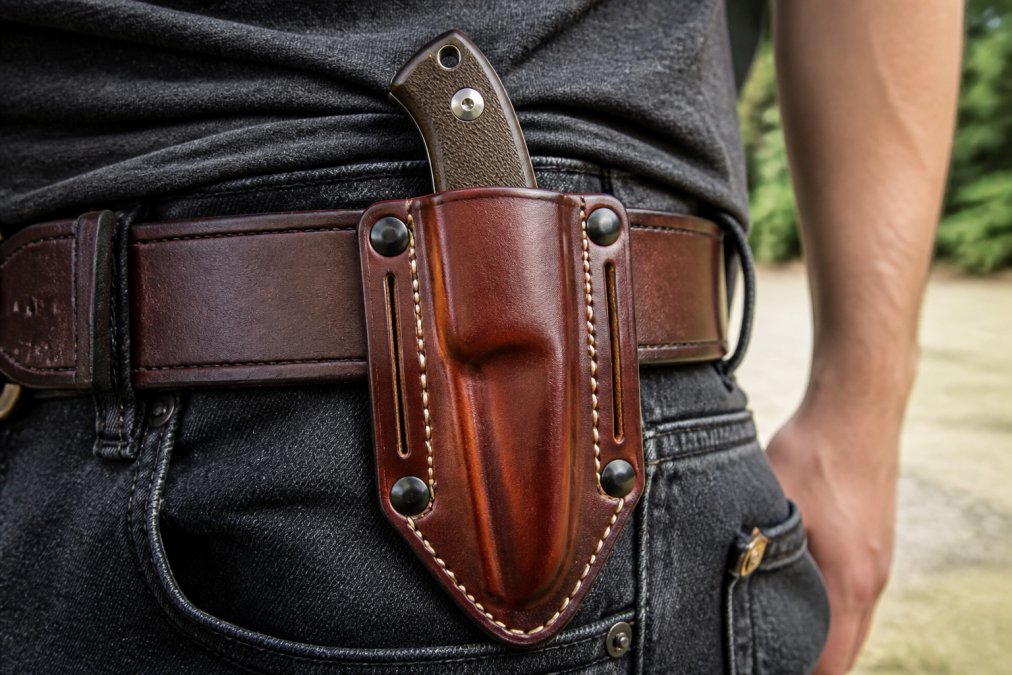
| Sheath Model | Price | Best For | Key Feature |
|---|---|---|---|
| The Rancher Pancake | $42 | Buck 382 & similar | Basket weave design, forward cant |
| Custom Texas Pancake | $46 | Custom-fit carry | Texas pride, personalized molding |
| Custom Pancake | $41 | Pocket knives | Slim profile, fast draw |
| Custom Leather (Horizontal) | $49 | Larger blades | Holds up to 5" blades |
| Texas Lineman Pancake | $43 | Heavy-duty carry | 7-8 oz leather, durable construction |
Maintenance and Sharpening Tips for Daily Use Blades
A sharp blade is a safe blade. Dull knives require more force, increasing the chance of slips. Keep your compact everyday carry knife sharp through regular maintenance.
Frequently Asked Questions
What is the best compact everyday carry knife for 2026?
The best compact everyday carry knife depends on your priorities: pocketability, blade steel edge retention, and handle ergonomics. Look for knives with high-carbon stainless steel (like D2 or S35VN) for corrosion resistance, a blade length under 3 inches for legal carry in most states, and a locking mechanism (frame lock or liner lock) that holds securely during tactical utility tasks. Pair your knife with a quality leather sheath to protect both the blade and your pocket.
How do I choose the right blade steel for my EDC knife?
Blade steel choice involves trade-offs between edge retention, corrosion resistance, and sharpening ease. High-carbon steels like D2 hold an edge longer but require more maintenance. Stainless steels like S35VN or VG-10 resist corrosion better and are easier to sharpen, making them ideal for everyday carry in humid environments. Powder metallurgy steels offer superior edge retention but are harder to sharpen without professional equipment. For most EDC users, a mid-range stainless steel offers the best balance.
What is the legal blade length for pocket knives I can carry?
Legal blade length for pocket knives varies by state and local jurisdiction. Most states allow blades up to 3.5 inches, but some restrict to 2.5 inches or less. Federal law permits knives on commercial flights if stored in checked baggage only. Before carrying any blade, verify your local and state regulations. Many EDC enthusiasts choose knives with blades under 3 inches to stay safely within legal limits across most jurisdictions while maintaining practical cutting performance.
How do I clean and maintain a leather knife sheath?
Clean your leather knife sheath regularly with a soft, dry cloth to remove dust and debris. For vegetable-tanned leather, apply a leather conditioner every 6-12 months to maintain suppleness and prevent cracking. Avoid soaking or submerging the sheath in water; wipe away moisture immediately. The natural patina that develops over time is a sign of quality leather aging beautifully. Store sheaths in a cool, dry place away from direct heat or sunlight to preserve the leather's integrity and appearance.
What carry system works best for compact everyday carry knives?
Pancake-style leather sheaths offer the best balance for compact EDC knives: they sit flat against your body, minimize printing, and provide secure retention with a deep carry clip or belt loop. A forward cant (angled carry position) speeds deployment while keeping the knife close. Ensure your sheath accommodates your belt width (most accept up to 1.5 inches) and choose vegetable-tanned leather for durability and edge protection. Custom-fitted sheaths prevent blade rattle and protect your pocket from sharp edges.
0 comments