
Quick Summary
A full-grain leather holster keeps the hide's natural grain intact, which makes it strong, breathable and comfortable as it softens to your body over time. Choose one by matching the carry style, confirming the exact firearm model and draw hand, and checking trigger coverage and retention before you carry.
- Full-grain leather keeps the natural grain, unlike corrected or split leather.
- Look for "full-grain" stated plainly in the listing, not vague "genuine leather" terms.
- Confirm the holster is made for your exact make and model before buying.
- Check that the trigger guard is fully covered on both sides when the firearm is seated.
- Expect a new leather holster to feel stiff, then soften over the first few days of wear.
Table of Contents
- Why Full-Grain Leather Works for Concealed Carry
- Choosing a Carry Style: IWB, OWB, and Pancake Designs
- Fit, Retention, and Firearm Compatibility
- Side-by-Side Comparison of AnchorsAweighLeather Holsters
- Full-Grain Leather IWB Holster Break-In and Care
- Safety and Responsible Carry Considerations
- Choosing Your Custom Holster: Next Steps With AnchorsAweighLeather
- Frequently Asked Questions
How to Choose a Full-Grain Leather Holster for Concealed Carry
Last Updated: November 21, 2026
Why Full-Grain Leather Works for Concealed Carry
Choosing a full-grain leather holster for concealed carry starts with understanding the material. At AnchorsAweighLeather, we handcraft our holsters from premium full-grain leather in the USA, and the material you pick shapes how the holster fits, feels and lasts.
Full-grain leather is the top layer of the hide, with the natural grain left intact. That grain makes it strong and breathable, and it softens to the body over time.
What full-grain leather is and how it differs from other leather grades
Full-grain leather keeps the outer surface of the hide, including its natural grain, scars and fiber density. Top-grain and corrected leather are sanded or coated to hide flaws, which makes them look more uniform. Split leather comes from the inner layers.
For a holster, this difference matters. When you shop, look for "full-grain" stated plainly in the product listing, not vague terms like "genuine leather," which can describe lower-quality material.
Where leather holsters have trade-offs
Leather is not the best choice for every carrier. It needs break-in before it fits closely, and it absorbs moisture, so it benefits from proper care.
These trade-offs do not rule leather out. They simply mean you should match the material to how and where you carry.
Choosing a Carry Style: IWB, OWB, and Pancake Designs
The three main styles are inside-the-waistband (IWB), outside-the-waistband (OWB) and pancake. IWB holsters ride inside your pants, which keeps the firearm hidden under a shirt. OWB holsters sit outside the belt and are easier to reach, but they are harder to conceal. Pancake holsters are flat, close-to-body designs that suit a sturdier, more stable carry.
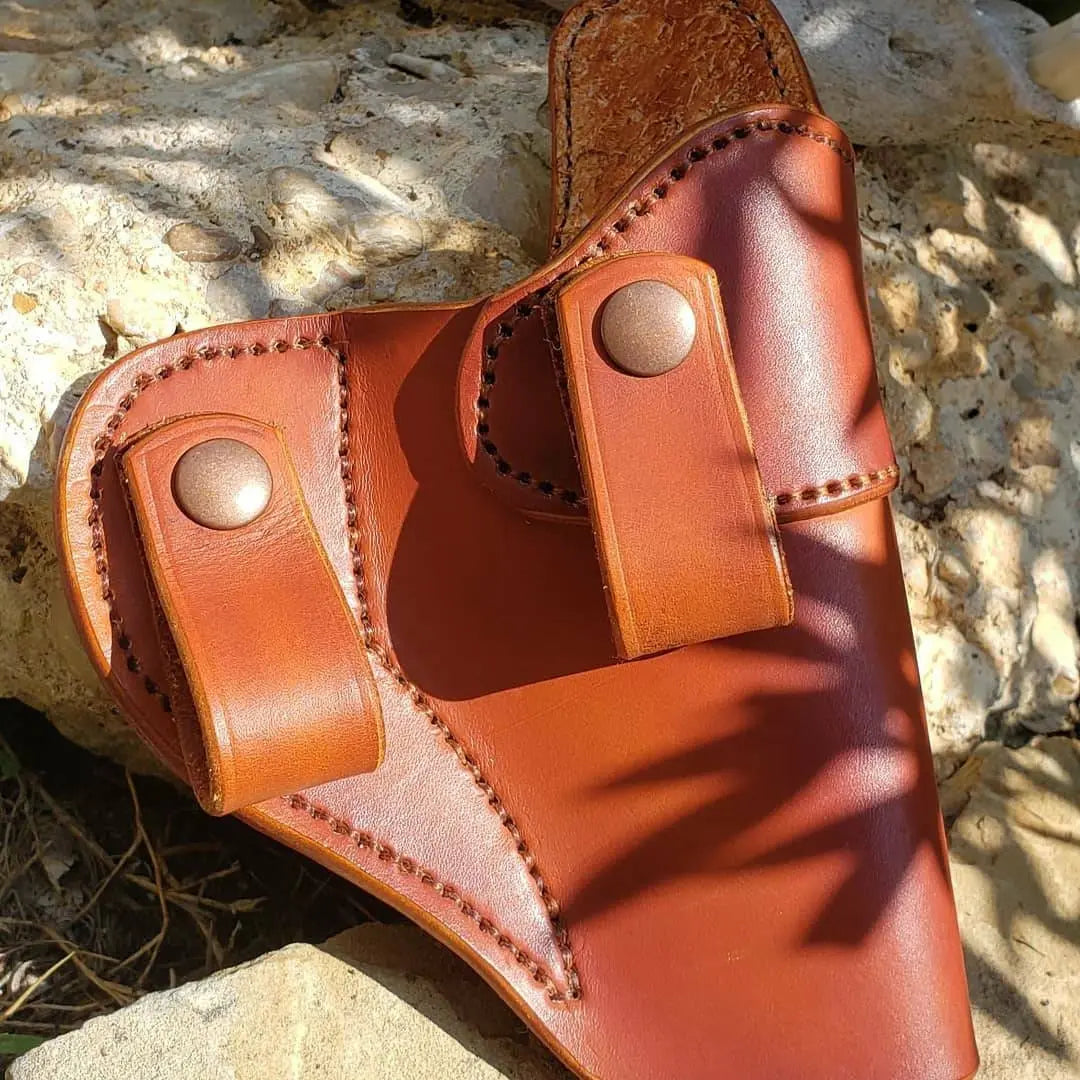
Our Custom Leather IWB Holster and The HOSS IWB Leather Holster are built for inside-the-waistband carry. For an open-carry or outside-the-waistband setup, The Patriot Saddle Holster is a pancake-style OWB option with a close-body profile.
Fit, Retention, and Firearm Compatibility
A holster only works if it fits your exact firearm. A loose fit lets the gun shift or fall out. A tight fit can make drawing and re-holstering harder. To pair your holster with a belt that keeps it stable, learn how to choose a gun belt for leather holsters.
Always check that the holster is designed for your make and model before you buy, and test the fit with an unloaded firearm in a safe, controlled setting.
Matching the holster to your exact firearm model
Holsters are often made for a specific model or a group of similar models. Our CCW Holster for the Ruger LCP / LCPII 22 and Smith & Wesson Bodyguard 380 is made for those firearms.
Universal designs, such as the Custom Leather IWB Holster and The HOSS IWB Leather Holster, are described as universal holsters. Universal does not mean every gun fits perfectly, so confirm the fit with your own firearm before you rely on it.
A fit checklist for full-grain leather holsters
Use this checklist before you carry a new holster. It covers the details that product listings often skip.
- Trigger coverage: With the firearm unloaded and the holster empty, insert the firearm and confirm the trigger guard is fully covered on both sides. You should not be able to reach the trigger through the holster mouth or any gap in the leather.
- Muzzle coverage: The muzzle should not protrude through the bottom of the holster in a way that exposes the front sight or allows the firearm to be pushed out from below.
- Retention check: Hold the holster upside down over a soft surface with the firearm seated and shake gently. The firearm should stay in place. Then try a slow, straight pull; the draw should feel firm but not require excessive force.
- Cant and ride height: Confirm the holster sits at the cant and ride height you ordered. A holster that sits too high or too low changes how your hand meets the grip during the draw.
- Belt attachment: Check that the belt loops or clips fit your belt width. A belt that is too narrow for the loops lets the holster shift; a belt that is too wide will not pass through.
- Red dot and light compatibility: If your firearm has an optic or a weapon-mounted light, confirm the holster is cut for that configuration. Many leather holsters are molded for the bare firearm, and an optic or light can change the fit or block the draw.
- Left-hand and right-hand draw: Confirm the holster is built for your draw hand. A right-handed holster will not work for a left-handed draw.
Compatibility limitations to know before you order
If you have added an aftermarket sight, grip, or laser, tell us before you order so we can confirm whether the holster will fit.
A common pattern is for carriers to buy a holster for one model and then switch to a similar but not identical model, such as a different generation or a variant with a different slide profile. Always confirm the exact model and any accessories before you rely on the holster for carry.
Cant, draw angle, and belt attachment
Cant is the angle at which the holster sits on the body. For guidance on positioning the holster at the right height, read about holster ride height for concealment. Compare leather and Kydex for appendix carry to see which material is more comfortable.
Belt attachment matters as well. Make sure your gun belt is sturdy enough to hold the firearm's weight without sagging. A belt that is too thin or too flexible can cause the holster to shift, which affects both comfort and access.
Side-by-Side Comparison of AnchorsAweighLeather Holsters
Here is how our four current holsters compare on the main criteria:
| Holster | Carry Style | Firearm Fit | Starting Price (USD) | Best For |
|---|---|---|---|---|
| Custom Leather IWB Holster | Inside-the-waistband | Universal | $43.00 | Everyday concealed carry |
| The HOSS IWB Leather Holster | Inside-the-waistband | Universal | $60.50 | Rugged, all-day wear |
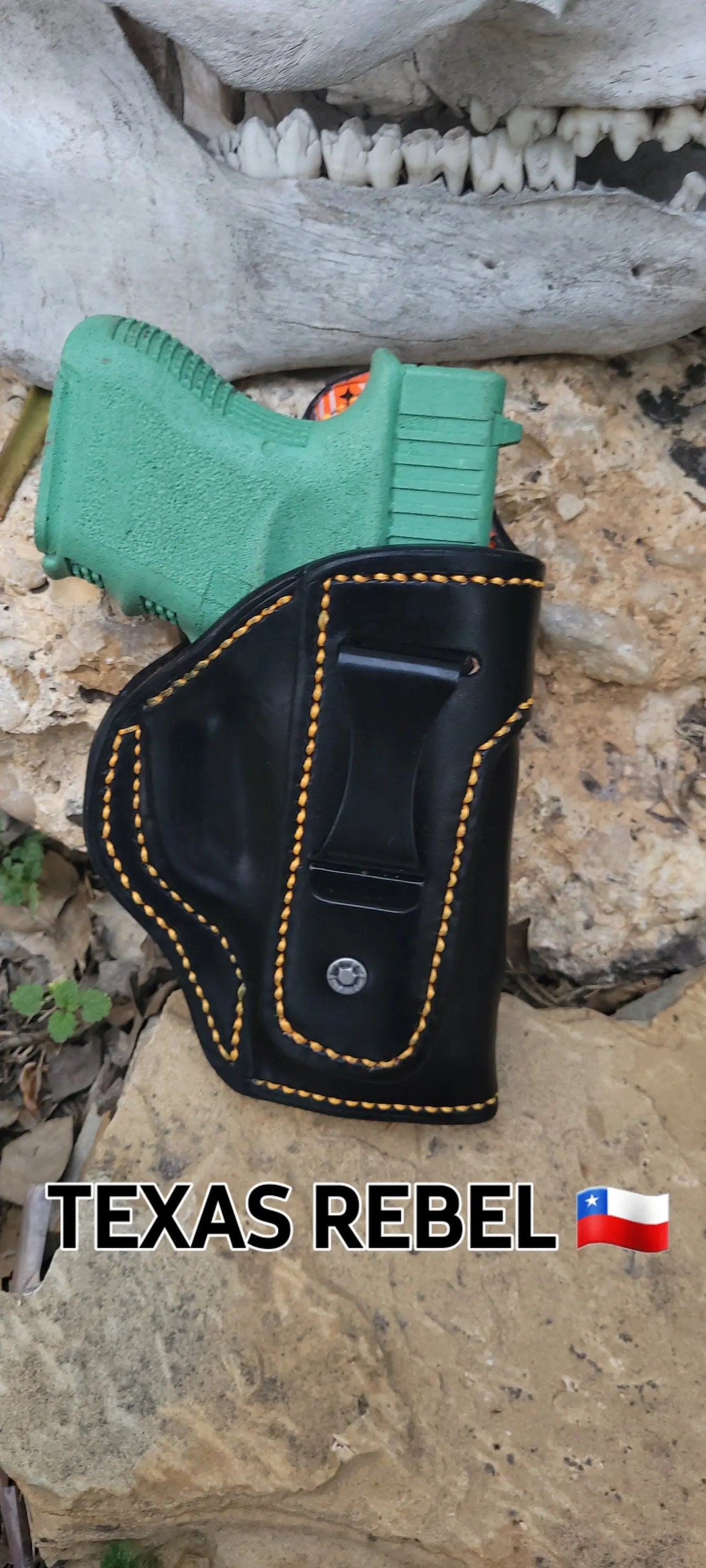
| The TEXAS REBEL IWB Conceal Carry Holster | Inside-the-waistband | Custom molded | $50.00 | A secure, snug fit |
| The Patriot Saddle Holster | Pancake OWB | Pancake design | $95.00 | Open carry and a stable, close-body draw |
Starting Price (USD)
Pros and cons:
- Custom Leather IWB Holster: Pro: budget-friendly, comfortable for all-day wear. Con: universal fit may need checking against your firearm.
- The HOSS IWB Leather Holster: Pro: universal fit with secure retention and a smooth draw. Con: higher price than the base IWB model.
- The TEXAS REBEL IWB Conceal Carry Holster: Pro: custom molded for a snug fit. Con: custom molding means it is best matched to one firearm.
- The Patriot Saddle Holster: Pro: stable, close-body carry with a clean draw. Con: highest price in the lineup and an OWB profile that is less concealed.
Full-Grain Leather IWB Holster Break-In and Care
New leather holsters need some time to settle, and they need regular care to last. Knowing what to expect helps you get the best fit and avoid damage.
Break-in period and comfort expectations
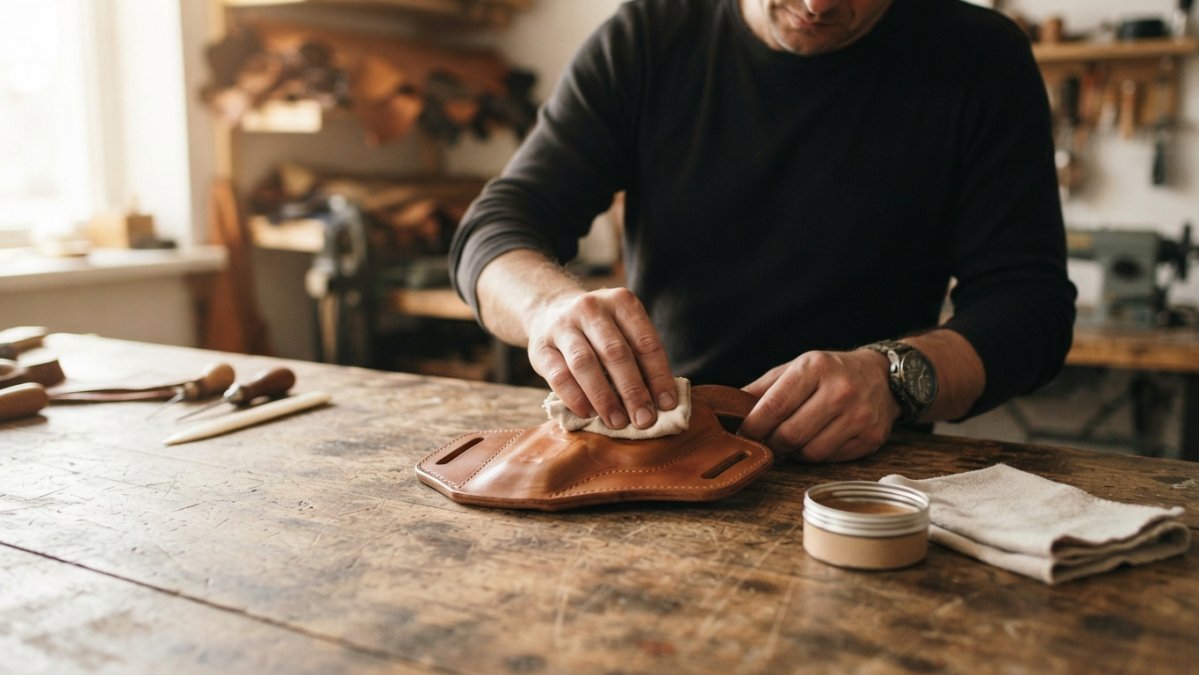
A new full-grain leather holster may feel stiff at first. Over the first few days of wear, the leather softens and molds to your firearm and your body. For detailed cleaning and conditioning steps, see how to clean and condition leather holsters.
Expect some stiffness at the start. If a holster feels uncomfortable after a reasonable break-in period, contact us before you decide it is not right for you.
Cleaning, conditioning, and storage
Watch out: Never store a leather holster with a firearm inside it for long periods. Moisture and pressure can change the shape of the leather and affect retention.
Safety and Responsible Carry Considerations
A holster is one part of a safe carry setup. Before you carry, learn the laws in your state, take a safety course and practice drawing and re-holstering with an unloaded firearm.
Good retention protects you and others. Check the holster before each carry to confirm the firearm is seated securely and the trigger is covered. If something feels off, do not carry until you have fixed it.
Retention and trigger coverage checks
Retention is not just about the holster holding the firearm during a shake test. It is also about how the holster behaves during movement, sitting, and re-holstering. A common pattern is for a new leather holster to feel tight at first, then loosen slightly as it breaks in. Check retention again after the first few weeks of carry.
- Trigger coverage: With the firearm unloaded, insert it into the holster and look for any gap that exposes the trigger guard. The trigger should be fully covered on both sides and from the top.
- Retention test: With the firearm unloaded and the holster on your belt, bend over, sit down, and stand up. The firearm should not shift or rise out of the holster. Then try a slow draw; it should feel firm but smooth.
- Re-holstering: Practice re-holstering with an unloaded firearm. The holster mouth should stay open enough to accept the firearm without your support hand covering the muzzle. If the mouth collapses, the holster may be too soft or too worn.
- Wear and stretch: Leather can stretch over time. If the holster no longer holds the firearm firmly, stop carrying and contact us about a replacement or adjustment.
Training and practice with an unloaded firearm
Before you carry loaded, practice the draw and re-holster with an unloaded firearm in a safe direction. Many ranges and instructors offer concealed-carry courses that cover holster safety, retention, and legal considerations. Practice until the draw is smooth and you can re-holster without looking. Keep your trigger finger straight along the frame until the firearm is pointed at a target and you have decided to fire.
Legal and storage considerations
Carry laws vary by state and locality. Check the current rules where you live and where you travel, including reciprocity agreements and restrictions on where you can carry. Store your firearm securely when it is not on your person, and do not store it in the holster for long periods. Moisture and pressure can change the shape of the leather and affect retention.
Choosing Your Custom Holster: Next Steps With AnchorsAweighLeather
Start by deciding your carry style, then confirm your firearm model and draw hand. Our handcrafted holsters are made in the USA from premium full-grain leather, and custom orders are available. Shipping is free on orders over $100.
Ready to find your fit? Browse our holsters and choose the one that matches how you carry.
Frequently Asked Questions
Which leather concealed carry holster is best?
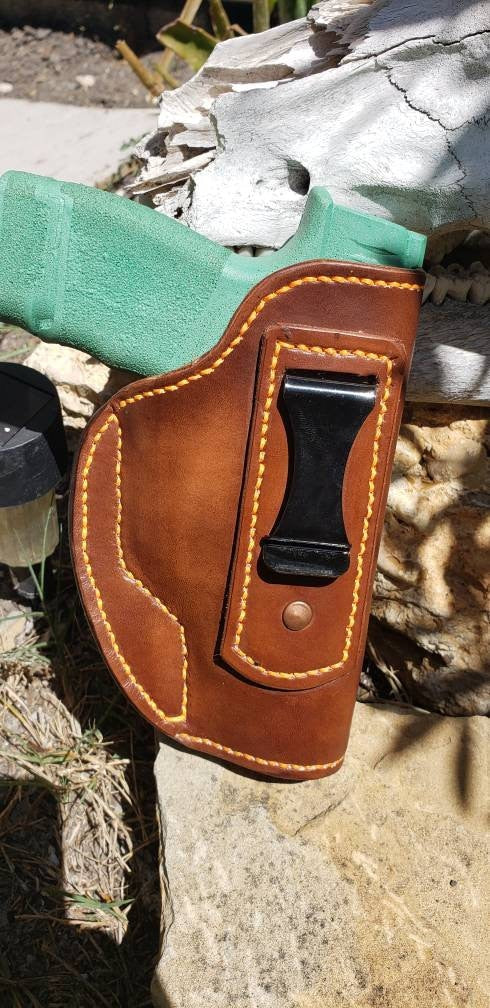
The best leather concealed carry holster depends on your firearm model, carry position, and how you dress. For inside-the-waistband carry, a holster that matches your exact pistol model is worth checking. AnchorsAweighLeather offers several handcrafted IWB options, including the Custom Leather IWB Holster at $43.00, The HOSS IWB Leather Holster at $60.50, and The TEXAS REBEL IWB Conceal Carry Holster at $50.00. Matching the model to your gun and belt matters more than any single brand name.
What type of leather is best for holsters?
Full-grain leather is generally the preferred choice for holsters because it keeps the hide's natural surface and strength, which helps it hold its shape under a firearm. AnchorsAweighLeather builds its holsters from premium full-grain leather handcrafted in the USA. The CCW holster for Ruger LCP and Smith & Wesson Bodyguard models uses 7-8 oz leather.
How do you break in a leather concealed-carry holster?
Leather holsters typically feel stiff at first and soften with regular wear.
How do you care for a full-grain leather holster?
Wipe the holster clean with a dry or slightly damp cloth after carry to remove sweat and debris. Apply a leather conditioner sparingly every few months, or when the leather looks dry, and store the holster in a cool, dry place away from direct sun. Keep the firearm out of the holster during storage so the leather can keep its shape. Regular light care is more effective than occasional heavy treatment.

0 comments