
Last Updated: November 1, 2026
Quick Summary
Leather is usually more comfortable for appendix carry because it softens and conforms to the body over time, while Kydex is firmer and can press at its edges. Neither material wins for everyone, though, since build, belt, and posture decide how appendix carry comfort actually feels.
- Leather spreads pressure and molds to your body, but it needs several weeks of wear to break in.
- Kydex is ready from the start and holds a consistent shape, though its rigid edges can dig in when seated.
- Ride height and cant often fix comfort problems more than switching materials does.
- Soft leather can collapse at the mouth, so reinforcement matters for safe reholstering.
- Always confirm full trigger guard coverage and secure retention on the exact setup you carry.
Table of Contents
- Leather vs Kydex for Appendix Carry: Overall Comparison
- Why Appendix Carry Comfort Is Different from Other Positions
- AIWB Holster Comfort: Leather, Kydex and Hybrid Trade-Offs
- Appendix Carry Holster Safety: Retention and Trigger Guard Coverage
- Appendix Holster Fit and Concealment: Ride Height, Cant and Body Type
- A Practical Wear-Test Method for Comparing Holsters
- Choosing the Right Appendix Holster: Your Next Step
- Frequently Asked Questions
Leather vs Kydex for Appendix Carry: Overall Comparison
Appendix carry is the most divisive position in concealed carry, and appendix carry comfort is usually the first thing people argue about. Leather is softer and more forgiving; Kydex is stiffer and more retentive. Our practical guide to breaking in leather holsters explains how leather softens and fits over time. Which feels better depends on your build, belt, and how you sit and move.
Leather molds to the body and breaks in over time, which many carriers find more comfortable against the abdomen. Kydex holds its shape, aiding retention and reholstering, but its edges can press sooner. Neither material is automatically more comfortable for everyone.
| Factor | Leather | Kydex |
|---|---|---|
| Feel against the body | Softer, conforms over time | Firmer, holds its shape |
| Break-in | Needs a few weeks of wear | Ready from the start |
| Retention | Depends on fit and adjustment | Typically firm, consistent grip |
| Reholstering | Can require a hand to open the mouth | Generally easier |
| Pros | Comfortable, quiet, classic look | Durable, consistent fit, easy to clean |
| Cons | Sweat and wear, slower break-in | Edges can dig in, less forgiving |
We'll try to be fair about where leather wins and where it doesn't.
Why Appendix Carry Comfort Is Different from Other Positions
Appendix carry places the firearm at the front of the body, near the hip bone and belt line, which changes how a holster feels. Sitting, bending, and reaching all shift the grip and body-facing surface against your abdomen. A holster that feels fine at the side or small of the back can feel very different in front.
Because the holster sits in a sensitive area, small differences in shape and edge treatment matter more. A rigid edge unnoticeable at the hip can become a constant pressure point at the front, which is why many carriers judge appendix holsters by how they feel after hours of sitting.
AIWB Holster Comfort: Leather, Kydex and Hybrid Trade-Offs
Appendix carry is often called AIWB, short for appendix inside-the-waistband. Most of the comfort conversation comes down to three styles: full leather, full Kydex, and hybrid holsters that combine a Kydex shell with a leather backing.
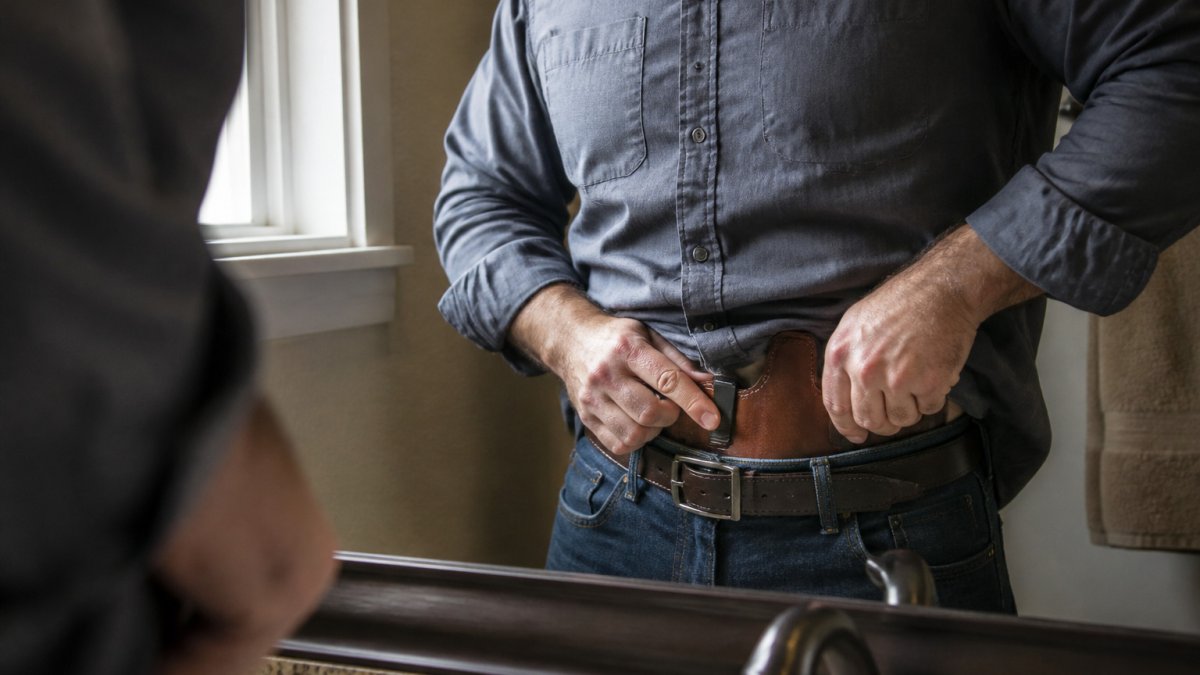
Full leather. Leather is the most comfortable choice for many people because its body-facing surface softens and conforms over time. The trade-off is break-in: a new leather holster can feel stiff before it molds to your belt and body.
Full Kydex. Kydex offers a consistent shape from day one, needs no break-in, and has predictable retention.
Hybrid holsters. Hybrids aim to keep Kydex's retention while adding a softer backing against the body, but they are not automatically more comfortable.
Why Body Type and Posture Change the Answer
At the appendix position, the holster sits over the lower abdomen near the hip bone, and that geometry differs from person to person. A carrier with a larger midsection often finds a wider body-facing footprint and slight forward cant keep the grip from digging in when seated. A slimmer carrier may find a narrower holster sits flatter and prints less.
Ride height and cant most often convert an uncomfortable appendix setup into a workable one. Raising the holster slightly can move the grip off the abdomen when seated; lowering it can reduce printing but may increase pressure. A modest forward cant often improves access and comfort, but too much presses the grip inward. These adjustments are covered in the fit section below.
Break-In, Sweat and Everyday Wear
Break-in matters more with leather than most people expect. Expect several weeks of regular wear before a new leather holster settles. Early on, it can be stiff and noticeable. Carrying it daily with the same belt helps it take a consistent shape.
Sweat is the main concern for leather in warm weather. Moisture can soften the leather, change its fit, and eventually affect durability. Our guide to cleaning and conditioning leather holsters walks through both steps.
Kydex does not absorb sweat. It still needs occasional cleaning, and its edges can feel firm against bare skin in heat. Most carriers who switch between the two find the choice depends on climate and clothing as much as comfort.
Appendix Carry Holster Safety: Retention and Trigger Guard Coverage
Comfort should never come at the expense of safety. For appendix carry, two things matter most: the holster must hold the firearm securely, and it must fully cover the trigger guard so nothing can get inside it.
Retention. Retention is the holster's ability to keep the firearm in place during movement. Our step-by-step guide to adjusting retention on leather holsters shows how to tune it. Leather retention depends on the molded fit and any retention strap or tension screw; Kydex retention is usually built into the shell and is firm and consistent.
Custom Leather IWB holster, Leather Holster, Conceal Carry Holster →
Trigger guard coverage. The holster should fully enclose the trigger guard. Any holster that leaves the trigger guard exposed creates a risk of the trigger catching on clothing, a drawstring, or an object. Check this on every holster you buy, and recheck it after any adjustment.
The Leather Collapse Problem
The safety concern that separates leather from Kydex most clearly is shape retention at the holster mouth. A leather holster softened by sweat and use can collapse inward when the firearm is drawn. If the mouth closes, reholstering becomes two-handed: you must push the mouth open with your support hand first.
A leather holster with a reinforced mouth can resist this; soft, unreinforced leather does not. That is why "comfortable leather" and "safe leather" are not the same thing: the softer the leather, the more important the reinforcement. Kydex does not collapse, which is why many appendix carriers prefer it for the reholstering safety margin even when leather feels better against the body.
How to Verify Safety on Your Setup
Verify retention and coverage on the firearm you actually carry, with the specific holster and belt you plan to use. Unload the firearm first, then check that the trigger guard is fully covered with no gaps, that retention holds when you shake the holstered firearm gently, and that the mouth stays open after a draw. Repeat after any adjustment to cant, ride height, or retention tension. A holster that passes on the bench but fails after a week of sweat and wear needs replacement or repair, not more break-in.
Appendix Holster Fit and Concealment: Ride Height, Cant and Body Type
Fit affects both comfort and concealment. Three settings matter most.
Ride height is how high the holster sits relative to the belt line. Our guide to choosing the right holster ride height for concealment explains how to find your setting.
Cant is the angle of the holster. Many appendix carriers find a modest forward cant improves access and concealment, but the right angle depends on your torso shape, how you bend, and where the grip sits.
Body type changes everything. A carrier with a larger midsection will often need a different ride height and cant than a slimmer carrier. Posture also matters.
These adjustments solve most comfort problems, regardless of material. A holster that feels wrong often needs a small change in cant or ride height rather than a new holster altogether.
A Practical Wear-Test Method for Comparing Holsters
Reading about comfort only goes so far. A simple, controlled wear test will tell you more than any spec sheet.
- Use the same firearm and belt for every holster you compare.
- Start with a baseline. Wear the holster for about an hour and note pressure points, hot spots, or shifting.
- Test in realistic conditions. Sit for an extended period, drive, bend to pick something up, and walk.
- Check retention and trigger guard coverage after each activity.
- Log your notes. Write down pressure points, sweat, and printing for each session.
- Give leather time to break in. Judge a leather holster after several weeks, not the first day.
- Repeat in heat and cold if your climate varies, since sweat and clothing change the results.
Choosing the Right Appendix Holster: Your Next Step
Once you understand the trade-offs, pick the option that matches how you live and carry. Our roundup of the best leather appendix carry holsters compares current options to narrow your choice. If you want a softer feel that molds to your body, leather is a strong choice, and expect a short break-in period. If you want a consistent shape from the start and easy cleaning, Kydex or a hybrid may suit you better.
Our handcrafted options are a good place to begin. The Custom Leather IWB holster is handcrafted in the USA from premium full-grain leather, priced at $43.00, and designed to fit your specific firearm. The HOSS IWB Leather Holster at $60.50 is a universal IWB design built for daily wear. The TEXAS REBEL IWB Conceal Carry Holster at $50.00 is custom molded for a snug fit. If you carry a Ruger LCP or LCPII or a Smith & Wesson Bodyguard 380, the CCW Holster for those models is priced at $48.00 and can be made for left- or right-handed draw.


Whatever you choose, test it with the wear-test method above before you rely on it. Comfort is personal, and the right holster is the one you forget you are wearing.
Frequently Asked Questions
Which is more comfortable for appendix carry, leather or Kydex?
Neither material is universally more comfortable. Leather is usually softer against the body at first, but it can lose shape and sag over time. Kydex holds its shape and retention, but some carriers feel its edges sooner in the appendix position. Comfort depends heavily on how the holster is molded to your firearm, how it is cut and how it is set up on your belt. Test each style with your own firearm and body before committing to one.
Does leather or Kydex conceal better in an appendix holster?
Concealment depends more on ride height, cant and the garment you wear than on material alone. A leather holster with a slimmer profile can disappear under a shirt, while a bulkier Kydex design may print more. Keeping the grip close to the body and using a properly fitted belt helps in either material. Check concealment in a mirror with your typical clothing before relying on it.
How should an appendix holster fit?
A well-fitted appendix holster keeps the firearm secure, covers the trigger guard completely and sits at a comfortable angle that does not force your hip or wrist into an awkward position. The holster should hold the firearm without the grip shifting when you sit, bend or reach. Make sure the holster is designed or molded for your exact make and model, and adjust belt tension and cant until the firearm stays put without digging in.
Is an appendix holster safe?
Appendix carry is considered safe when the holster fully covers the trigger guard and retains the firearm firmly. Retention and trigger guard coverage are the two things to check first. Practice drawing and reholstering with an unloaded firearm and a safe backstop until the motion is consistent. Inspect the holster regularly for wear, and replace it if the retention weakens or the shape no longer matches your firearm.

0 comments